By Patrick F. Cannon
I have a humidifier in my bedroom for cold nights when the furnace works overtime. It adds enough moisture to the air to prevent those nightmares where you’re crawling across the Sahara Desert like that poor guy in the old movie, Four Feathers, and wake up screaming “water, water!”
When I fill the reservoir, there’s a warning against adding any “essential oils.” Not having a clue what they were, I felt confident that I was in no danger of adding any. As far as I knew, the only essential oils were the kind you needed to keep your internal combustion engine from seizing up in the middle of the Illinois Tollway. And of course, there are many other machines that need oil to keep them spinning happily.
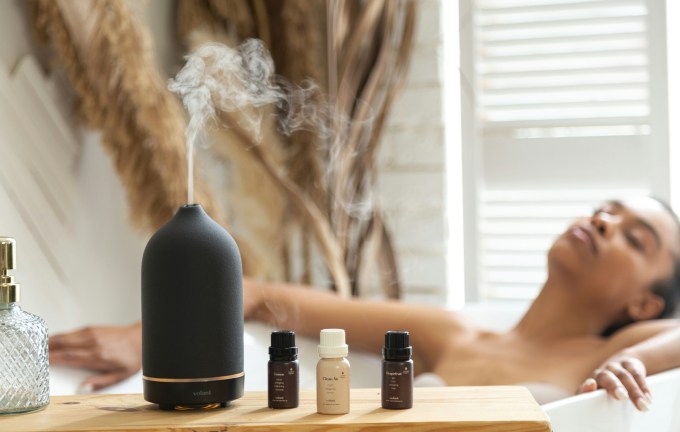
Recently, however, a television channel I occasionally watch has been running commercials from a company that sells little bottles of what they claim are essential oils. Scenes of young women dreamingly communing with nature and sniffing the air are featured. I can’t recall seeing any men in them. Available oils include scents of lemon grass, lilac, lavender, citrus, and peppermint, and are said to be the concentrated extracts of those plants.
Apparently, they are used in something called “aromatherapy,” a branch of mystical medicine that is said to affect the brain’s emotion centers, theoretically reducing stress, improving sleep, and even managing pain. Like alchemy and astrology, it has proven difficult to produce scientific evidence to support these claims. But, as we know, the brain also has a substantial gullibility center, which leads to fortunes for those who know how to exploit it.
I did a little checking and discovered that Americans spend about $10 billion a year on these odorous oils. Scented candles are also popular to the tune of about $3.5 billion a year. Americans who love a good sniff also spend $3 billion on room fresheners; and cough up about $500 million a year to make their laundry smell like the great out of doors (not the urban version, but the one where Bambi and the hummingbirds roam).
I confess I used Febreze fabric spray when I had dogs who took long naps on the couch. I no longer have a dog, so the only odor preventing product I now use is underarm deodorant. I confess that all the scented candles I’ve received over the years have been regifted or consigned to Goodwill. I’m sure they found good homes.
With all the money I’ve saved, I’ve been able to afford a better brand of bourbon and decent bottles of wine. I’ve also saved a fortune by never taking vitamins. Of course, if my doctor said I should, I would follow his advice. But he never has. Apparently, consuming a balanced diet that includes fruit and vegetables has provided all the vitamins I (and most people) need. Yet, Americans spend more than $60 billion a year on vitamins and other supplements.
One of the more popular recently has been memory supplements. There are several brands, all of which claim to feed stuff to your brain that will improve your memory. If you look at the small print at the bottom of their ads, you’ll notice the disclaimer that their claims have not been evaluated for accuracy by the Food and Drug Administration (FDA). Of course they haven’t. And it’s not because they forgot to submit them for testing. Those that take them must cough up about $50 a month. Of course, the cost goes down if you forget to take them.
Copyright 2026, Patrick F. Cannon
.
 cannonnadedotcom
In parts of Florida and elsewhere that are plagued by biting midges (“no-see-ums” in Tonto-ese) they sell, as a less toxic alternative to Deet, little spray bottles of essential oils that are claimed repel the pests.
The problem with it is users end up smelling like potpourri (from the French, “putrid pot.”). Does it work? Maybe as effectively as asaphedita bags with contagion, or garlic with vampires.
Dogs have a particularly keen sense of smell. They identify things by nose, and can apparently distinguish crotches, as well as Fido’s marked territory from Bowser’s.
The most pungent scents from my childhood were the New York subway’s emanations, a distinct fragrance that blended sparking third-rail, steel dust, concrete grime, human desperation and the damp, musty miasma of tombs.
Pittsburgh has made strides to clean its air, but I always associate that city with the rotten egg smell of sulphur dioxide produced by the now gone steel furnaces. If you were unlucky enough to get stuck in traffic while commuting through the infamous Liberty Tubes, auto emissions would combine with the sulphur to rival the circles of hell.
And let’s not forget India and the exotic aromas that greet you the moment you arrive. Methane, charcoal fire smoke, spices and the occasional mildew accompany you everywhere.
Like Pete Rose (who probably didn’t smell like one), no fancy perfumes for me. Pier One (now a grocery) on Oak Park’s Lake Street would hit you, the moment you entered, with an overpowering floral/cinnamon/cloves smell worse than the dead rose aroma of funeral parlors. Jill and most women from what I could see didn’t seem to mind it, but I refused to go in.
Perfume is in the nose of the sniffer, goes the old adage.
Scents have an effect on people and it’s easy to understand why people use them to create a mood, whether amorous as with Chanel No. 5, product sales as with Pier One, or sanctity as with incense at Catholic Mass.
Personally, the aroma of Italian delis (cured meats and cheeses) always puts me in a good mood.
I wonder if anyone has ever thought of creating an after shave with it?
LikeLiked by 1 person
Of course, I recall Pittsburgh’s smells vividly. The Chicago subways had their own smell, but couldn’t rival NY for its odors of the ages. I have been through the Liberty Tubes many times in recent years, and got through mostly without feeling faint. But as you pointed out, hard to beat the Italian deli for pure pleasure.
LikeLike
We stopped at a deli in Rome, Volpetti:
That was heavenly.
LikeLike