Hope Springs Eternal
By Patrick F. Cannon
I’ve been a fan of thoroughbred horse racing since 1957. In addition to the Chicago tracks – Washington Park, Arlington Park, Sportsman’s Park, Hawthorne (all now gone except the latter) – I have been to the races New York, Florida, California and Arkansas; and overseas in England, Ireland, France, South Africa, and Hong Kong. While never a big bettor, I’m sure I’ve lost more than I’ve won (the fate of most gamblers, whether they admit it or not).
After all these years of fandom, I decided last year to take the plunge and become an owner. Partnerships in owning horses have become much more common, as the cost of buying well-bred young horses has increased. Among others, MyRacehorse – which I chose – enters partnerships and offers small shares of their share in a variety of horses to folks like me. One of them, Authentic, won the Kentucky Derby and Breeder’s Cup Classic. So, for less than $300, I bought miniscule shares in three two-year-old horses. On January 1, as all race horses do, they all became three years old.
Only one of them, Ein Gedi, has actually run, finishing fifth and seventh in her two starts. In watching her races, I had the feeling that she was more comfortable being part of the herd than leading it. In both, she was among the leaders, but seemed unwilling or unable to break free and lead. Horses are, after all, herd animals, and most herds have only a few leaders. She was supposed to run recently at Tampa Bay Downs in a turf (grass) race, but heavy rains caused the race to be transferred to the dirt track, and she was scratched.
Because she seems uninterested in being a race horse, she may be sold as a brood mare prospect. She was bred in England; her sire is the highly successful Oasis Dream, and many well-bred but unsuccessful mares have themselves produced excellent race horses. By the way, she was named after an oasis in Israel called Ein Gedi, which translates as “spring of the kid.” A good name, but a horse that won’t make me rich.
Another filly that I own part of, Night Combat, is not going to the races at all. It seems she had an injury that will prevent her from ever standing the rigors of training and racing. She is also well bred, being a daughter of Malibu Moon, who sired more than 130 stakes winners (and counting) before he died in 2021. She will also be sold as a broodmare prospect. My share might be a couple of bucks.
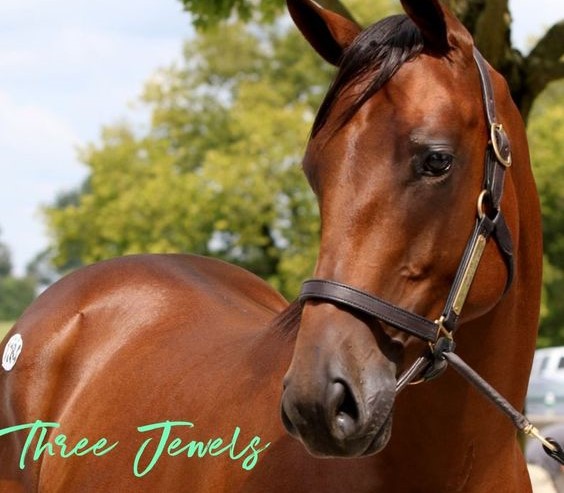
Still alive – as we horsemen are wont to say – is Three Jewels, a colt by the Triple Crown winner, American Pharoah. Last year, he had a small bone chip removed, a common occurrence for young Thoroughbreds. Just the other day, he was diagnosed with bone bruising, another common ailment. He will spend the next 90 days living in grassy splendor in sunny Florida. If he heals properly, he might return to training for a summer debut.
So, I am the part owner of one horse who has run without winning; one that will never run; and one that may run – if he doesn’t run into a fence or other solid object – this coming summer. Discouraged? Not a bit of it. Indeed, I just bought three shares in a handsome two-year-old colt by Candy Ride, an undefeated champion who has sired numerous takes winners, including the new sire sensation, Gun Runner. His name is Secret Crush, no doubt a reference to the on-line game, Candy Crush.
I like the name, and, you know, this could be the one!
Copyright 2023, Patrick F. Cannon




 cannonnadedotcom