
I Wish I Owned a Country!
By Patrick F. Cannon
You’ve probably been wondering why I’ve never written about the proprietors of Saudi Arabia and the United Arab Emirates. I have no excuse, other than lethargy. But something in the Chicago Tribune recently finally got me on my high horse (and those noble steeds will be relevant in due course). One of the lesser known Emirates is Ras Al-Khaimah, whose port has become a refuge for the luxury yachts of Russian oligarchs trying to prevent their seizure. More importantly, the Emirates have also become a safe haven for their money.
The most famous of the Emirates is probably Dubai, home to the Burj Khalifa skyscraper, which tops out at 2,722 feet; and numerous luxury hotels, resorts and shopping centers. They even have an indoor ski hill. All of this has risen from the desert in the last 50 years or so, and is meant to be a hedge against the eventual decline of income from – you guessed it – the Emirates oil reserves. Dubai is owned, and I use that term advisably, by the Maktoum family, whose current head is Sheikh Mohammed bin Rashid al Maktoum. Along with the rest of the Emirati (have I coined anew word?), he has scrupulously avoided criticizing the Russian invasion of the Ukraine.
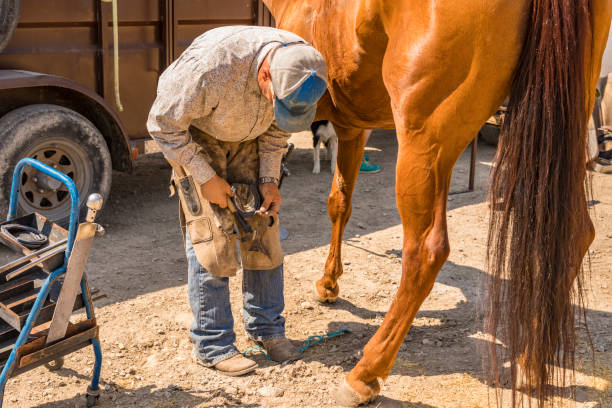
Back in the 1970s, Sheikh Mohammed decided to get involved in Thoroughbred breeding and racing. Since his family owns Dubai and its oil, he had the dough to get in at the top. Beginning in 1977, he began showing up at the Keenland July Yearling Sales, where the cream of Kentucky’s young horses were sold. Ditto the major sales in England, Ireland and France. Since there were Englishmen and Irishmen with deep pockets interested in the same horses, a new Golden Age began for Kentucky breeders. Indeed, the highest prices for yearlings were all achieved in the 1980s.
Not to be outdone, the family that owns Saudi Arabia also got involved in breeding and racing Thoroughbreds. They also hold the world’s richest race, the Saudi Cup, which has a purse of $20 million. It replaced the Dubai World Cup, which has a paltry purse of only $10 million. For comparison, our own Breeder’s Cup Classic only offers $6 million.
In the rest of the world, purses are generally related to nomination fees and betting. The high purses in the Middle East have lured American horses, who would otherwise have done their winter racing in California or Florida, to the sands of Arabia. It’s obvious that American and European breeders and owners don’t care where the money comes from, even when the Saudis still chop off the odd head and hand, prescribe the death penalty for homosexuality, and order the execution of political opponents like Jamal Khashoggi, who was murdered and dismembered in the Saudi embassy in Turkey.
In an obvious PR ploy, the Saudis convicted a couple of dupes, instead of the man who ordered the murder, Crown Prince Mohammed bin Salman Al Saud. He’s the same fellow who earned kudus for permitting women to get driver’s licenses! With the price of oil through the roof, he will be able to buy even more yachts and French estates.
In yet another effort to buy legitimacy, the Saudi Investment Fund, said to total $560 billion, is this very day initiating a new professional golf tour, whose purse is reputed to be $25 million. On the American PGA tour, the average purse is a bit more than $10 million. Oh, and there is no appearance money on the PGA tour; the players are independent contractors. Not so on the Saudi tour.
The highest ranking golfer to deflect for the Saudi dough is former World #1 Dustin Johnson, who reputedly has been guaranteed $125 million for making the move. Just added to the London event is Phil Mickelson, a six-time major tournament winner who described the Saudi’s (please excuse the language, but this is a direct quote) as “crazy motherfuckers.” Not so crazy, however, that Phil is going to turn down a similar upfront payment.
“Everyone has their price,” goes the old saying. The folks who send their horses to Saudi Arabia and the UAE for the big purses, and the golfers who have chosen to play on their new tour, have found theirs. They are thus willing to overlook extensive human rights violations, many centered on legal systems based on the sacred documents of Islam, including the Quran. It’s as if our laws would be based on the Old Testament. Of course, we do have a significant number of our fellow Americans who would welcome it.
P.S. Two of the Saudi-backed golf tournaments in the US will be held at Trump-owned courses.
Copyright 2022, Patrick F. Cannon




 cannonnadedotcom