The Absent-minded Actor

By Patrick F. Cannon

I bet you haven’t thought about actor Fred MacMurrey (1908-1991) lately if you’ve ever thought about him at all. In his day, he was among the most famous of the screen actors; in fact, for several years, he was Hollywood’s highest-paid performer. If he is remembered, it’s usually for his long running television series, My Three Sons, which ran from 1960 to 1972.

            Toward the end of  his career, he was most associated with family friendly films like The Shaggy Dog (1959), The Absent-Minded Professor (1963), and Son of Flubber (1963). His characters tended to be good-hearted, if a bit, as in the title of the movie, a bit absent-minded. In real life, he was a shrewd businessman, who amassed a fortune far beyond his acting income alone. Born in Kankakee, Illinois to a devout Roman Catholic family, he apparently retained a strong faith for the rest of his life. He married the actress June Haver in 1954 after his first wife died, and they apparently had a happy marriage until he died in 1991.

            But it’s the films where he played against type that are still worth seeing and are, in fact, classics.  The first of these is Billy Wilder’s 1944 Double Indemnity. MacMurray plays Walter Neff, an insurance salesman who is lured by a very seductive Barbara Stanwyck into killing her husband for the insurance money. The screenplay was written by Wilder and Raymond Chandler, based on a novel by James M. Cain. Insurance investigator Edward G. Robinson plays Neff’s friendly nemesis. As you might imagine, it doesn’t end well for poor Walter.

            In 1954, he played Navy Lt. Thomas Keefer in the movie version of Herman Wouk’s 1951 Pulitzer Prize winning novel, The Caine Mutiny.  The cast also included Humphrey Bogart as the unhinged Captain Queeg (he was nominated as Best Actor but lost to Marlon Brando). Van Johnson and Jose Ferrer also gave exceptionally fine performances. I won’t go into the plot in detail, but MacMurray’s Keefer instigates a mutiny against Queeg, then denies involvement at the subsequent court martial, letting his fellow officers hang out to dry.

            Finally, he starred with Jack Lemmon and Shirley MacLaine in Billy Wilder’s The Apartment, which won the 1960 Academy Award for Best Picture. MacMurray plays a despicable personnel manager who coerces aspiring executive Lemmon to lend him his apartment to carry out his extra-marital affair with elevator operator MacLaine. It would be difficult to imagine a more unsympathetic character, but he did a convincing job of it!

            MacMurray made more than 100 films in his career, including comedies and westerns. He got lucky with these three, which became classics.  Of the three, he said his favorite was Double Indemnity, in which his character at least generates some sympathy. But he made important contributions in all of them, which you should see if you haven’t already.

            Fred wasn’t Kankakee’s only famous son. It also boasts Harold Gray, creator of the ageless Little Orphan Annie; nor should we forget Kankakee native Geoge Ryan, one of four Illinois governors who have served time in Federal prisons. It also has a great name, rivaling Walla Walla, Kalamazoo, and Ashtabula. And let’s not forget Kokomo, Indiana.

Copyright 2025, Patrick F. Cannon
It’s Out Back

By Patrick F. Cannon

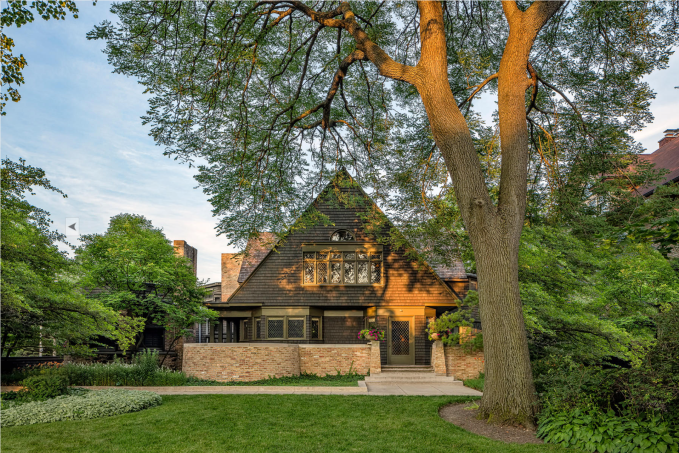
I mentioned in last week’s piece on Bill Bryson that I was currently reading his At Home, which is a story of how private homes have developed over time. As it happens, I give tours at legendary architect Frank Lloyd Wright’s original home and studio in Oak Park, Illinois. It was built in 1889 and added on and changed over the years, with the connected studio added in 1898. It was restored as it was in 1909, after which Wright left his family, closed the studio, and moved his basic operations to Wisconsin.

            The house has indoor plumbing. This is no surprise to visitors until I comment that in 1890, only about one percent of American homes were so equipped. Most homes had an outhouse in the back, above a cesspit. You didn’t necessarily have to trudge out there in all weathers; you could use chamber pots, then empty them outside at your leisure. As usual, it was good to be rich – your servants could do that for you.

Nor does anyone comment on the electric lighting that can be turned on when darkness falls. That same one percent would also have applied to electric light in 1890, mostly in the homes of the rich, who often powered their houses with on-site generators. As it happened, the electric lines reached Wright’s neighborhood in 1891.

            Where did Wright get these new-fangled ideas? Almost certainly from his employers, the architectural firm Adler & Sullivan. The year he built the house was the same year they finished building Chicago’s Auditorium Building, which Chicagoans will know as the home of Roosevelt University and the famous Auditorium Theatre. It was not only then the largest private building in the United States, but a marvel of technology.

            The building encompassed a 400-room hotel; a 4,000 plus-seat theatre; and an office tower (the tallest structure in Chicago at the time). Not only did it have electric lighting – often spectacular in its effect – but the theatre also had a sophisticated air circulation system, which included an early form of air cooling, consisting of massive blocks of ice and blowers! I should also mention that the structure was supported by massive rafts, which floated on Chicago’s spongy subsoil. It was assumed the building would settle 18 inches, which it in fact did. Later buildings would be supported by caissons drilled down to bedrock. Had the bedrock been inaccessible, Chicago’s skyline would be quite different today.

            By 1889, Wright was the firm’s chief draftsman, so would have been responsible for producing the working drawings that made construction of this marvel possible. So, it’s no wonder that he would want the latest technology in his own, more modest, home. Indeed, embracing technology would be a hallmark of his lengthy career. One of his early essays was titled “The Art and Craft of the Machine.”  Another house that embodies these concerns is the famous Robie House, completed in 1910.

            I led tours there for many years, and my partner James Caulfield  and I are currently working on a book on the house, which should be published early next year. The house has a sophisticated lighting system; a pump driven hot water heating system (since replaced with a modern climate-control system); a three-car-attached garage; and even a central vacuum system. By the way, by 1910, only 10 percent of American homes had electricity.  This had only reached 50 percent by 1924, but large areas of rural American were only electrified starting in the 1930s with the New Deal rural electrification programs.

            As to indoor plumbing, as late as the early 1970s, 20 million people in rural America still did without it. I know that because a client of mine at the time was a government-funded program to bring water and sewer service to unserved areas. I quoted that number in a  news release that the New York Times printed verbatim on the front page, albeit below the fold! Anyway, as you wander about your house, keep in mind that the facilities we take for granted were once luxuries enjoyed only by folks like the Rockefellers and Morgans. So, flush with pride (unless you have one of those new toilets that flushes itself!).

Copyright 2025, Patrick F. Cannon

Image of Frank Lloyd Wright Home & Studio, copyright James Caulfield, all rights reserved.

Read Bill Bryson, Please

By Patrick F. Cannon

The dual American/British citizen Bill Bryson is one of those non-fiction writers you can read with real pleasure no matter what captures his fancy. The subjects of his 20 odd books include travel, memoirs, language, science, and history. Oh, and one biography – of William Shakespeare, another notable wordsmith.

            He was born in 1951 in Des Moines. His father was a long-time sportswriter for the Des Moines Register, where his mother was the home furnishings editor. After a couple of years at Drake University, in 1972 he put on his backpack and headed for Europe. He ended up in Great Britain, where he worked for a  time at a psychiatric hospital, where he met his wife Cynthia (she was a nurse, not a patient). They returned to Des Moines so he could finish his degree.

            Back in Britain, he worked for newspapers, including senior editing positions at The Times of London, and the Independent. Some idea of the esteem with which he is held was his election as chancellor of Durham University in 2005, where he succeeded the great Peter Ustinov. He was made an officer of the Order of the British Empire (OBE) in the same year.

            I have now read about half of his books, and plan eventually to read most of them. A good place to start would be with his 2013 bestseller, One Summer: America, 1927, a year in which Charles Lindgerg flew solo across the Atlantic; Babe Ruth hit 60 homeruns; Sacco and Vanzetti were executed; Ford transitioned from the legendary Model T to the Model A; and talking pictures began with the release of The Jazz Singer. It is both interesting and hilarious.

            Another book that has those qualities is 1997’s A Walk in the Woods: Rediscovering America on the Appalachian Trail. By then, he had moved his family back to the United States, and was living in Hanover, NH, home of Dartmouth College. Hanover is near one section of the trail, and, on a whim (of mid-life crisis?), he decided to undertake the 2,000-mile walk.  His wife, understandably dubious (he was 44 years old), didn’t want him to do it alone, so he ended up undertaking the journey with an old friend from Des Moines, Stephen Katz. Their adventures, and misadventures, made for a well-received and popular book, which was later made into a 2005 movie, with Robert Redford as Bryson, and Nick Nolte, perfectly cast as the overweight and out of shape Katz.

            While in Hanover, he also published a series of essays that appeared in London’s Sunday Mail on his experiences of returning to America in I’m a Strange Here Myself.  His friend Stephen Katz also figures in Bryson’s 2006 memoir of growing up in Des Moines, The Life and Times of the Thunderbolt Kid: Travels Through My Childhood,  I’m currently reading At Home: A Short History of Private Life, which, as with most of his books, is both factual and amusing.

            Finally, for you Shakespeare buffs, his biography, Shakespeare: The World as Stage, tells us everything known about that genius, while convincingly putting to rest all the looney theories that claim anyone but him wrote the plays. I recently saw the fine British actors, Mark Rylance and Derek Jacobi, claim that someone like Edward De Vere, the Earl of Oxford, was a better candidate because he was Cambridge educated and more widely travelled. In the end, does it really matter?

            Anyway, reading anything by Bill Bryson is both instructive and a pleasure. He reminds me most of the late E.B. White. Like White, he wrote about language, including books on the differences between American and British English. The next time you’re tempted to pick up yet another thriller or mystery, instead why not read something by one of the greatest current practitioners of our mother tongue?

Copyright 2025, Patrick F. Cannon

Re-Re Districting

By Patrick F. Cannon

Texas Democrats – who like most politicians lack any sense of irony – chose to escape to the poster child for political redistricting (which we like to call Gerrymandering), my own Illinois, to prevent a mid-decade attempt by Texas Republicans to redraw the Congressional map in their state to add more Republican seats in time for the mid-term elections in 2026. They were asked to do this by President Trump, who never takes “no” for an answer.

            Illinois Governor Pritzker welcomed them with open arms. As I recall, when he ran for governor in 2018, he promised to support “fair maps” for Illinois. I gullibly donated my own money to an effort to amend the Illinois Constitution to provide for an independent commission to draw the maps. More than enough signatures were obtained to get this on the ballot, but the Illinois Supreme Court – dominated by Democrats – found a loophole to keep it off.

            At the time, the chief justice was Anne Burke, wife of the since convicted Chicago alderman Ed Burke. But I’m sure the one who whispered in Pritzker’s ear that the maps weren’t his concern was then speaker of the Illinois House Michael Madigan, who has since also joined the ranks of convicted Illinois politicians.

            To today’s politicians, the term “fair maps” can have many meanings, but most would agree it should be a map that gives them the best chance to be elected. That may mean a district that captures the most Democrats or Republicans; or the most blacks; or the most Hispanics (further broken down between Puerto Ricans or Mexican Americans); or the whitest evangelicals. I could make it more complicated, but  you get the idea. The goal is to create so-called “safe” seats, not only for the candidate, but for his or her party.

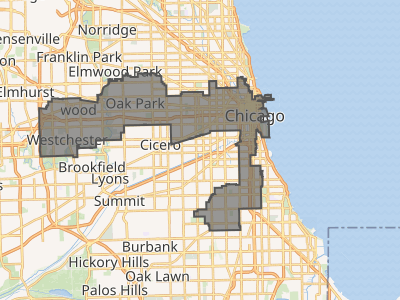
            The map shows the Illinois 7th Congressional District. I live in the district and my representative for many years has been Danny Davis, who is retiring after this term. He is black, and the worthies who have so far announced they would like to succeed him are also black. The district, you see, was designed to capture the maximum number of black voters and thus ensure that it will always be represented by a black. I could show you other maps from the Chicago area designed to capture as many Hispanics as possible.

            Although not all representatives are guilty of this, it does lead to the feeling in many that they are really only representing the part of their constituency that voted for them. A case in point: Republicans representatives have been warned not to have so-called “Town Hall” meetings in their districts because Democrats might show up. The implication couldn’t be clearer.

            One of the ways to get out of this mess is to eliminate all factors except population in creating congressional districts. One of the bedrocks of our democracy is that all men are created equal, and that they are entitled to one vote. Voting rights laws should guarantee only one thing – the unhindered right to cast your ballot. Until we use the computer to create districts based purely on population, many of us have been denied any real choice on election day. Apparently, that’s the way our politicians like it. And we just have to lump it.

            P.S. My regular readers will know about my trials and tribulations as a part (small) owner of thoroughbred race horses. Things are looking up. On Friday August 8, my two-year-old filly Love Like Lucy won her first start at Gulfstream Park in Miani. It was limited to Florida breds, for which there is a lucrative series of stakes races in the coming months. The very next day, my three-year-old filly, Reputation, won the Tyler Gilpin Stakes at Colonial Downs in Virginia. It’s a big deal, because it greatly increases her value as a broodmare when she finally retires. Who knows, someday I may break even.

Copyright 2025, Patrick F. Cannon
Eggstrordinary!

By Patrick F. Cannon

No sooner had last week’s Cannonnade hit the streets (metaphorically) than I got a call from my daughter Beth calling me to account for failing to mention the annual egg toss in my article about the Donnelly family reunion.

            “What in God’s name is an egg toss?” you might reasonably ask. Well, I can tell you that it’s the annual capstone to the reunion. Run for many years by the Eggsalted High Rooster, my cousin Bill Sutman, it consists of couples standing across from each other in a large empty parking lot and tossing a raw egg back and forth until one of them drops the egg. After each toss, the survivors take a step back until the gap is egg-defying. This year, it started with about 30 couples. The last couple standing then must toss the egg one more time to claim the Golden Egg trophy. I may have neglected to mention the event last week because I dropped the egg on the first toss.

            Last Saturday, I had breakfast at a new place with Beth and her husband Boyd. I ordered the house hash topped with poached eggs. There are various methods of poaching eggs. The classic is to drop the eggs in simmering water, laced with a tiny bit of vinegar, scooping them out when done to your satisfaction. Purists will strain some of the watery part of the white out before dropping in the water, but that may be too fussy for you. Poached eggs are a feature of fancy dishes like Eggs Benedict and Eggs Florentine. I prefer them just plopped on a piece of buttered toast.

            There are a bewildering number of ways to cook eggs. Sunnyside up is when you simply break an egg into a frying pan (with some butter, one hopes) and wait until it seems cooked enough. The “sunny” describes the round yellow yolk. Over easy is when you get the willies from even the suggestion that the egg white may be runny, so the egg is turned over to cook the other side a bit. Over medium is when you’re gripped by fright and want to make doubly sure.

            If you’re French and prissy, you can make shirred eggs, which are baked. Coddled eggs are cooked in a container submerged partly in a water bath. Then, of course, there are boiled eggs, where you submerge the whole egg in boiling water until soft or hard boiled. When we were kids, we were often given soft-boiled eggs, served in an egg cup. You lopped the top off and scooped the egg out with a spoon. Everyone has their own method of boiling eggs, which you can find on the internet. A hard-boiled egg goes well with some salt and cold beer. Then, of course, there are the omelets and frittatas, but I can see you’re getting bored.

            Eggs have had an up and down reputation. At one point, they were said to be killers, because they were high in something that zoomed your cholesterol. Sales plummeted. Later, other experts (who are these people?) said, “wait a minute!” they’re high in protein and other nutrients and a couple a day would keep the doctor away (or at least not lurking at your door). A few months ago, egg prices spiked because of the bird flu or some other dread plague. Since I live alone and only eat eggs a couple of times a week, the increase didn’t break my bank. Anyway, the prices seem to be falling.

            One way to beat price spikes is to keep chickens. This has become fashionable in liberal circles, along with planting corn in your front yard. Although I now live a block west in an adjacent community, I lived in Oak Park for 40 odd years. The birthplace of Ernest Hemingway and home for 20 years of Frank Lloyd Wright has been fondly called “the Socialist Republic of Oak Park.” It was an early adopter of backyard chickens, mostly in south Oak Park, which is largely inhabited by the bearded Birkenstock crowd.

            Imagine my surprise when a friend who lives in a tonier (richer) area of the legendary village reported that his next-door neighbors had added chickens to their backyard landscaping. He said you get used to the gentle cackling, and they don’t have a crowing rooster in the brood. Besides, he gets an occasional egg or two.

            Here’s a couple of eggstras. I think it doesn’t matter what comes first, the chicken or the egg. I also wonder who the first human was who broke an egg and decided to take a chance on eating it. He or she should be in the same culinary hall of fame as the human who took a chance on the oyster. Here’s egg in your beer!

Copyright 2025, Patrick F. Cannon

Donnelleys All

By Patrick F. Cannon

I just got back from the Donnelly family reunion, held for many years in Pennsylvania’s beautiful Laurel Highlands, just a 45-minute drive southeast of Pittsburgh. With some mountains exceeding 3,000 feet, and river valleys famous for trout fishing, it is one of America’s great landscapes. Overlooking one of its streams is Frank Lloyd Wright’s Fallingwater, the most stunning home in America.

            On a sadder note, the area is also the location of the Flight 93 National Memorial, which I visited – with my daughter Beth and son-in-law Boyd – for the first time. It’s not easy. I found myself choking up as I looked at the crash site and followed the story of the awful day in the Visitor’s Center.

            The reunion itself was held at the Seven Springs Mountain Resort. In the winer, it’s a ski resort. In addition to the main hotel and associated cabins at the bottom of the ski runs, there are a series of condominiums at the top, whose owners rent them out in the off season. We have held the reunion there for many years (with time out for the stupid Covid pandemic).

            Attendees, and there were about 80 this year (and two dogs!) are all descendants of Frank and Catherine Donnelly of North Braddock, Pennsylvania. They had seven surviving children, six girls and one boy. They produced 20 children. Seven of us are still alive, and all were at this year’s reunion.

            Although the Donnelly’s were Irish, only my mother married an Irish man. My aunts married men named Goldstrohm, Rodgers, Sutman, Ratesic, and Orzulak. My only uncle, Paul, was represented by a granddaughter.

            When I was a little kid, we often had family picnics in Pittsburgh area parks. But the first organized reunion I attended was (I think) 56 years ago. My son Patrick was an infant, and my wife Mary and I  travelled from Chicago in a VW Beetle named Whitey. By then, you could take toll roads the whole way. We stayed with my aunt and uncle, Harry, and Frances Suttman, in Glassport. The reunion itself was held at Renziehausen Park in McKeesport, the city downriver from Pittsburgh where I had gone to high school. We used a roofed  pavilion for meals. Everyone brought something to eat, including fried chicken, potato salad, baked beans, and a big jar of pickled beets and hard-boiled eggs (which turned a nice shade of red). The pavilion was near a ball field, and we were then young and numerous enough to play softball.

            As we got older and more prosperous, we decided to move it to Seven Springs, which not only offered stunning views, but sports facilities, including a testing golf course. We often were able to organize three foursomes, always including my golf-nut brother Pete, who, in addition, was the energetic life of any party. I miss him every day, but his wonderful family lives on, including his wife Mary Beth, herself a golf nut.

            The reunion is a bi-annual event. In the last two off-years, we (my daughter Beth and son-in-law Boyd) have travelled to Pittsburgh and hosted a mini-reunion dinner for whoever can make it. I obviously place immense value in these family events. And I am not alone. When I used to travel on business, more than once I stayed at a hotel that hosted a reunion for black extended families. I found out that these are common. And just the other day, I read an obituary for a former Chicagoan who had moved to Buffalo to teach at a state university. He played host to annual reunions at his summer home in the Chautauqua area of New York.

            Maybe your family gets together on a regular basis. If they are scattered to Chicago, New York, North Carolina, Ohio, Florida, and California, as mine is, it may not be as convenient, but what could be more important than family?

Copyright 2025, Patrick F. Cannon
Doing the Dirty Work

By Patrick F. Cannon

I live in a town of modest homes on small lots. With few exceptions, the lawns are – as you might guess – modest and small. Most owners mow their own grass and otherwise maintain their property. It is quite different in nearby, more affluent, communities.

            If you drive through their leafy streets anytime between April and November, you will likely see at least one landscaping service on every block busy mowing broad lawns, trimming the hedges, and planting and maintaining the showy flower beds. When I owned a home in one of these communities, I also decided to hire out the work and stay cool while others sweated. The landscaping service I used was owned by two men, one with a German name and one with an Italian. The company was large enough to have several crews. All were led by, and consisted of, Hispanics, mostly Mexicans.

            Some of the smaller companies were owned by Hispanics, who had presumably worked for the larger companies and eventually decided to start their own. What could be more American than that?

            Are all those workers here legally? I have no idea. I’m sure some are citizens, either born here or naturalized. Some have the green cards of permanent residents. Others may  work here under legal programs for seasonal workers. And some certainly are here illegally.

Restaurants have similar workforces. It’s no secret that most of the kitchen staff, even in the toniest establishments, are Hispanic.  Almost without exception, the person who busses your table will also be Hispanic. Increasingly, I notice that the servers will be too. And of course, the Chicago area – as with most large cities – has literally hundreds of Mexican restaurants, varying from push carts to full-service establishments. Can I say that Americans are addicted to Mexican food? They must be, because there are an estimated 80,000 Mexican restaurants in the US, about the same number as Chinese. Italian restaurants number about 60,000, and no one really knows how many are owned and operated by Greek Americans. Almost without exception, all depend on Hispanics to stay open.

As many of you know, I own small shares in Thoroughbred race horses (with indifferent luck, I must say). Like most agricultural industries, breeding and racing depends largely on Hispanics for the day-to-day care of the horses. Most of the jockeys are Hispanic. Speaking of agriculture, most fruits and many vegetables are hand-picked by – you guessed it – Hispanics, mostly Mexicans.

At the risk of piling on, most of the people who clean hotel rooms are also now largely Hispanic, as are the ladies who clean my house every two weeks. Various numbers are reported, but let’s say that approximately 11 million people are here illegally. Eight million are from Mexico and other Latin American countries; 1.7 million from Asia; 775,000 from Europe; 180,00 from the Middle East; and 375,000 from Africa. You can blame multiple administrations for letting it happen and thank the Trump administration for slowing it down.

(By the way, does anyone still believe that immigrants, legal or illegal, commit crime at greater rates than we native born Americans? President Trump and his toadies still rail about “rapists and murderers,” despite evidence to the contrary. His “base” loves it though.)

(While I’m in a parenthetical mood, why don’t we hear of mass deportations of illegal immigrants from Ireland, Poland and Canada? Are they too white to be noticed?)

 Do we really want to send them all back where they came from? It seems Trump advisor Stephen Miller would. Trump, as usual, is waffling. Congress probably knows how to make sense of it all but refuses to do so. If Miller has his way and deports the whole lot, we’ll have to suffer the consequences. But maybe it won’t be so bad. For example, I live in a sixty-unit condominium building. If every unit owner is given the responsibility for cutting the grass and trimming the bushes in turn, and considering the growing season at 28 weeks, then my turn would only come up once every two years. And surely, we’ll all be willing to eat only good old American food – at home!  

Copyright 2025, Patrick F. Cannon

An Awful Lot of Coffee From Brazil

By Patrick F. Cannon

Back in 1946, when I was just a wee lad, Frank Sinatra released a recording of a new song by Bob Hilliard and Dick Miles called (I think) “There’s an awful lot of coffee in Brazil.”  As I recall, some of the lyrics went like this:

            A politician’s daughter was accused of drinking water,

            And was fined a great big 50-dollar bill,

            Because there’s an awful lot of coffee in Brazil!

Of course, an awful lot of that coffee was and is shipped from Brazil to us, since our independence from Britain also became an independence from tea. Ever since our future Americans tossed 342 chests of tea into Boston Harbor in 1773, we have largely transferred our allegiance to coffee (except for those who watched too much Downton Abbey and are happy to spend big bucks to have afternoon high tea at fancy hotels).

            I start my own day with 16 ounces of strong coffee. I drink another eight ounces of regular coffee at lunch, then switch to decaf after dinner. Altogether I consume a quart of the stuff every day. When I was a wage slave, I drank even more. Now, coffee packagers rarely tell us where the coffee beans originated, but about one-third comes from Brazil, worth about $2 billion a year. We get a comparable amount from Columbia. The only part of the United States that produces any significant amount of coffee is Hawaii, whose Kona coffee is among the most expensive.

            As it happens, I have long believed that the tariff system has treated us unfairly. A good example is Europe, where many countries – France being a good example – protect their farmers from competition by using phony reasons for keeping our products out. A good example is the ban on Genetically Modified Organisms, the dreaded GMOs. There is no credible evidence that these crops are in any way unsafe (many of our own consumers are guilty of this bias as well). Despite this, they are banned. The real reason? To protect their inefficient farmers from fair competition.

            There are many other examples of unfair trading practices, including government subsidies that support certain industries. The Chinese auto industry is a good example here, and both Europe and the United States should take this into account when setting our tariffs on these products. But what if tariffs are used to punish a government for their internal legal decisions?

            President Trump has decided he can’t abide Brazil’s prosecution of former President Jair Bolsonaro, who is accused of organizing a coup to overthrow the election of his successor, Luiz Inacio Lula da Silva, so he threatened a 50 percent tariff on imports from Brazil, including of course coffee. The reason is not unfair trading practices, but because he thinks the prosecution of his friend Jair is a “witch hunt.”  Does this situation have a familiar ring to it?

            Anyway, if it goes into effect, expect to pay more for your restorative cup of joe. Coffee is a commodity, for which the cost fluctuates based on many factors. As I reported, we get two-thirds of our coffee from other countries, so we probably won’t be paying 50-perent more. But we will be paying more, because the roasters and packagers will be paying the tariffs, and will be passing along these costs to us. Of course, we can be comforted by the fact that all the tariff income will go to the Treasury, just like our income tax payments.

Copyright 2025, Patrick F. Cannon

You Stink!

You Stink!

By Patrick F. Cannon

I think I must have been 12 or 13 years old when my mother suggested I start using an underarm deodorant. In the summer, my brother Pete and I played baseball almost every day, with a bit of basketball thrown in. We both played “midget” football for the McKeesport (PA) “Little Tigers” in the fall. In high school, he concentrated on baseball, and me on football. Although we bathed regularly, we started to have what was then called B.O. (for body odor).

            Once I started using deodorant, I noticed those who didn’t. McKeesport High School was the only one in a city (then) of some 65,000 people. Every social class was included, from the children of laborers to the more favored boys and girls of the upper middle class. If you were in a classroom with 30 of your fellow scholars, there was a kind of background odor, which seemed to lessen as the years passed. I suspect this had something to do with  the rise of television, and the relentless commercials for deodorants and bad breath mints and potions.

            When the Army shipped me off to France in 1961,   I discovered that the average French person hadn’t gotten the message. Not only did body odor permeate the atmosphere, but I was amazed to see girls with hairy underarms, and even the occasional hairy leg! In the good old US of A, you had to go to the hidden hollows of Appalachia or some other place in the back of beyond to find hairy lasses. (Nowadays, not shaving your underarms and legs is a badge of honor for some feminists.)

            Over the years, I have returned to France several times, and over time the natural human smells have all but disappeared. If you watch French TV, you are likely to find the same “personal care” products advertised that one sees here. It makes riding the Metro much more pleasant.

            I mention this because I have noticed that banning underarm odor is simply no longer enough. Several months ago, a perky female doc started hawking a deodorant lotion meant for the entire body. You not only rub it under your arms, but everywhere else, including your “privates.”  By “privates,” I can only assume she means your genitals. Apparently, her product, Lume, was flying off the shelves, because major brands like Dove and Secret have entered the market. Recognizing that men can also be stinkers, Degree provides products for them.

            Speaking of hair, several months ago the “Grey Lady” of journalism, the New York Times reported on yet another personal grooming trend – shaving one’s privates. I checked this out and discovered that there are numerous products available to accomplish this, both mechanical shavers and specialty razors (it gives a whole new meaning to “I cut myself shaving”). I also discovered that there is no medical reason for doing it, just as there is no medical reason for shaving any other hair we seem meant to have.

            On the positive side, making all these products creates jobs here and around the world. And if we banish all human odors, including the stink that emanates from our politicians, it may help us better smell the roses.

Copyright 2025, Patrick F. Cannon

Congratulations!

By Patrick F. Cannon

Proving once again that we’re the most generous people on earth, charitable giving in the United States totaled an estimated $592.5 billion in 2024. Adjusted to inflation, this was a 3.3% increase over 2023.

            A strong economy and stock market no doubt contributed to an eight percent increase in individual giving, and a corporate increase of nine percent. Religious giving declined slightly, although that category remains the largest at about 25% of the total. For example, Catholic Charities in the Archdiocese of Chicago raised $42 million last year.

            Of course, the total doesn’t include the dollar bills we hand to folks at street corners, or (for me at least) at the entry to the local Jewel food store. I keep loose dollar bills in my car’s center console for this purpose. Some people think these folks just use the money to buy booze or drugs. Maybe some do, but I  don’t worry about it.

            In most years, I give about 10% of my income to various causes and organizations. I suppose it’s a variation on the religious practice of tithing. Most people probably do much the same, or even more. On the other hand, many of our new tech billionaires (and some of our old real estate developers) seem loathe to give much away. If they did, that $592.5 billion figure would easily reach a trillion dollars.

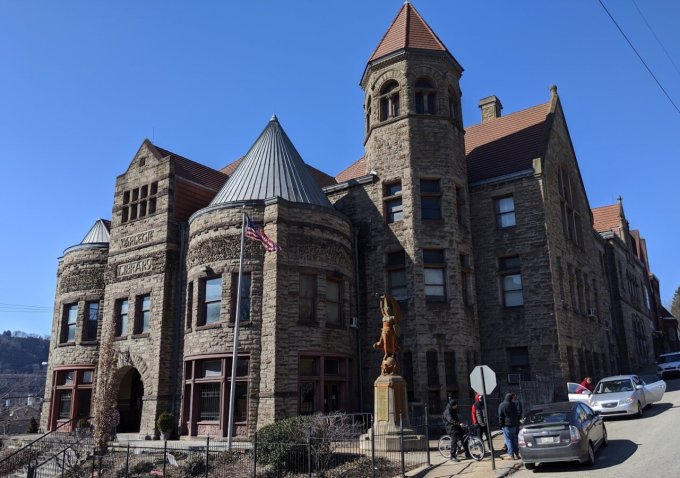
            Bill Gates is a good example of an older techie who is now giving back. The legendary Warren Buffet intends to give most of his fortune away. There are plenty of historical precedents. Those of us originally from the Pittsburgh area will know the name Carnegie very well indeed. Before he sold them all to J.P. Morgan, almost all the steel mills in the Pittsburg area were part of the Carnegie-Illinois Steel Corporation (as were the mills in Gary, Indiana, and Chicago). But even before he sold out, he began to endow the creation of public libraries. The first one was in his home country of Scotland. The first of nearly 1,700 in this country was in my birthplace, Braddock, Pennsylvania. It’s still there, although not much of the rest of the town is.

            The Carnegie name is also on many Pittsburgh’s museums – Art, Natural History, Science, and even the Andy Warhol. Then, of course, there’s the world-famous Carnegie-Mellon University, which brings up the Mellon family of Mellon Bank fame. Among their may contributions is the National Gallery in Washington. Heinz gave the world its best ketchup, but to Pittsburgh they also gave Heinz Hall and  the Heinz History Center.

            Let’s not forget the Rockefellers, Fords, Fields, Guggenheims, Rosenwalds, and many, many more. Some are now characterized as “robber barons.” In our “enlightened” times, we see them as greedy exploiters of their workers. Let’s face it, they weren’t unique in this, just more successful. And unbelievably, they tended to be highly religious. Carnegie was a stern and pious Presbyterian; and Rockefeller a Baptist who help found the University of Chicago and paid for its Rockefeller Chapel; and for the Riverside Church in Manhattan.

            In the Chicago area, I’m a member of and minor donor to many cultural organizations, but their very founding and continued existence has and continues to depend on the financial support of  people with serious wealth. For example, my fellow Northwestern University alum Pat Ryan is funding its new Stadium, but he and his wife Shirley have done so much more. For example, their Shirley Ryan Ability Lab in Chicago is the world’s leading rehabilitation facility.

            So, who knows? Maybe the current iterations of the “robber barons,” including the current occupant, who is determined to make he and his pals even richer, will decide to give some of it away. I’m not holding my breath though.

Copyright 2025, Patrick F. Cannon