Kindred Spirit

By Patrick F. Cannon

It’s rare to find someone who shares my taste and ear for music; rarer still when he’s 30 years younger than me and has a column in the New York Times. His name is John H. McWhorter. When not writing for the Times and other publications, he’s a linguistics professor at Columbia University in New York.

            He’s black, and much better known for his opposition to quota systems, and for holding the belief that African Americans should abandon victimology and separatism, and that affirmative action should be based on class, not race. You can see why these views may not be universally admired , but it’s his views on music that caught my attention.

            Like me, his ear isn’t attuned to today’s popular music, although he concedes that doesn’t make our shared taste in music superior (he’s more forgiving than I am). Coincident to reading his column on how people hear music differently, I started listening to a CD that I’d had for some time, but somehow overlooked. It was still in that plastic wrap that’s so difficult to get off. The title? Stephane Grappelli Plays Jerome Kern.

            Grappelli (1908-1997), born in Paris, was that rare bird, a jazz violinist. He is often associated with the Roma (Gypsy) guitarist Django Reinhardt, his co-leader in the famous Quintette du Hot Club de France. You can find their recordings together and separately on the internet. You can also discover or rediscover Jerome Kern (1885-1945).

            Along with  George Gershwin, Irving Berlin, Cole Porter, Duke Ellington, Richard Rogers, Leonard Bernstein, Frank Loesser, Stephen Sondheim, and (add your favorite), he was one of the composers who defined American song for much of the 20th Century.

            He is credited with composing about seven hundred, mostly for Broadway shows and movie musicals. Unlike Berlin, Porter, and Sondheim, he didn’t write his own lyrics. They were supplied by luminaries like P.G. Woodhouse, Dorathy Fields, and Ira Gershwin. Of the dozens of Broadway shows he did, only Show Boat is still occasionally performed. And you Fred Astaire/ Ginger Rogers fans will remember Swing Time, one of the best of their ten movies.

            Grappelli plays “Can’t Help Lovin’ Dat Man” and “Old Man River” from Show Boat, and “The Way You Look Tonight” from Swing Time (for which he got the Academy Award). Other songs on the album include “Smoke Gets in Your Eyes,” “A Fine Romance,” “All the Things You Are,” and a special favorite of mine, “Long Ago and Far Away.” It was sung by Gene Kelley and Rita Heyworth (maybe dubbed in her case) in 1944s Cover Girl. If you look online, you can find that version, and Jo Stafford’s, which was a big hit for her.

            These are the kind of songs that fit my ear, along with the works of Bach, Mozart, Beethoven, and Schubert. The thing all these great composers had in common was that they had to write music to eat and pay the rent. They had to please the public, not some foundation or university. In this regard, although their music might not fit my ear, performers like Taylor Swift and Beyonce earn my respect, because they work hard to know and please their fans. Of course, I can’t lend them my ears.

Copyright 2024, Patrick F. Cannon

Night Light?

By Patrick F. Cannon

Fellows of a certain age will know that sleeping through the night is the province of the young. I can still vaguely recall groggily arising at around noon on a Saturday (or any day when school was out for that matter). As we get older, however, nature begins to send urgent messages that a trip to the bathroom might be prudent about halfway through our journey through the land of nod.

            I soon decided that walking into walls and stumbling over impediments in the pitch dark on my way to the bathroom was annoying, so I installed a night light in my bathroom (which is directly connected to my bedroom, or “en suite” as the French might say, but rarely do). It used one of those same little bulbs that one finds on Christmas trees. It worked with a switch that I turned on just before I headed for my bed. If I had to get up during the night, it provided sufficient light to permit safe passage.

             As with all old-fashioned bulbs, it would eventually burn out. Being prudent, I always had a supply of replacement bulbs. Recently, however, the bulbs began to burn out with more frequency. When one burned out within a week, I surmised that the culprit wasn’t the bulb, but the fixture. Apparently, the little wires inside had gotten jiggled about in some unfortunate way. Now, instead of calling an electrician, I decided a new light would be more economical, so went online to find a replacement.

            I found a dizzying array of them online. If you fancy puppy dogs, you can find a night light that sits up and begs when it comes on; or looks like a stained-glass window; or a bowl of flowers. I chose a plain one, or rather, two, since it was almost impossible to buy just one of anything these days. In the end, I went for simple but elegant from General Electric. When they arrived, I was not surprised that they  were made in China. I installed one in my bathroom and the other in the second bath, which is used mostly by guests. It was then that I noticed something strange, even eerie, about them.

             They don’t have a switch. When you turn the regular light off, they come on. I can’t help but get the feeling they’re watching me. As I switch the regular light off, the night light comes on immediately. How can that be? Is there someone in an underground complex in Beijing who’s watching me? You may scoff. How, you ask, can a small night light beam a constant signal across thousands of miles of ether. I need only remind you that the cell phone in your hand can do what vast room-sized computers once did. Why is it not possible for one of the billions of Chinese not otherwise occupied in sewing your next shirt to spend his or her day keeping track of Americans like me through their night lights?

            I was once part of America’s vast security apparatus; perhaps that’s why I was chosen for monitoring. Whatever the reason, I try to enliven my watcher’s day by making funny faces or telling jokes in a phony Chinese accent. Of course, if I were on TikTok, they wouldn’t have to resort to the night light ploy. And were I you, I’d be checking to see where my night light was made.

Copyright 2024, Patrick F. Cannon

Pay As You Go!

By Patrick F. Cannon

I know I’ve harped on this theme many times over the years, but now that I’m running for president, I want to yell it loud and clear: we owe too much money! we need to balance the budget!

            I am reminded of Wilkins Micawber’s famous statement in Charles Dickens’ David Copperfield: “Annual income, twenty pounds, annual expenditure nineteen and six, result happiness. Annual income twenty pounds, annual expenditure twenty pound ought and six, result misery.” So why aren’t we and our politicians more miserable?

            Because we’re all numb, that’s why. How many times have we heard these lame excuses?

            “We need to stimulate the economy! We’ll cut back when things get better.”

            “Lower taxes mean more money to invest and thus more jobs.”

            “The American people won’t stand for any tax increases!”

            “Most of the budget is set in stone. We can’t cut Social Security, Medicare, and Medicaid, can we? After all, they represent two-thirds of the budget!”

            Blah. Blah. Blah. Conceding that one can bend statistics to one’s will, the top income tax rate in the period 1945-1963 was 91 percent. In 1956 the GDP growth rate was 7.1 percent. In the period 2018-2022, the top rate was  37 percent. In 2019, GDP growth was 2.5 percent. The last years we had budget surpluses were 1998-2001. The most precipitate deficit increases came after the 2017 tax decreases. If this trend continues, it won’t be long until the annual cost of paying the interest on our debt will reach one trillion dollars! I remember when billions seemed scary.

            During my first one hundred days in the office, I would try to accomplish just a few things. I would increase the top income limit for the payroll tax from $168,600 to at least $500,000. As a reminder the payroll tax is supposed to fund Social Security and Medicare. For Social Security, it’s currently 6.2 percent each for employee and employer. The Medicare tax is 1.45 percent, but there is no income limit for it. In addition, I would do everything I could not to extend the 2017 tax decrease beyond its 2025 expiration date.

            Next, I would try to get my pet project of consolidating all anti-poverty programs adopted. As faithful readers may recall, this would provide a single payment to replace the earned income tax credit, food stamps, housing assistance (and any other programs that have slipped my mind). It would also get rid of busy-body bureaucrats who decide eligibility and what recipients can spend the money on.

            I would initiate a new energy program called “We’re stuck with fossil fuels for a long, long time, so  get used to it.” Electric cars need – wait for it – electricity! So do electric houses, electric lawnmowers, and all those phones and other gizmos we can’t seem to live without. If all  that stuff were to be powered by wind or sun, the wind turbines and solar panels would need so much space there would be no room left for the buffalo to roam. That doesn’t mean that we couldn’t do away with fossil fuels eventually, but saying we could do it by 2050 is a pipe dream.

            Finally, I would promote a balanced budget amendment to the Constitution. Some states have one, and some amazingly make it work. And once I get all this done, I’ll start teaching pigs how to fly.

            Oh, and one more thought. Last night I saw one of those commercials for a debt relief company – you know, the kind of outfit that tries to negotiate with your creditors to reduce your debt. If they can do it for John Doe, how about Uncle Sam?

Copyright 2024, Patrick F. Cannon

Going Big!

By Patrick F. Cannon

It’s not enough to “throw your hat in the ring” and run for president of the United States – as I did last week – you must back it up with a program and vision for the country. Now that the drama of the Kentucky Derby is over (I picked the loser as usual), I have been able to devote several hours to specific initiatives that will stir my fellow Americans to trust me with their vote.

            While I won’t bore you today with my total vision – I’ll do that in future weeks – I thought it would be a good idea to look to the past for inspiration. Franklin Delano Roosevelt (FDR of legend) promised a “New Deal” in his 1933 inaugural address. Not to be outdone, Harry Truman promised a “Fair Deal” in 1948. Jimmy Carter had the “Bad Deal’; and LBJ the “Back Room Deal.” More recently, Donald Trump has given us the “Me Deal”; and Joe Biden the “Old Deal.”

            Amazingly, none of them has done the obvious and given you the “Big Deal!” Except me, of course. My inspiration is the great Chicago architect and chow hound Daniel Burnham, who famously said: “Make no little plans. They have no magic to stir men’s blood. Make big plans: aim high in hope and work.”  This was the man who gave us the 1893 Columbian Exposition in Chicago; and the great Union Stations in Chicago and Washington, D.C. He stirred my blood, I can tell you! In his honor, I’m naming my first great idea “The Burnham Plan.”

            Like me, I’m sure you’ve noticed that electric car charging stations are popping up in parking lots and garages around the area. I first noticed this trend in Chicago’s Grant Park underground lot. Just the other day, I spied two stations in the parking garage at the Oak Park Public Library. Since the lot was otherwise full, I was tempted to take one of them for my gas guzzler, but I was afraid of being shocked with a parking ticket (ha ha). Anyway, these thousands of stations around the country got me thinking. Why can’t we electrify our roads? That way, simply driving along would recharge those batteries!

            You’re probably thinking “Cannon’s gone nutsy again!” How could such a thing be done? It came to me during a commercial for an otherwise ugly couch whose arms can charge your phone while you’re watching “Prancing With the Stars.” And I’m sure you’ve seen those gizmos that charge your phone, tablets, and other devices by simply placing them on the surface (I must get me one of those – I still have to plug my stuff in).

            But what about the cost? It would be minimal. As we are all too painfully aware, every year a high percentage of our vaunted Interstate Highway system is under reconstruction. In 10 years, I bet the shole shebang gets repaved or rebuilt. What a perfect time to imbed charging cables in the roadbed! We could even power up the system by lining the roads with solar panels and/or wind turbines (which could be decorated for the Holidays)! Even folks with regular gas-powered vehicles would benefit, since their phones, tablets, key fobs – even their 12-volt batteries – would get charged too!

            After we finish the Interstate, we could start on the state and local roads and streets. Heck, people could even power up their driveways! Before you ask how we’re going to pay for this electrifying idea, we would continue to collect the gas tax, and add a new tax on electricity. And let me lay to rest right at the start the fear that we might be subject to electrocution while driving along. I say it’s worth trying. After all, we’d never get anything done in this country if we worried about unintended consequences!

Copyright 2024, Patrick F. Cannon

My Hat’s in the Ring!

By Patrick F. Cannon

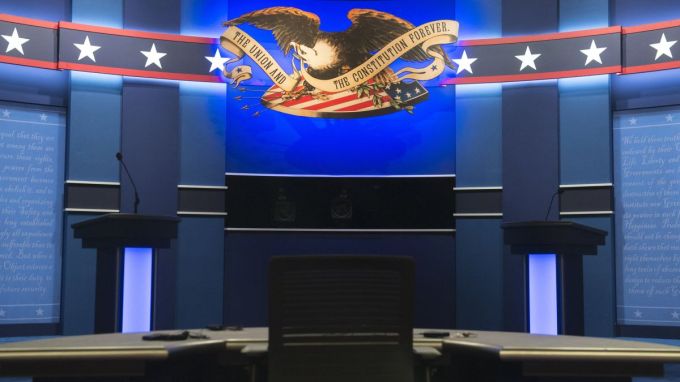
After not-so-sober deliberation, I have decided to throw one of my hats in the ring and run for president of our beloved United States! I haven’t yet decided which hat to toss. As it happens, I own quite a few.

            Three are from Hanna Hats of Donegal, Ireland. One has a brim; the other two are the classic caps one sees most often on Irish heads. As a member of the United States Golf Association (USGA), if I pay my dues, I get that year’s US Open cap. Not sure how many of these I have; most are in the trunk of my car along with my golf clubs. I also have a Pirelli cap, a gift from my son. We share an interest in Formula I auto racing, and Pirelli is the tire supplier for the series. It’s a bit snazzier than most, with gold leaves on the bill!

            Aside from having so many handsome hats, you may wonder what other qualifications I might have to run the free world. Experience for one. I’m already older, at 86, than President Biden will be at the end of his second term (assuming he’s even elected!). And that Trump fellow is even younger! Also, I’ve served my country in the armed services, unlike my draft dodging opponents.

            I’m also more than happy to share my university transcripts with the voters. While Northwestern University couldn’t release them as a matter of law, I have a copy of  my own that I would happily share if my opponents would do the same. You’ll find that I did well in the courses that interested me, and not so well in those that didn’t. If the biologists refuse to vote for me, I’ll have to live with it.

            I’m also willing to take a cognitive test if my opponents do the same. In fact, let’s do it in public! We could get Ken Jennings from Jeopardy to do the questioning, with all  the networks preempting their regular programming to cover it. I’m sure Trump would relish the opportunity to prove he’s the genius he’s always claimed; and President Biden would welcome the chance to prove he’s up to serving four more years.

            As the president’s health is always a concern, I’ll be willing to share my complete medical history. Up front, I’ll admit to taking medications for cholesterol and high blood pressure, but I’ll authorize my doctors to release everything they have in detail, not the “he’s really healthy” we get from their docs.

            Although “body shaming” is a no-no these days, I feel I must mention that Trump is rather portly, as am I. He recently claimed to weigh in at 215 pounds. Although I hit the scales at 245, I do appear a bit lighter than he. My guess he’s closer to 270, but then he’s always had his own truth. Poor Biden looks like he could use a good meal.

            Not that it matters much, but I have all my real, original hair, and it’s not dyed. As you may recall, Biden had hair transplants; and I’m not sure how I would characterize Trump’s amazing “strawberry blonde” hairdo (and matching skin color).

            Finally, we’re all golfers. Not sure what Biden’s game is like, but Trump claims to have won the club championship at the club he owns. I have never won a club championship, since I don’t belong to a country club, but I once had the low net at a Lions club golf outing. Oh, and I don’t cheat.

            Can I count on your vote?

Copyright 2024, Patrick F. Cannon   

Useless Knowledge?

By Patrick F. Cannon

I’m currently reading a book about the 1945 treason trial of Marshall of France Phillippe Petain, who urged in 1940 that his country negotiate an armistice with Germany, and then led the so-called Vichy government in unoccupied France until the Allies liberated the country in 1944.

            The book explores how the “hero” of the Battle of Verdun in 1916, and the Commander-in-Chief of all French armies when World War I ended in 1918 – and became a Marshall of France and a member of the French Academy as tokens of his country’s esteem – ended up in a Paris courtroom charged with betraying the very country that had honored him. Why should I care?

            My interest in French history is an outgrowth of my spending from June 1961 to July 1962 in the French Atlantic-coast city of LaRochelle, courtesy of the United States Army. I am forever grateful to Uncle Sam for sending me there instead of Alaska, or South Korea, or Eritrea. It is now a World Heritage site, designated for its historic medieval harbor fortifications and charming central city. It was bypassed during World War II, as it had no strategic value, its port being too small for modern shipping.

            As it happens, my time in France coincided with the return of Charles De Gaulle to power, the granting of independence to Algeria, and the revolt of officers in the French army stationed in Algeria who opposed it. Because of the unrest, I learned to my dismay that Paris was off limits to US service personnel (the ban was lifted by the end of the Summer, thank God). In addition to finally visiting Paris, I was able to spend time in Orleans, Potiers, and Saint-Nazaire; and eat a lot of really good food, and drink great (and still cheap) wine.

            This spurred my interest in French history. Most of us are aware – or should be – that it’s unlikely that we would have prevailed in the Revolutionary War without French money, soldiers, and ships. We were France’s allies in World Wars I and II. And who can forget the American Colonel Stanton uttering the famous phrase “Lafayette we are here” when he arrived on French soil in 1917 with the American Expeditionary Force to help save France as they had once saved us.

            A deeper study of French history gave me insight into the more ambivalent relationship they have had with the English. It was the French William the Conqueror who gave English King Harold one in the eye in 1066, starting a series of wars that ended only at Waterloo in 1815. Briefly, the English ruling class always thought they owned France too, so kept going across the English Channel to stake or re-stake their claim. Agincourt is only the best known of 750 years of intermittent wars.

            It is against this historic background that back in the 1990s, my wife Jeanette and I were in Paris and decided to take the fast TVG train down to La Rochelle – a trip down memory lane if you will. We had a fine old time visiting my old haunts. One day, we were poking around a shopping arcade when we came upon an art gallery which, among other things, had a series of original watercolors of La Rochelle scenes. One caught our eye – it now hangs in my dining room – and we tried to get the attention of the salesperson, who was studiously ignoring us.

            Finally, I was driven to say something like “pardonne moi, can you help us?” For a moment, he looked startled, then brightened and said “You’re American! I thought you were English.”

            Typifying the attitude on the other side of the Channel, I recall watching a program on the construction of the Channel Tunnel, now usually known as the Chunnel, I have since gone though it on the Eurostar train from London to Brussels. While it was under construction, citizens on both sides of the Channel were asked their opinions about its potential worth. Most were more or less enthusiastic, except for an elderly Anglican vicar in a village near the entrance on the British side, who when asked whether he was glad to be able to get to France so quickly, responded “why would anyone want to go to France?”

            But what of Marshall Petain? Any amusing lessons there? His country turned to him when France was on the verge of total defeat by Nazi Germany in June 1940. He was 84 and had always been a pessimist. He was on trial for treason in 1945 not only for negotiating an armistice with the enemy, but for collaborating with them. An example – the rounding up and deporting of France’s Jewish citizens, most of whom died at Auschwitz. He was convicted and sentenced to death. The sentence was commuted to life in solitary confinement. He lived on until 1951.

            Many of his associates weren’t spared. The infamous Laval was shot, and others were shot and even guillotined for betting that Hitler would ultimately prevail. In this case, the joke was on them.

Copyright 2024, Patrick F. Cannon

Stop and Smell the Gators!

By Patrick F. Cannon

Although they may be dwindling, America’s roadside attractions still demand your attention as you tool along the  backroads of our great and goofy country. Books have been written about the more compelling, but I have personal experience of only a few. I find that often you find them on the day after you’ve visited a famous attraction like Disney World or the Mammoth Caves and have time to spare. It’s usually raining.

            Although I can’t exactly recall where in Florida it was, I once spent an hour I’ll never get back at some kind of shell museum. I can only tell you that there are numerous varieties of seashells; and that you can string them, frame them, and otherwise arrange them in a bewildering variety of ingenious displays. After a few agonizing minutes, they make you wish they would all return to the waters whence they came. Florida is also the home of the Gatorland Zoo and Jumperoo! It’s in the Orlando area, conveniently close to Disney World.

            My children were young when we visited, and to this day I’m sure they count it among their most cherished memories. You entered through a Gator’s maw to pay your fee and enjoy a gift shop chockful of Gator-themed stuff, including toys, models, key chains, tee shirts, and cute stuffed Gators looking for their next meals. Speaking of meals, a highlight of a visit is feeding time. You sit in a grandstand with other families; many look like they came out of the cast of Deliverance.

            On a platform over the water, an employee dangles (dead) chickens on a pole, whereupon a gator will “jump” and grab the chicken (no doubt raised hormone and antibiotic free). Gators can’t really jump – praise the Lord – but rear up on their tails. Because their tail is under water, it does look like they’re jumping for joy. To be fair, Gatorland is also a nature reserve, with a little train to take you to see Gators (and Crocodiles and Caimans) in a more or less natural setting. What these Crocodilians (scientific terms) have in common is they’ll all happily eat you given a fair chance.

            On another family trip, this time to Kentucky, we visited the Mammoth caves, then went on to thoroughbred horse farms in Lexington. At Spendthrift Farms, we saw Triple Crown winner Seattle Slew, who might have bitten off my daughter Beth’s hand had she not been warned off by a frantic farm employee. On one of those rainy days, the only indoor attraction we could find in the area after visiting the caves was a biblical wax museum.  

            If you’re inclined to see a wax figure of Moses carrying the Ten Commandments, I find that these days you can find biblical museums in many locations. There’s the Museum of the Bible in DC, funded by Steve Green of the Hobby Lobby family. The Creation Museum in Kentucky (lots to see in Kentucky!), and its sister attraction, a recreation of Noah’s Ark, will do their best to convince you that the Earth is only 6,000 years old, Darwin and geologic evidence be damned!

            Recently reading Richard Ford’s novel, Be Mine, reminded me of two attractions I could have easily seen, if I had been inclined to drive west for a few hours from Albert Lea, Minnesota, where I lived for two years in the late 1960s. In the book, a father and his son – who has ALS and is dying – travel from the Mayo Clinic in Rochester to Mount Rushmore in South Dakota. Along the way, they visit Wall Drugs in Wall; and the Corn Palace, in Mitchell, South Dakota. I saw signs for both (“only 200 miles to Wall Drugs!”) many times as I drove in Southern Minnesota. I regret not driving the few hours to these still-famous attractions.

            To be honest, though, my greatest regret is not driving a mere twenty miles east of Albert Lea to Austin to visit the Spam Museum at the headquarters of Hormel Foods. Then again, maybe it’s not too late. And then there’s the beer can house in Houston, the only reason I can think of to go back to that otherwise dull city.

Copyright 2024, Patrick F. Cannon

Our Nonsensical Government

By Patrick F. Cannon

I keep hoping the country will come to its senses. Alas, it’s so divided politically that any hopes I may have once had now seem almost fantastical.

            It may come as a surprise that most of our problems are solvable. For example, we came remarkably close to at least improving the immigration problems at our southern border, but former President Trump decided to keep it as a campaign issue, issued a decree to that effect, and that was that. In general, the Republicans in the House of Representatives have adopted “tit for tat” as their fiscal policy. If you want dough for Ukraine, then you must make a corresponding cut somewhere else to pay for it.

            This is not a coherent fiscal policy. Nor is one that makes half-hearted efforts to keep the national debt from rising too fast. Every once in awhile there is a sincere effort to confront the mess. I am reminded of the Grace Commission, established by President Reagon in 1982. (By the way, Reagan used the term “drain the swamp,” which has become the rallying cry for MAGA Republicans.) Chaired by J. Peter Grace of W.R. Grace & Company and released in 1984, the report made specific recommendations, which, predictably, were widely ignored. At the end of that fiscal year, the national debt reached $1.57 trillion. On September 30, 2023,it had risen to $33.1 trillion.

            This is what the 2023 number looks like: $33,167,334,044,723.16 (I wonder who we borrowed the sixteen cents from). The last time we had a Republican administration the debt increased by $6 trillion; and the current Democratic administration is determined to at least match that. And it is estimated to cost $870 billion just to pay the interest on the debt this year.

            I’m a financial ignoramus but let me personalize this. Say you have an income of $100,000 a year. You have a mortgage, car payment and an assortment of other bills which your income doesn’t quite cover. But you also have $100,000 in accumulated college loan and credit card debt, for which you can only make the minimum payment. Unless you can find a way to reduce your regular expenses, the possibility of paying off that debt is zero.

            For the entire country, the national debt has risen to 123 percent of our gross domestic product. In 1980, it was 31 percent; in 1990, 56 percent; in 2000, 54 percent; and in 2010, 64 percent. Even economists who used to pooh pooh worrying about carrying debt are beginning to worry. And although we’re not economists, we know debt like this is unsustainable.

            We also know that there are only two ways out of this mess – increase income or lower expenses, or, ideally, both. What are we to think of a Congress that lowered the tax rate in its most recent effort to  solve the problem? And has passed budgets that increased expenditures from $3.8 trillion in 2106 to an estimated $6 trillion this year. Way to go, guys and gals!

            Here’s the thing. None of us really knows the actual scope of the Federal government. Do you really know what the Department of Agriculture is doing? A famer might have an inkling, but what about you? How about the Department of Education? Since actual schools are funded and controlled locally, just what have they been doing since they were created in 1979? What do they spend their $84 billion budget on? What does the Department of Commerce do with the $68.5 billion they want to spend this year? If they can’t even issue a passport promptly, what is the Department of State going to do with its $63.1 billion? You don’t know, do you? I know I don’t.

            Thank God we have some state and local governments who manage to balance their budgets (sometimes because they’re required to by law). This even though Federal mandates like Medicaid add to their burdens. Why doesn’t the Federal government have a balanced budget amendment? Ask your senator or congressperson. I know you’ll enjoy the response if you get one.

Copyright 2024, Patrick F. Cannon

A Long Journey Indeed!

By Patrick F. Cannon

On a whim, and with enough time on my hands, I decided to watch a filmed version of Eugene O’Neill’s Long Days Journey into Night. O’Neill, who was awarded the Nobel Prize for Literature in 1936, based the play on his own family, which was notably dysfunctional. With a running time of 174 minutes, dysfunction gets its full due. Written in 1941, it was not performed on stage until 1956.

            Released in 1962, the film version stars Katherine Hepburn, Ralph Richardson, Jason Robards, Jr, and Dean Stockwell. All, of course, are long gone. Hepburn needs no introduction, and Robards is perhaps best remembered for playing Ben Bradlee in All the President’s Men. Richardson was an English actor of the same generation as Lawrence Olivier and John Gielgud, but less well known in this country. Dean Stockwell, who played the youngest son, based on O’Neill himself, had a long career on both stage and screen before his death in 2021. Then, a glutton for punishment, I decided to watch another O’Neill classic

            The Iceman Commeth – written in 1939, but first produced in 1946 – runs a full four hours! The version I saw was released in 1973. Its cast included Lee Marvin, Robert Ryan, Fredric March, Bradford Dillmann, and Jeff Bridges (the only one still with us); and a wonderful group of character actors you’ll recognize without quite remembering their names. All are great, but I would signal out Robert Ryan – from a noted Chicago family – for his performance as a disillusioned anarchist (the play is set in 1912).

            The location is Harry Hope’s (played by March) New York saloon, populated with a group of drunks and prostitutes, each living with his or her set of illusions. They are awaiting the annual arrival of Theodore “Hicky” Hickman, a travelling salesman who comes to celebrate Hope’s birthday, and who not only has great stories to tell, but buys the drinks! This time, he’s sober and bent on exposing everyone’s “pipe dreams.” I’ll leave it at that. You’ll have to watch it to see what happens.

            What struck me as I watched these filmed versions was how few of our more famous American actors ever take on these classical roles. It is as if a classical pianist never tested him or herself by playing the Beethoven sonatas. A notable exception is our greatest actor, Denzel Washington, who played Hickey in a 2018 Broadway production; and who has also taken on Shakespeare on several occasions. Another was Kevin Spacey, who has been blackballed for his alleged sexual misdeeds, for which he has never been convicted (he should run for president). Although not “leading man” types, the late Brian Dennehy, and Stacy Keach, both distinguished themselves in classic roles. And I should add Alec Baldwin as an actor unafraid to step on a stage.

            Most of our actors apparently don’t have the urge to test themselves, as the British do, in the great classic roles, whether Shakespeare, O’Neill, Williams or Miller; just as our singers prefer to sing their own songs instead of classics like Gershwin, Porter, or Berlin. It’s a pity, really. Actors like Tom Hanks or Leonardo DiCaprio are certainly capable of taking on Hickey in The Iceman Commeth. They could certainly afford to. Are they afraid to test themselves against the past? Or is it just easier not to?

Copyright 2024, Patrick F. Cannon

On Being Ignored

By Patrick F. Cannon

I’ve been doing this blog since the Fall of 2015 and haven’t missed a single week. In case you’re interested, that’s 435 weeks in a row. I keep doing it despite  realizing that my opinions don’t seem to have gained much traction.

            For example, I have several times expressed my distaste of tattoos. Yet, everything I see tells me that they’re more popular than ever. I should have known I was losing ground when they started being called “body art.”  Since I have yet to see a tattoo that enhances a person’s appearance – quite the opposite, in fact – I can only take satisfaction in knowing that as they age, the tattooed ladies and gentlemen will regret their decisions as their skin inevitably turns into wrinkled paper, and the now bright colors fade  into indistinct blurs.

            Speaking of art, I’m afraid the definition thereof now includes anything that someone claims it to be. For example, if I were to blow my nose whilst strolling jaunty jolly along a sidewalk and toss the tissue away; and were someone to yell at me, I could claim it was my artistic comment on our throwaway society. Who could object in this world where giant metal balloon animals sell for tens of millions? Alas, my making fun of it has only caused prices to rise! And I get no thanks!

            My espousal of classical music and the Great American Songbook (Berlin, Porter, Gershwin, etc.) has fallen on deaf ears – literally deaf from listening to over-amplified guitar riffs. Whatever happened to the singer whose talent didn’t need dancers and light shows to distract an audience? When did the lyrics become irrelevant? Where is it written that you must write your own songs, even if they’re mediocre? Another of my lost causes.

            So, apparently, is Donald Trump. Recent polls have shown him ahead in the president’s race, despite the fact that  he’s a lying, cheating, bigoted, and dishonest sociopath (and that’s just scratching the surface). I’m certainly glad I’m not on his bad side. Those who have annoyed him have had their lives threatened by the crazies who respond to his tirades as if coming from the Almighty. And speaking of the Almighty, there are even some religious folks who literally believe Donald has been sent by God to clean out the temple (Washington).

            His baleful influence has resulted in a Congress that has passed fewer laws than any since the Great Depression. The House of Representatives has become a bad joke. Several Republican members have resigned in disgust, making the party’s hold on power even more tenuous. Their tireless efforts to prove that “Crooked Joe” has enriched himself in the public trough have come to naught. And blaming poor Joe for all the rest of our ills – and there are many – gives him way too much credit!

            As a natural conservative, I find this year’s apparent choice (I hold out hope it might change) highly depressing. I frankly don’t want to vote for either Trump or Biden. I console myself that I’m not legally required to make a choice. I can either just vote “down ballot” (if I can find candidates worthy of a vote), or perhaps write in someone like Mitch Daniels or John Kasich, who are, in my definition anyway, actual Republicans.

Copyright 2024, Patrick F. Cannon