On Being a Sardine

By Patrick F. Cannon

Thank God I don’t have to fly much anymore. Just got back from Tampa on a visit to my son Patrick, and it was the usual uncomfortable experience. Small seats, no legroom, full flight, crumbly cookies, narrow aisle – well, if you fly, you know it’s no fun. Thankfully, it was only a two-and-a-half-hour flight, and it was on time.

            Look, I understand economics. The airlines want to get as many seats as they can on their airplanes. The Federal government regulates them and could theoretically mandate larger seats with more leg room, but they have to balance that against this: “fewer seats, higher fares.” The resulting equation means OK comfort for someone 5 feet 3 inches, weighing 130 pounds, but torture for me at 6 feet 2 inches and 240. The reality is that my knees touch the seat in front of me. And, to add to the torture, you’re not allowed to get up and stand in that narrow aisle, once a Godsend on longer flights.

            If you’re old enough, you can remember better days. I flew commercially for the first time in 1956, when I moved from Pittsburgh to Chicago after my mother died. As I recall, the plane was a two-engine turboprop, and we landed at the newly-opened O’Hare. Over the years since, I have been on just about every commercial craft then flying, starting with the legendary DC-3, which took me from Nairobi, Kenya to a dirt landing strip near a game park.

            My first time in the air was in a Piper Cub, piloted by an employee of my father, who had been a World War II pilot. I have no idea where the little airport was, but it must have been a southern or western suburb of Chicago. I have also been up a couple of times with my pilot son in a Cessna 172. The only other single-engine plane I can recall flying in was one the US Army used for courier service in France. As I recall, it had a radial engine and could accommodate six passengers. Also in the Army, I flew from Augusta, Georgia to McGuire Air Force Base in New Jersey – enroute to the ship that would take me to France – in a Lockheed Constellation. Early in my post-Army career, I also flew in its piston-engine competitor, the Douglas DC-7.

            My first business flight was in 1963 from Chicago to New York for an orientation session with my new employer, the Union Camp Corporation. We flew in a Sud Aviation Caravelle, a twinjet manufactured in France. Get this! It was all first-class, and only male passengers were permitted! We were served cocktails and steaks by young and comely stewardesses (still called that in those pre-politically correct days).

            You newer fliers may be interested to know that some early versions of the Boeing 747 jumbo jet actually had bars, some with pianos. Because even the coach seats were adequate and even comfortable, and you could stretch your legs and even join a sing-along, travel was at least bearable. And, of course, for any flight longer than a couple of hours, you got a meal, which was not always great, but at least something you didn’t have to bring aboard.

            Before I retired, I mostly flew business or first class for longer flights. Now, I suffer with the folks in steerage. For some international flights, airlines offer an upgrade for coach seats that provide a bit more leg room. It’s another dodge like baggage fees, but worth it if you’re taller than average.

            There was a day when air travel was an adventure. People actually went to the airport to see friends and family off on their adventures. No more. And no more smiling faces in the departure lounge or singing “Fly Me to the Moon” at the piano bar.

Copyright 2024, Patrick F. Cannon
See You on the Radio

See You on the Radio

By Patrick F. Cannon

For more than 20 years, my Sunday morning routine has not changed much. After a hearty breakfast, I watch CBS Sunday Morning from 8:00 to 9:30 am, then read the Sunday Chicago Tribune. The television magazine program has always run for an hour-and-a-half, but the Trib has dwindled over the years to become a shadow of its former self.

            From 1994-2016, the program was hosted by Charles Osgood, who died on January 23, age 91. Concurrently, Osgood – who always considered himself a “radio man” – did a radio program called “The Osgood File.” He was also a dab hand at the piano, and something of a poet, although he always said he was just a “rhymer.”  

            He succeeded Charles Kuralt as host. As it happens, I hired both to be speakers at Lions Clubs International conventions. One of my staff members picked Kuralt up at the airport and delivered him to the venue the next day. I met him then, and somewhere have a photo taken with him and my staff. One of his most popular features was “On the Road with Charles Kuralt.” He travelled the county in a motor home, stopping in small towns and attractions along the way. In his talk, he was able to mention the Lions clubs and members he had encountered along the way. This went over well with American members in the audience of 15,000, but less so with German and French attendees!

            I personally picked up Osgood at the airport. In those simpler days, you could meet people at the gate. We paid for first class for our guests and speakers, so he was one of the first passengers off the plane. We exchanged pleasantries, and I took his suit bag, which was his only luggage for this quick trip. About halfway down the concourse, he suddenly patted his suit jacket, stopped and said: “I think I left my wallet on the plane.”

            Back to the gate we went, where one of the staff hustled back to the plane and found his wallet. In the hired limo to the hotel, we chatted about this and that. At one point, he asked if I had ever worked in radio, because, as he said, “you have a radio voice.” Ever since, I wished someone had said that to me fifty years ago. I might have given Wally Phillips a run for his money.

            Anyway, he was the nicest speaker I ever hired. As a tribute, I’ll end this with a verse he used to end his talk the next day. It seemed that the Census Bureau had created a new category for describing households: Persons of Opposite Sex Sharing Living Quarters (or POSSLQ). Here is Osgood’s take on it:

            Come live with me and be my love

   And we will some new pleasures prove

            Of golden sands and crystal brooks

            With silken lines and silver hooks.

            There’s nothing that I wouldn’t do

            If you would be my POSSLQ.

            You live with me, and I with you

            And you will be my POSSLQ.

            I’ll be your friend and so much more;

            That’s what a POSSLQ is for.

            And everything we will confess;

            Yes, even to the IRS.

            Someday on what we both may earn,

            Perhaps we’ll file a joint return.

            You’ll share my pad, my taxes, joint;

            You’ll share my life – up to a point!

            And that you’ll be so glad to do,

            Because you’ll be my POSSLQ.

Rest in peace, Charles Osgood.

Copyright 2024, Patrick F. Cannon

Just Doing Their Jobs

By Patrick F. Cannon

If you’ve been reading these weekly musings long enough, you’ll know that I’m not a big fan of the proliferation of governments, agencies and corporations that employ people to tell you what to do, or why they can’t or won’t. One solution for multiple Federal anti-poverty programs that I’ve advocated: get rid of the multiple agencies that provide financial assistance and replace them with one that decides eligibility based solely on family size and income and sends a monthly check sufficient to cover all eventualities (food, housing, medical care, etc.). I’m told that some people will game the system. Guess what? They already do. In my system, there will just be fewer bureaucrats worrying about it.

            What spurred me to write this was a January 18 David Brooks column in the New York Times. With apologies and thanks to David, let me repeat some of the stuff he found out. First, and this should be no surprise to most folks, a third of all health care costs go to administration, costing the average American $2,000 a year. What these administrators mostly do if figure out ways to deny coverage. I recently experienced this when my doc hit the wrong button on his computer. He thinks he’ll be able to fix it, but I’m not holding my breath.

            Here’s a shocker. According to a study in the Harvard Business Review, there is now one administrator or manager for every 4.7 employees, doing stuff like anti-harassment training, writing corporate mission statements (I was once guilty of that), collecting data and managing “systems.” Here’s one that Brooks didn’t mention: At the height of World War II, there was one general or admiral for every 6,000 troops; now there is one for every 1,600. The poor enlisted soldier can barely walk a block without having to salute someone!

            Why does it cost so much to go to college? Well, M.I.T., for example, has eight times as many nonfaculty employees as faculty. In the University of California system, non-faculty positions increased 60 percent between 2004 and 2014 (God knows what it is now). Faculty positions? Eight percent. Many of the new administrators spend their time worrying about the meaning of free speech, or whether the school is measuring up in equity, diversity and inclusion (D.E.I.).

            Brooks gives us the example of Mark Edmunson, who teaches literature at the University of Virginia. Once the self-evaluation he had to submit ran to one page. “Now he has to fill out about 15 electronic pages…demonstrating how his work advances D.E.I., to make sure his every waking moment conforms to the reigning ideology.”

            Finally, although it beggars belief, Edmunson quotes these rules his university devised to govern how students, faculty and administrators should practice sadomasochistic sex: “When parties consent to BDSM 3, or other forms of kink, nonconsent may be shown by the use of a safe word, whereas actions and words that may signal nonconsent in non-kink situations, such as force of violence, may be deemed signals of consent.”

            Has all this made for a better, more humane world? You tell me. And by way, the Federal government is our largest employer, with about 3,000,000 on the payroll. Wall-Mart comes second with 2,300,000. And they give you value for money, and a smile when you walk in the door.

Copyright 2024, Patrick F. Cannon

Live and Let Live?

By Patrick F. Cannon

I don’t know how many time people have said to me: “I don’t understand how anyone could vote for Trump.” The reason I won’t vote for him is simple – he’s a horrible, awful human being, and I despise him with all my heart and soul.

            But that doesn’t mean that I don’t understand why some 40 percent of my fellow citizens currently say they would vote for him rather than President Biden (assuming both end up being the actual nominees). Let’s just explore a few of the more obvious reasons.

            Conservative Christians – and that includes a significant number of Roman Catholics – believe that abortion is morally wrong. To many of them, Trump is a hero because he appointed justices to the Supreme Court who made it possible to overturn Roe v Wade. Now, I don’t think Trump really cares about abortion either way, but he sees it as important to his base, so changed his former “pro-choice” stance. The left’s demonization of those who oppose abortion for strongly-held moral and religious reasons just hardens their attitudes, which Trump exploits (as many another politician would also do).

            As it happens, the majority of Americans support abortion, but within limits.  Many have suggested it be legal up to about 13 weeks, or about 10 weeks before fetal viability. After 13 weeks, abortion would only be permitted for medical reasons. This sensible compromise exists in some states, but others ban abortion outright. Absent Federal law, the current Supreme Court decided to punt, with predictable results.

            I know people who voted for Trump in 2016 and 2020 and may vote for him again. All of them are good citizens and neighbors, as generous and civic minded as you would wish. Do you wonder why they resent being demonized because they believe in the sanctity of human life? Or that they are concerned when their children are exposed to a variety of sex education that is far too sophisticated – and dare I say doctrinaire? – for little kids? And are concerned when their young sons and daughters are forced to share bathrooms with someone obviously of the other sex? Or girls who are required to compete in sports with trans girls? Rightly or wrongly, President Biden takes the rap for all of it.

            I won’t go into all the varieties. of “wokeness” that infuriates people, including me. I will point out, however, that there is a growing reaction against its more blatant examples. The presidents of both Harvard and the University of Pennsylvania discovered – I’m sure to their amazement – that sometimes there is a clear wrong and right. And that the major donors who give them all that money understand the difference better than they do.

            This is not to say that every Trump supporter is a solid citizen. It’s clear that a significant number are racists, nativists or just plain wing nuts. Although many Republicans are trying to rewrite history (including Newt Gingrich’s attempt to rehabilitate Richard Nixon), I watched January 6, 2021, on live TV, and showing some footage of smiling and peaceful Trump supporters isn’t going to erase the violence.

            Finally, Americans of both parties are sick of the dysfunctional Congress and government. Trump supporters see him as someone who will shake things up. As for me, I worry that the shaking might turn into an earthquake. The Republicans could make a more rational choice, but it doesn’t look like they will. It won’t be a dull year, anyway!

Copyright 2024, Patrick F. Cannon

In Vino Veritas?

By Patrick F. Cannon

A bottle of Domaine de la Romanee Conti red Burgundy, vintage 1945, sold for $558,000 at auction, the highest price ever paid for a standard-size bottle of wine. That must have been a good year, because a bottle of Chateau Mouton-Rothschild red Bordeaux of the same vintage sold for $310,000. Not to be completely outdone by the French, a bottle of Screaming Eagle California Cabernet Sauvignon (the main grape used in Bordeaux as well) once sold for $500,000. It was a relative youngster, vintage 1992.

At nearly 80 years old, are the French wines still drinkable? Maybe; then again, maybe not. Because of that doubt, I have always been puzzled by wine collectors. On the rare occasions when one of these bottles is opened, it’s just as likely to be undrinkable as it is to be transcendent. And there’s so much chicanery in this market that the finest Gallo Hearty Burgundy might be lurking in that bottle of Chateaux Margaux.

Collectors are interesting people though. Many are speculators, making bets on the future. I was watching a car auction recently, and several of the offerings were essentially brand new models that had been made in limited numbers or were the last of their kind. They had the kind of mileage a new car would have; some even had their protective covers intact. The idea was to buy the car new, wait a year of two, then hopefully sell at a profit. The seller would put a reserve price that would guaranty at least a small profit. Amazingly, to me anyway, a car bought for $100,000 often sold for $150,000 or even more.

The contemporary art market is similar, it seems to me. The collectors who bet on Warhol, Basquit or Jeff Koons early on have been amply rewarded for betting on what could become fashionable among the gullible (including museums). What their investments will look like in 100 years is open to question, but why should they care?

I’m not really a collector. If I had had enough dough when I was younger, I might have bought myself a Ferrari, but I would have driven it, even if only in good weather. Many years ago, I almost bought a small Rembrandt etching of a young man reading. It had been printed during Rembrandt’s lifetime, and could have been had for about $10,000. I decided against it. Had I bought it, it would be worth about $35,000 today. I think I spent the money on a new roof instead. (By the way, to me a single Rembrandt self-portrait is worth more than all of Warhol’s and Koon’s collected works.).

Of course, some people collect stuff because they love it. I had a colleague once who collected baseball cards. He was may age, and started collecting in 1945 or thereabouts. Why? He loved baseball. I’m sure lurking in his collection were cards worth a lot of money. But, alas, he stored them in his basement, which flooded one day when he wasn’t at home. He mourned their loss, not for the money, but for the love.

In comparison, what are we to think if the Saudi Arabian prince who paid a record $450.3 million for Salvator Mundi, a “lost” painting by Leonardo da Vinci? Did he buy it for love or ego? Does it hang in his bedroom, or languish in a vault?

The greatest fear of collectors in it for profit is the fickleness of the market. If you watch Antiques Roadshow, you may have noticed that the market for so-called “brown” furniture (Georgian, Regency, etc.), has declined significantly. And most of those collector plates that you used to see advertised in the Sunday supplements are now worthless (and the Sunday supplements are gone too). On the other hand, the strangest collectible of all, Beanie Babies, seem to be holding their own. I just saw one advertised at $40,000.

But the most successful collector I ever knew was Guido “The Collector” Santucci, from the old Italian neighborhood in Chicago where I used to live. I think his collecting must also have had something to do with baseball, since he always seemed to have a bat in his hand.

Copyright 2024, Patrick F. Cannon

Munch, Munch & Crunch!

By Patrick F. Cannon

In my modest way, I have always tried to inject a note of optimism in these articles. As you may recall, last week I pointed out that the economy was actually fairly strong. Interestingly, recent polls have shown many folks think just the opposite. It turns out most of them are Republicans. Of course, if a Republican were in the White House, Democrats would be the ones crying gloom and doom.

We should all agree, however, that we are in the Golden Age of snacks. Let me begin by admitting I’m addicted to potato chips. When I was a young lad, there were few choices. In the Pittsburgh area, I recall that Wise was the main brand. In Chicago, it was Jays. Shipping potato chips is expensive – they weigh almost nothing – so local brands tended to dominate until national brands like Lays began to be widely available. And for most of their history, the recipe (the first one appeared in 1817) was basically thinly-sliced potatoes fried in oil, then salted.

By the time I started gobbling them up, the only variation was the ridged chip used for scooping up French onion dip. Both standard and ridged were then quite fragile, and many a partial ridged chip remained lodged in the dip, requiring a delicate and furtive touch to rescue.

Now of course we have the far sturdier “kettle” chip. Basically, these have been sliced a bit thicker, and the makers claim they are fried in smaller batches. I do prefer them – they hold up better and provide a more satisfying crunch. And the ridged versions rarely get stuck in the goo. Frankly, I would be quite happy if the classic chip – sliced potato, fried and salted – were the only ones available. But, as we know, Americans are restless snackers, so flavored chips proliferate.

Have a hankering for barbecue? Versions from mild to fiery are available. You no longer have to dip your chip in sour cream and onion dip – the combo is already there! In homage to the UK, you can have your chips pre-flavored with vinegar. Are you a ranch dressing aficionado? Why eat a salad when you can munch a chip? Are you a cheese fancier? How about yellow or white cheddar? The ubiquitous jalapeno pepper gets its due in various combinations, and the Canadians – ever weird – are partial to flavors like poutine, maple bacon, Jamaican jerk chicken, wasabi, Greek feta and olive, and even ballpark hot dog.

Although by no means exhaustive, a Chicago-area snack aisle will have potato chip brands like Lays, Kettle, Cape Cod, Ruffles, Jays, Vitners and Utz. I recently bought a bag of Great Lakes brand chips from Traverse City, Michigan (which state, by the way, produces more potatoes for chips than any other). I have bought chips from all of them, but currently favor Utz and Cape Cod. Cape Cod, by the way, makes a cracked pepper and sea salt chip, my only venture into flavored chips. Cape Cod also provides a map to its factory on Cape Cod should you care to visit (it’s on my bucket list).

I also have a weakness for cashews. Of course, there’s a separate aisle for nuts, and large sections devoted to pretzels, corn chips and other munchies. “Healthy” snacks have a somewhat smaller footprint, as befits that contradiction in terms.

Finally, remember that the noble potato is a healthy food. It’s rich in Vitamin C and Potassium, among other nutrients. And chips are now fried in vegetable oils containing no trans fats. Although I avoid them, you can even get chips with low or (horrors!) no salt. To add to our joy, some restaurants offer their own house-made chips!

By golly, it’s great to be an American!

Copyright 2024, Patrick F. Cannon

The New Year Beckons!

By Patrick F. Cannon

At the beginning of every year, I ask myself: can things really get worse? My inclination is to say “yes, by golly, they sure can.” But frankly, you just never know. Last year, for example, inflation and a looming recession were on our minds (well, maybe not the rich folk, who could give a crap). Well, there was no recession and inflation finally seems under control.

While the cost of fuel for our supposedly gas-guzzling cars is a constant source of complaint, in real terms, adjusted for inflation, it’s actually cheaper than it was in 1965; and average miles per gallon of current cars is 25.4; in 1966, 13.5. Persistently low unemployment rates have quieted calls for a higher national minimum wage, because the market has raised wages due to demand, as it always has. And despite what you may believe, real wages have increased faster than inflation.

All of this is going along just fine despite the chronic dysfunction in Washington. You would have to be some kind of lunatic to be looking forward to the 2024 election. I first voted in the 1960 presidential election, and I can’t think of one since that provided so clearly a choice between the devil and the deep blue sea. Frankly, I don’t think either likely candidate will survive the full four years, so we should all pay attention to who the vice presidential candidates are. I’m just a bit ashamed to admit I wish something would happen to both even before the election.

I do wish I could say that I was looking forward to a banner year for Chicago sports teams, but based on 2023, the future looks grim indeed. There was jubilation last Sunday because the Bears actually won a game. At 6 wins and 9 losses, they are unlikely to get in the playoffs, which they last did in 2018. Both the Bulls and Blackhawks are mired at the bottom of the standings, and the less said about the Cubs and Sox the better. Even the Chicago Fire had a dismal season.

Strangely enough, the Bears are the NFL’s fifth most valuable franchise at $6.3 billion; and the Cubs are MLB’s fourth most valuable at $4.1 billion. My wish for both is that the current owners cash out and we end up with folks like Jerry Jones of Dallas and the late George Steinbrenner of the Yankees, i.e., owners who have a passion for winning. As for Jerry Reinsdorf of the Sox and Bulls, I have no idea what goes on in his mind, but winning doesn’t seem at the top.

I can’t think of any resolutions for the coming year. Last year, I decided to be less judgmental. As a result, I keep dollar bills in my wallet and car and give them to panhandlers on a regular basis. I’m sure some of this money has bought drugs or booze, but I hope some has gone for a decent meal. Americans are the most generous people in the world, donating to charities and organizations of all kinds. Let’s keep it up.

I also fully intend to keep doing this blog as long as I’m able. This will be the 423rd week in a row that I have posted. At a rough calculation, that’s about 275,000 words. Sometimes my readers don’t agree with me, and take the time to tell me so. I value any response, so feel free!

Finally, my partner, photographer Jim Caulfield, and I are in the final stages of finishing our eighth book on Chicago architects and architecture. It’s a major revision of an earlier book on one of America’s greatest architects, Louis Sullivan. It is titled Louis Sullivan: An American Architect, and should be available late next Summer. As usual, I have sworn it will be my last. Whether I actually mean it this time will have to await next year’s final blog post!

Copyright 2023, Patrick F. Cannon

Bad Blood?

By Patrick F. Cannon

I spent some time recently on Ancestry.com checking my family tree. I was gratified to see that as far back as my great grandparents on both sides, I seem to be of pure Irish descent. My father was born in Ireland, thus an immigrant to the United States when he arrived in 1908, aged two. And while the Irish were looked down upon by some, they eventually were accepted as true Americans. After all, they came from Europe, and Northern Europe at that.

This bloodline may become important if former President Donald Trump succeeds in reclaiming the office next November. As it happens, his ancestors came from Germany and Scotland, which could explain his strange hair color – a combination of Nordic blonde and Scots red. So far, he seems OK with all Europeans, even Spaniards, Italians and Greeks. The rest of the world, however, seems to be a problem.

Although he has in the past complained about Africans and Asians, he seems most obsessed with illegal (and even legal) immigrants from Latin America. As he so elegantly put it: “Nobody has any idea where these people are coming from, and we know they come from prisons. We know they come from mental institutions and insane asylums. We know they’re terrorists. Nobody has ever seen like we’re witnessing right now. I’s a very sad thing for our country. It’s poisoning the blood of our country. It’s so bad, and people are coming in with disease. People are coming in with every possible thing you could have.”

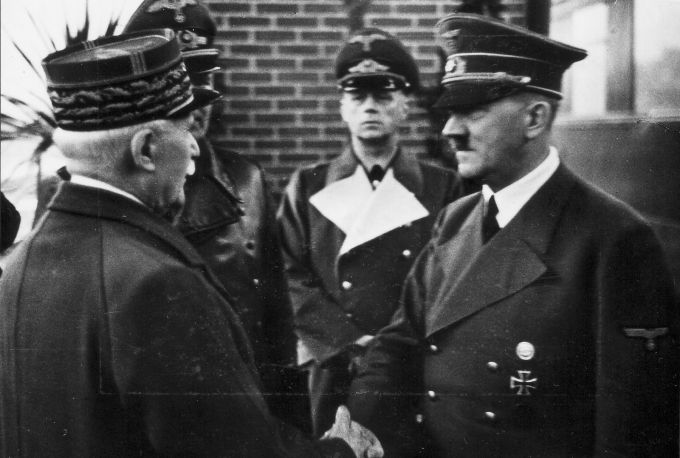
Now, some people have pointed out that this kind of rhetoric seems to resemble the kind of language Adolph Hitler used to justify his racial policies. But I see a fundamental difference between Donald and Adolph. Der Fuehrer liked to wear quasi-military uniforms (the famous brown shirts), while Trump favors blue suites and red ties. Also, Hitler sported a mustache.

In the past, Trump has characterized Mexicans and other Latin American immigrants as murderers, rapists, drug dealers and likely to vote Democratic (illegally, of course). And, of course, in the usual run of things, they certainly include their share of miscreants – as it happens, however, at no higher a percentage than we pure-blooded natives. One area where they seem to be lacking is in providing their share of serial killers. Maybe they’re too busy cooking most of the food we get in restaurants, often after working their way up from washing dishes and bussing tables. And you may have noticed that upper income folk trust them to mow their pristine lawns and trim their hedges. I would also be remiss is I didn’t mention the cheerful ladies who clean my condo every other week. And who do you think owns those businesses?

Someone also pointed out the similarity of Trump’s rally crowds to those who attended Hitler’s speeches. Not the same at all. Except for all the red MAGA regalia, Trump’s adoring crowds look like any you might find at the county fair. Hitler’s, on the other hand, are more formally dressed. The gents are wearing either one of those snazzy German uniforms, or a proper suit and tie. A few of the ladies also sport uniforms, but most are wearing modest dresses. Since the events were shot in black & white film, it’s difficult to get a sense for color, but it’s easy to see that there’s many a blonde head in evidence. And, as the camera pans the crowd, an occasional tear can be seen.

Hitler, of course, promised to Make Germany Great Again. And, you know, for awhile he succeeded. And then he didn’t.

Copyright 2023, Patrick F. Cannon

Happy Holidays from Dogpatch

By Patrick F. Cannon

Well, another year has passed, so I thought I’d bring you all up to date on the family as the holidays approach. As usual, there wasn’t a dull moment. First the bad news: old Uncle Abner won’t be with us this year – once again, the Parole Board turned him down. He didn’t help his case this time when he got caught running a dice game behind the mangles in the laundry.

I guess he’ll have to serve the full sentence, unless he gets smart and lets the screws win once in awhile. But heck, he’ll only be 70 when he gets out. If he watches his health, he ought to be able to enjoy some of the cash he has stashed away. He still refuses to tell me where it’s hid, despite me telling him inflation is eating away at it, and I’d be happy to invest it for him. Oh, well, he’s as cantankerous as ever.

Daisy Mae is pregnant again. Not sure who the father is this time either. As you know, all her kids look just a little different. I call them the rainbow coalition. She’s a worker though. Took an online course in beauty culture, using money borrowed from the government. She says no one every pays off them loans, so it’s like a free education. Aren’t these young folks smart? Anyway, she’s got everyone in the holler sporting green, red, purple or pink hair (even yours truly).

As you know, young Georgie is in the army. He made it all the way to corporal before he got busted back to private for drinking on duty. At least they didn’t give him a dishonorable discharge like his brother Amos. I guess they treat drunkenness and attempted murder different.

You probably heard that Aunt Nellie got married again. You kinda lose track, but I think this might be number seven. I’m sure it’s just a coincidence that her former husbands all died suddenly. At least they all left her some money. Maybe she’ll have better luck this time. Last year’s new husband looked healthy enough, but I guess he was on the clumsy side; he managed to fall off the balcony in that luxury Miami condo he bought her as a wedding present. Her new hubby is the building maintenance man, so that should be handy for her.

I’m proud that the family remains on the cutting edge of social change. Cousin Charlie announced that he was changing his name to Charlene. Guess we’ll all have to bone up on our pronouns. I suggested to Charlene that the beard might be considered odd for a lady, but he’s (she’s?) quite fond of it, reminding me that the carnival that comes through town still features a bearded lady. So, it looks like a career change might be in the offing too.

I’m sure you’ve seen all the media stories about son Ralphie. As you know, he’s the only member of the family to graduate from college – and Harvard no less. He’d already graduated by the time they found out he’d phonied up his transcripts and ACT scores to get in, and by then were too embarrassed to go public. Ralphie says the trick is to get in. After that you don’t have do much, since they think you’re already smart enough.

Anyway, Ralphie’s now got the record for the greatest Ponzie scheme in history. Unlike old Madoff, he got away to Russia with the dough before it was discovered, so all that education sure paid off. That picture of him and Putin riding those white horses bare-chested made all the papers. Funny though, when we tried to get a passport to visit him, we got turned down. I complained to our congressman, and he told me he was surprised too, since he thought they would be happy to see us leave the country. Not sure what he meant by that.

I hope you won’t believe that story about wife Rosie being found naked with the preacher. She told me it was just a new way or praying; something about going back to the innocence of Adam and Eve before they ate the apple. She said it made her feel so good she might try it again.

As for me, my run for Congress didn’t work out so good. I thought for sure having former President Trump’s endorsement would do the trick, but those crooked Democrats foiled me by actually going to the polls and voting. I was wrongly criticized for not having any political experience, which I thought was actually a plus. I also thought it was unfair to bring up those accusations of sexual misconduct, especially since the statute of limitations had already expired.

Anyway, if the former president of the United States can play grab (censored), why not your humble servant? I guess I’ll just have to go back to selling used cars salvaged from the recent hurricanes. I always hate to see stuff go to waste. Of course, if my new book, Hillbilly Theology, takes off like my publisher thinks it might, I understand a senate seat might come open!

My brother Caleb says he won’t be attending any of the family’s Christmas gatherings this year. Says he can’t afford to, since he claims I borrowed $5,000 from him some years back and never paid him back. He’s the eldest you know, and it’s sad to see his memory starting to fail him.

Well, that’s all for this year. You have a Merry Christmas and Happy New Year. As for me, I can’t wait to see what the future has in store for Yokum family.

Copyright 2023, Patrick F. Cannon

Go Cats!

By Patrick F. Cannon

Last Saturday, the Northwestern University Wildcats men’s basketball team defeated the number one ranked team in the nation, Purdue University, 92-88 in overtime. They did the same thing last year on the way to their first NCAA tournament appearance in many years. Now at 6-1, it looks like they’re well on their way to another great season.

After surviving a hazing scandal that led to the firing of football coach Pat Fitzgerald, that beleaguered team pulled together and won seven games for new coach David Braun, so it’s bowl eligible. Who knows, they may get a bid to the Pop Tart Bowl (actually they accepted an invitation to the Las Vegas Bowl). By the way, I played organized football at three levels (parish, midget and high school) and survived far worse abuse than was reported in this case, but I guess times do change (too late for me).

As a very long ago graduate of Northwestern, I’m proud of our athletes, whose overall 98 percent graduation rate is the highest in the Big 10; and its 97 percent football graduation rate is the highest in the country for major colleges. But there’s no doubt that the home football stadium, Ryan Field (Dyche Stadium when I was there) in Evanston has seen better days. My good friend Ed Swanson has had season tickets for many years, and I have attended with him from time to time. Let’s just say the joint’s a bit primitive (no elevators, for example).

Our fellow NU grad for whom the current stadium is named, Pat Ryan, has put up a sizable pile of dough to build a new stadium. It will have fewer seats, but all the modern amenities (elevators!) included. But to help pay its way, NU asked the City of Evanston for permission to host up to six concerts a year. Because of its design, noise from these mostly musical events would be well contained, but nearby residential areas – both in Evanston and neighbor Wilmette – would certainly be affected by increased traffic of not only cars, but perhaps of strange and exotic people!

There was no problem approving the stadium itself – it was just replacing what was already there. But the Evanston City Council voted separately on the additional concerts. You should be aware that there has always been a tension between NU and Evanston. The university uses up a lot of Evanston’s land, but pays no real estate taxes. While it’s true that recent campus expansions have been on new landfill in Lake Michigan, still many Evanstonians don’t think NU has ever paid its fair share.

To be frank, most game days haven’t been a big problem. The only time its seating capacity of about 48,000 is reached is when the opponent is someone like Notre Dame, Michigan or Ohio State. And in a typical season, there are only six home games. But concerts would likely be at night!

I lived in Oak Park for more than 40 years, and I always thought of it as “Evanston without the lake.” Both are “progressive” politically. The few Oak Parkers of a conservative nature fondly call their community “the Peoples Republic of Oak Park.” If anything, Evanston is more progressive. Even Oak Park has not passed a reparations ordinance, but Evanston has.

The deciding vote in favor of permitting the concerts was cast by Evanston’s mayor, Daniel Biss. He is a former Assistant Professor of Mathematics at the University of Chicago, and a graduate of both Harvard and MIT (where he got his PhD). Abandoning academia for politics, Biss was elected to the Illinois State Senate in 2010; ran unsuccessfully for governor in 2018; and was elected mayor in 2021. Over the years, his positions have been reliably progressive; he even supported Elizabeth Warren in her run for president in 2020.

Yet, he no doubt disappointed many of his constituents by voting “yes.” I’m sure he looked at all sides of the question, and decided on the basis of “the greatest good for the greatest number.” While NU may not pay real estate taxes, its students and faculty mostly live in the community and eat, drink and pay rent there. On game days, alums, parents and others pay an entertainment tax on their tickets, and no doubt avail themselves of local restaurants, which adds local tax revenue to the bill. Tickets to the added concert events will be far more expensive, boosting entertainment tax revenues. And those folks will no doubt eat, drink and be merry before and after the concerts.

So the mathematician did his sums before casting his vote and decided to be a politician instead of an ideologue. Compare his reasoned approach to that of his neighbor to the south, who is learning the hard way that governing a great city isn’t the same as being a former county commissioner, teacher and union organizer.

Copyright 2023, Patrick F. Cannon