See You on the Radio
By Patrick F. Cannon
For more than 20 years, my Sunday morning routine has not changed much. After a hearty breakfast, I watch CBS Sunday Morning from 8:00 to 9:30 am, then read the Sunday Chicago Tribune. The television magazine program has always run for an hour-and-a-half, but the Trib has dwindled over the years to become a shadow of its former self.
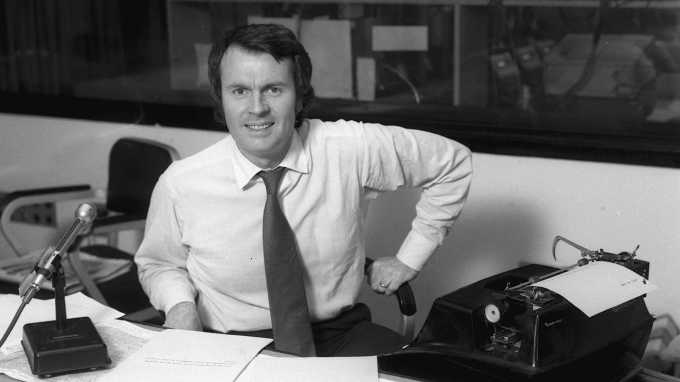
From 1994-2016, the program was hosted by Charles Osgood, who died on January 23, age 91. Concurrently, Osgood – who always considered himself a “radio man” – did a radio program called “The Osgood File.” He was also a dab hand at the piano, and something of a poet, although he always said he was just a “rhymer.”
He succeeded Charles Kuralt as host. As it happens, I hired both to be speakers at Lions Clubs International conventions. One of my staff members picked Kuralt up at the airport and delivered him to the venue the next day. I met him then, and somewhere have a photo taken with him and my staff. One of his most popular features was “On the Road with Charles Kuralt.” He travelled the county in a motor home, stopping in small towns and attractions along the way. In his talk, he was able to mention the Lions clubs and members he had encountered along the way. This went over well with American members in the audience of 15,000, but less so with German and French attendees!
I personally picked up Osgood at the airport. In those simpler days, you could meet people at the gate. We paid for first class for our guests and speakers, so he was one of the first passengers off the plane. We exchanged pleasantries, and I took his suit bag, which was his only luggage for this quick trip. About halfway down the concourse, he suddenly patted his suit jacket, stopped and said: “I think I left my wallet on the plane.”
Back to the gate we went, where one of the staff hustled back to the plane and found his wallet. In the hired limo to the hotel, we chatted about this and that. At one point, he asked if I had ever worked in radio, because, as he said, “you have a radio voice.” Ever since, I wished someone had said that to me fifty years ago. I might have given Wally Phillips a run for his money.
Anyway, he was the nicest speaker I ever hired. As a tribute, I’ll end this with a verse he used to end his talk the next day. It seemed that the Census Bureau had created a new category for describing households: Persons of Opposite Sex Sharing Living Quarters (or POSSLQ). Here is Osgood’s take on it:
Come live with me and be my love
And we will some new pleasures prove
Of golden sands and crystal brooks
With silken lines and silver hooks.
There’s nothing that I wouldn’t do
If you would be my POSSLQ.
You live with me, and I with you
And you will be my POSSLQ.
I’ll be your friend and so much more;
That’s what a POSSLQ is for.
And everything we will confess;
Yes, even to the IRS.
Someday on what we both may earn,
Perhaps we’ll file a joint return.
You’ll share my pad, my taxes, joint;
You’ll share my life – up to a point!
And that you’ll be so glad to do,
Because you’ll be my POSSLQ.
Rest in peace, Charles Osgood.
Copyright 2024, Patrick F. Cannon





 cannonnadedotcom