Really, I Did Know

Really, I Did Know

By Patrick F. Cannon

You could be forgiven for thinking, based on what you hear from the New York Times and many others, that children of past generations had never been taught that there was such a thing as slavery; or, if they were, that it might have been just a lifestyle choice.

            I just turned 84. Now, I can’t precisely recall how it was taught in the Roman Catholic grammar schools of Pittsburgh and Chicago, but I certainly got the impression that slavery was a bad thing, and that the Civil War was largely fought to eliminate it. Now, I don’t know what kids in Mississippi were taught, but I wouldn’t doubt that it was couched in a somewhat different way.

            In public high school in McKeesport, PA, the teaching of American history became a bit more sophisticated. Two things became clearer – much of the politics of the first half of the 19th Century in the United States revolved around what to do about slavery; and also how to remove the indigenous peoples from land the settlers wanted to land they didn’t. Maybe Mississippi extolled the South’s Jim Crow laws as enlightened, but Pennsylvania certainly did not.

            At Northwestern University, I took the usual lecture course in American history, which delved into these and other matters in more detail. While it explored the economic and social factors that led to the widespread use of slave labor in the south, it never confused reasons with excuses. Nor did is shy away from detailing the shameless way the country “solved” its indigenous peoples problem by penning them up in arid wastelands.

            Since then, I have read widely in American history. These issues and many more have been explored in detail in countless books by dedicated scholars (and some not quite so dedicated to the truth, one must admit). The point is: no one who cares to spend a little time studying American history can deny that slavery in particular hasn’t been extensively and truthfully studied and written about. But until recently, I was never personally told that whatever successes I might have had in my life were based upon the simple fact that I was white; and that I was a member of the “privileged” class.

            This is not to deny that privilege has played a role in the relative success of some of my fellow citizens. If you come from money, you certainly have a leg up. If daddy graduated from Harvard, and  became a major donor, few would deny that you might get a so-called “legacy” admission. It’s no accident that Harvard has the largest endowment of any university, last year reaching $53.2 billion. But that nest egg has permitted Harvard – and similar universities – to admit students who could not otherwise afford to attend. (By the way, Harvard admits slightly more women than men, and enrolls whites and non-whites in roughly equal percentages. In a recent class, blacks made up 14 percent, about the same as their percentage of the country’s population.)

            While everyone’s story is unique, most of us don’t come from inherited wealth. Let’s take mine. My father was born in 1906 on a small island off the West coast of Ireland. When he was two-years-old, his family emigrated to the United States, settling in the Pittsburg area. He had some college, but never graduated. He was variously a deputy sheriff, clerk in the county assessor’s office, elected councilman in Braddock, PA (where his family settled and where I was born), and manager of furnace company branches in Chicago and McKeesport, PA.

            He died in 1950, when I was 12-years-old. My mother soon ran through the modest insurance money, and we ended up living in public housing. I was never without a job during my high school years. I set pins in a bowling alley; worked in a grocery store; and bussed tables and cooked at a Pittsburgh amusement park. My mother died when I was 18. By then, I was working at a steel mill. I then moved to Chicago and lived with my sister.

            I did not get a legacy admission to Northwestern University. I worked during the day and attended school nights and weekends. I paid my own way, until I got drafted into the Army because I wasn’t  going to school full time. After I got out, I was “privileged” to get part of my costs paid under the G.I. Bill. After I graduated, I started a long career in marketing and public relations. Having a degree from Northwestern certainly helped me along the way, but I flatter myself that I succeeded based on my own work and talents. And I don’t think I  ever had a friend who’s success was due to family ties.

            I don’t feel in the least guilty for being white. Nor should I; nor should anyone who has not actively discriminated against another race, even if that person’s ancestors held slaves. By the way, you would be forgiven for thinking that American had invented slavery. In 1787, when the Constitution was written, slavery was legal in most European countries, and widespread in most of the rest of the world. If we should blame anyone for slavery in this country, it is the British, who not only introduced it here, but profited most from it. And we shouldn’t forget that Britain came very close to recognizing the Confederate States, primarily to protect the source of cotton for their mills and tobacco for their pipes.

            By the way, my family came to this country from Ireland because they saw no opportunity in a country exploited by the British for 200 years, and who let people die during the famine of the late 1840s. Now, nearly 175 years after the famine, a small number of Irish people still harbor the old hatred. But most have come to realize that living in the past is not the same as learning from it.

Copyright 2022, Patrick F. Cannon  

Czar Putin, the Conqueror

Czar Putin, the Conqueror

By Patrick F. Cannon

Back in the days when the computer was in its infancy, when you registered for classes at Northwestern University, it was a mad dash to grab a course card from the box before they were all gone. First, you made a beeline for required courses, then electives. I tended to look for electives in either art or the more usual kind of history. One day, it turned out to be Russian.

            Before that, my knowledge of Russian history was Stalin and his immediate successors. Although I can’t remember exactly what year I took the course, it was likely that the affable Nikita Khrushchev (“we’ll bury you!”) was the current leader. (By the way, Stalin died in 1953. For a chillingly humorous take on the event, I recommend the movie, The Death of Stalin.)

            The current dictator, Vladimir Putin, is just the latest in a long line of autocrats that extends back to Ivan the Terrible in the 16th Century; and beyond, to Czars Peter the Great, Catherine the Great, and finally, the not so great Nicholas II, who was succeeded by Lenin, Stalin – and now, Vladimir Putin.

            The fantasy that Communism would change Russia into a country of peace-loving workers was embraced by the left in this and other countries for far longer than the reality of what became the Soviet Union became apparent. But Communism simply continued the expansionism and autocracy that has been constant in Russia since Ivan. When the Soviet Union began breaking up in 1989, Vladimir Putin was a KGB agent working in East Germany. To put it simply, he was not amused by the events that followed.

            So, when former Soviet vassal states began joining NATO, it was rubbing salt on the wound. As we know, he began chipping away at the borders. Chechnya was subjugated in 2000, followed by parts of Georgia and then Crimea. Now Ukraine.

            His claim that the Ukrainians are really brother Russians is tragically amusing. I’m sure many of them have reason to remember that Stalin caused the death by starvation of something like 4 million of their ancestors during the forced agricultural collectivization of the 1930s. I suppose that’s like Cain and Abel, with Stalin being Cain.

            Let’s not then be surprised that Putin is returning to the old ways. Given Russian history, it would be more surprising if he didn’t.

Copyright 2022, Patrick F. Cannon

Wood You?

Wood You?

By Patrick F Cannon

The history of baseball is full of chicanery. Foreign substances on the ball; cork in the bats; juice in the veins; and eagle eyes stealing signs. And like most sports, the odd game thrown for cash.

            Absent any of this, the basics of the game haven’t changed much. The bat is still wood, and the ball in recent years has been pretty consistent. The rules have been tinkered with, and there is no doubt that today’s players are generally in better physical condition. Pitcher’s throw harder and are changed more often. Batters tend to swing for the fences; strike out more; and have generally lower batting averages. But the fan of 1920 would recognize today’s game, even if appalled at the price of admission.

            Ditto football (and what we call “soccer” too). The ball is much the same as it’s been for decades. Like baseball, the physical condition and size of the players has changed. When I played high school football in the 1950s, it was rare to have a lineman who weighed as much as 250 pounds. Now, it’s common to have 300 pounders, even in high school. Because of the size, strength and speed of today’s players, protective equipment is far better. And although the basic game is the  same, rules on penalties have changed, mainly to protect the players, especially the cherished quarterbacks. When I played, “unnecessary roughness” really had to be egregious.

            Although not a hockey fan, there hasn’t seemed to be much change in the game since the introduction of the curved stick decades ago. And although it has become more popular with a younger crowd, Julius Caesar would probably recognize bocce as the same pastime the Legion lads played when they weren’t conquering all of  Gaul.

            Now, I gave up football in my early 30s when I broke some ribs playing touch football against younger fellows in Albert Lea, Minnesota. Pick up baseball games were a feature of our family reunions until it moved to venues without playing fields. In the mid-seventies, I installed a basketball backboard and hoop on the garage. That was several houses ago, and don’t believe I’ve shot any hoops since.

            The only sport I still play regularly is golf, in which the equipment has changed more than in any other sport – and not for the better.  The equipment I use today – clubs and balls – have been transformed by technology. TaylorMade introduced the first “metal” wood in 1979 (a classic oxymoron still used today). In 1980, the average driving distance on the PGA Tour was 257 yards. In 2020, it was 296. Last year, Bryson DeChambeau averaged 314.5 yards per drive. Sixteen of his fellow swingers averaged more than 300. In 2003, only two did.

            What’s wrong with this, you say? For one thing, once-famous golf courses either had to be dropped from tournament golf or redesigned and lengthened to suit today’s long hitters. It has also become meaningless to try to compare today’s golfer with the legends of the past. Bobby Jones played with forged-steel irons and real-wood woods, usually persimmon. Steel shafts became common after 1925, but that was pretty much it until 1979. Metal woods have gone from steel to  aluminum to various alloys to titanium to the latest innovation – miracle metal with carbon fiber faces. If you want the latest thing – and golfers are goofy about this – the driver alone can set you back $600 or more.

            Of course, you need more than a driver to play a round of golf. A quick check of top-of-the-line clubs yields a cost of about $2,500 to put you on the first tee. And if you’re truly goofy, when fabulous new clubs come out in two years, you’ll rush to order them! Of course, the chances of my readers even being golfers is slim. Added to the cost of equipment – good balls, by the way, cost about $50 a dozen – is the cost of actually playing, which can easily run $50 at a public course. No wonder the Pickle Ball courts are full.

            Anyway, the United States Golf Association (USGA) and the Royal and Ancient, which set the rules of golf, should dial back the technology and set standards for clubs and balls that would permit comparisons of golfers from different eras. I would opt for real wood, with drivers reduced to a size somewhere between the past and present, say 350 cc for drivers, and 250 for fairway woods. The heads of irons should be one piece, forged from steel only, and limited in size. Balls could have reasonable limits in compression, etc.

            None of this is going to happen, and most of you don’t care anyway. You probably agree with Mark Twain, who is quoted as saying “golf is a good walk spoiled.”

Copyright 2022, Patrick F. Cannon

Actor! Actor!

Actor, Actor!

By Patrick F. Cannon

As you fellow Shakespearean scholars know, most female parts in his and other plays of the period (and later) were played by men or young boys in drag. Women and girls, it was then supposed, were not fit to mingle with the disreputable denizens of the theatre.

            It was only in 1660 that women began to play female parts on the English-speaking stage (it varied in other countries). Since then, some have even played male parts. Legendary French actor Sarah Bernhardt famously played Hamlet in 1899; and more recently, in 2016 at age 80, Glenda Jackson played the title role in King Lear at the Old Vic in London, a role she repeated in New York in 2019.  There are, of course, many other examples of actors playing the opposite sex. Actors are, by definition, impersonators, aren’t they? Why shouldn’t they play these roles?

            It has also become common for black actors to play across racial lines. Denzel Washington, perhaps America’s finest actor, played the title role in last year’s film of  Shakespeare’s Macbeth, along with three other black actors in supporting roles.  Macbeth was, of course, a Scot; it’s likely he was fair of skin and red of hair. But a great actor makes us believe what’s most important about the character.

            And many of our greatest actors have been gay. John Gielgud suffered humiliation when he was arrested for homosexual activities, but his fellow actors and most of his public rallied to his defense. Over a career of some 80 years, Gielgud played many heterosexual men, as have more recently Derek Jacobi and Ian McClellan, who were able to come “out” in a more enlightened age. As in any art, talent is the most important trait we look for in an actor.

            So, if Denzell Washington can play Macbeth; Sarah Bernhardt Hamlet; and Ian McClellan Lear; why couldn’t Meryl Streep play Rose in August Wilson’s Fences? Yikes! I can hear the cries of “cultural appropriation” crashing down on my head!

            And I understand it. Black artists have been discriminated against in this country (and in others too) for hundreds of years. But if the idea of Ms. Streep playing a black woman seems absurd, it does raise a larger issue. Do black artists – and other minorities – deserve extra credit in their  marks because of past discrimination? In the arts, I don’t believe they do, just so long as they have been given access to the same education and training as everyone else.

            Nor do I believe that only a certain kind of actor can play a certain kind of role. I recently saw an old favorite movie, Bad Day at Black Rock, in which the great Spencer Tracy plays a one-armed World War II veteran. As it happens, Tracy had both of his arms, but he was also supremely talented. Daniel Day-Lewis didn’t have cerebral palsy, but who can deny that his portrayal of Christy Brown in My Left Foot was anything but brilliant? Day-Lewis wasn’t Lincoln either; or a fashion designer; or the last of the Mohican’s best friend. But he convinced us he was all of these.

            Nothing good can come of establishing quotas, especially in the arts. What we can do is provide equal education and access. After that, it comes down to talent. This may sometimes seem unfair. I wish I could paint like Velasquez; or compose like Ellington; or act like Scofield. But I just can’t. So I found something else to do.

Copyright 2022, Patrick F. Cannon

So You Want to Buy an Old House, Part 2

By Patrick F. Cannon

The So-Called Victorians.

Queen Victoria and the industrial revolution marched hand in hand, particularly after Prince Albert’s  hand was removed by his early death. Technology brought new wealth and largely created the middle classes as we know them today. Although the industrial revolution began in England, we soon surpassed the Mother Country, due largely to our incomplete appreciation of business ethics. With new wealth at hand, everyone wanted a splendid new house. Excess was not uncommon, and to it we now owe the once despised, but now cherished, “Victorian” home.

You should be warned now that the term “Victorian” does not apply to any particular style; rather, it is an umbrella term covering several distinct styles, unrelated but similar. I hasten to add that some houses were built using elements of various styles. These are sometimes called the “Eminent Victorians.”  Since more of these houses exist than any other kind (with the exception of Subdivision Grotesque), you should study the following with great care.

Italianate. This is our interpretation of the country houses built in the early 19th century by romantic Italians to house their mistresses. While ours resemble the originals not at all, they do exhibit much of the Italian passion for irrelevant detail. Cupolas abound, as do ornamental brackets, widow’s walks, bay and oriel windows, and other assorted fripperies. The hip roof is cherished here, rather than despised. General Grant lived in such a house, which may be all we need to know.

Stick. This is the only Victorian style native to these shores, although one sees them inland as well. The name was coined by Professor Vincent Skully of Yale University to describe a type of house he often noted on his solitary walks through the back streets of his beloved New Haven. “Stick” refers to the method of construction. Rather than covering the framing members, the siding is placed between them. Still visible, the members look a bit like sticks – hence the name.

There is an interesting story in connection with Skully’s scholarly breakthrough. It  seems that one-day he was giving his famous seminar: “Architecture and Jurisprudence,  An American Dilemma.”  A slide was on the screen, illustrating the as-yet­ unnamed style. As he pointed to the slide, he was heard to mutter that “the frame seems to be little more than a series of sticks. . . “  With that, an enterprising student – secretly a stringer for the New York Times – crept unseen from the room to the nearest phone.

Within days, the world of architectural history was shaken to its very foundation when the Times announced in a front-page headline: “Yale prof says ‘Stick is it’, discovers ‘lost’ architectural style.” With a single word, Skully had made room for 14 new doctoral dissertations. He later tried to recant, but nothing doing.

Tudor. King Henry VIII was largely responsible for this rustic style, which first saw the light of day as a result of the famous building materials crisis of 1538. Henry’s mania for building stately homes had left the British Isles denuded of native stone, and his contretemps with the Pope over his (for the times) eccentric marriage habits had effectively closed the door to imports of Italian marble . Good King Harry was equal to the task, for his domain still had plenty of trees and vast resources of plaster.

What if, he pondered, these could be joined together in some useful way? He soon had Sir Thomas More on the   job, and the future saint solved the technical problems in an exemplary manner. It is to him that we own the invention of lath. Alas, to insure that he would get all the credit, Henry had Sir Thomas  beheaded .  But the wily future saint had the last lath, since Jesuit spies managed to spirit his secret notes out of the country. Thus it is that the style is today called “Tudor” only in English-speaking countries; in the rest of the world it is commonly called “Moorish.”

Queen Anne. Queen Anne reigned in England from 1702 to 1714. The building style named after her was popular in the 19th century. Why this is so is inexplicable (except to the English, to whom it seems to make perfect sense). Nevertheless, the style was quite popular in rural areas, and it wasn’t long before it was exported to America in a converted tea clipper. Perhaps because the hold was wet, the style was somewhat watered down in transit.

Its unveiling caused a sensation at the Philadelphia Exposition of 1876. We didn’t swallow it whole, however, choosing its more banal and excessive motifs for exploitation.  A typical example might have turrets, bays, Palladian windows, sweeping porches with classical columns and pediments (and in extreme cases, impediments), and a variety of surface materials such as might boggle the mind (and numb the eye).

Depending upon how all this was arranged, the results can be classified as Traditional Queen Anne, Non-traditional Queen Anne, Perpendicular Queen Anne, Rectilinear Queen Anne, Perpendicular-rectilinear Queen Anne, Simplified Queen Anne, or Over-simplified Queen Anne. The wise homebuyer will be familiar with all of them and good luck to him .

Shingle. See above, but with shingles.

Prairie. The only 20th century style that need concern us is the Prairie, invented by that brilliant but insufferable genius, Mr. Frank Lloyd Wright. It was his inspiration that the flat or gently rolling countryside of the Midwest demanded a horizontal line. While his architecture changed many times over the years, he was always to maintain a dominant line.

Those willing to wade through the purple can find an incomprehensible   description of the style’s genesis in Wright’s In the Cause of Architecture. The houses themselves are notable for their simplicity of line and materials. Where there is ornament, it is organic and understated. Many of the houses one sees in today’s subdivisions owe their basic form to a misunderstanding of Prairie School principles .

Wright’s originals are naturally rather expensive, and are said to be a roofer’s dream. Those designed by his disciples are less expensive and have the added advantage of often being mistaken for the master’s work. Some indeed are blatant copies, but since Wright paid his employees very little or not at all, there seems to be a kind of rough justice at work.

Unfortunately, Wright’s architecture became influential in Europe and eventually  led to the International Style of the 1920s and later. Many of these houses were essentially all glass and led to booms in voyeurism and the drapery trade.

Go Forth!

Armed with information I have provided, anyone should feel supremely confident as they go forth to seek a house for renovation or restoration. This knowledge will not prevent heartache or even bankruptcy, but it will certainly add to the pleasure one should feel for having preserved something of the nation’s architectural legacy. And, to be blunt, no one ever asked the owner of a tri-level to open it for a house walk.

Copyright 2022, Patrick F. Cannon

So You Want to Buy an Old House — Part One

By Patrick F. Cannon           

Some people buy old houses with the intention of restoring them to their former glory. While they may not fully understand the trials that await them, they have at least some idea of what they have and what the house should ultimately look like. Others buy old houses because they’re relatively cheap. Real estate agents often describe these properties as needing “tender loving care.” A little “updating” and some “sweat equity” could, they contend, easily double their value.

Alas, in all too many cases the new owner barges ahead with little consideration of what architectural or historical value the house might have. It may  end up being perfectly “livable,” but  any  architectural significance may be  lost forever.

On the other hand, if the new owner were armed with at least a rudimentary knowledge of architectural styles before ripping off ornamental brackets or other details, he or she might do a sympathetic restoration instead of a mere remodeling. It is in this spirit that I have prepared this basic primer on historic building styles one is apt to come across in this country.

Of course, one cannot hope to cover every style in the space available. For example, I have left out the Georgian. Never having been in the Peach State, it seemed presumptuous to include it. Nevertheless, what follows should suffice for most cases.

Colonial. True Colonial houses are quite rare, understandably-irate Native-Americans having burned many of them down. Later owners may have thought them too plain and drafty and thoughtlessly replaced them. Those that do survive are simple and unadorned, with an occasional dormer or gable to relieve their dullness. The early settlers, after all, had more interest in survival than art. True colonial houses rarely appear on the market, since most are now being used for local historical societies or gift shops.

Dutch Colonial. Since their forbearers had invented gin, the Dutch settlers in New Amsterdam were rather less stiff-necked than the English Puritans in New England. The distinguishing feature of their houses was the Gambrel roof, an invention of Alois van Gambrel. He had actually started with the intention of using a hip roof, but even the Dutch thought that might be a bit too racy. The Dutch never made it big in America, so most of the better surviving examples of Dutch Colonial are found tucked away in the shabbier comers of Manhattan, Harlem and Yonkers. The finest extant example now houses the offices of the Knickerbocker Holiday Inn, an excellent example of adaptive reuse.

Spanish Colonial. This is a tricky one, since authentic examples are often indistinguishable from most of the homes in the Southwest and Southern California and all Mexican restaurants. People of taste would do well to steer clear of this style (and perhaps Mexican restaurants too, depending on the state of their digestion).

Federal. As you might imagine, this noble and austere style was developed by members of the Federalist Party as a reaction to the excesses of  the Articles of Confederation. Indeed, feelings ran so high during this turbulent period that all Confederalist-style buildings were burned to the ground by members of the Federal Institute of Architects (F.I.A.), disguised for the occasion as Canadians. As a result of a later compromise between Thomas Jefferson and John Adams, all Federal houses exhibit lofty and spacious rooms for the owners and small, dark and gloomy ones for the servants or slaves.

Classic Revival. As you might expect, itdidn’t take long for the mercurial Jefferson to break with both Adams and the Federalist style. One can imagine the revulsion he must have felt as his once-cherished architectural principles came under attack by – and ultimately succumbed to – monarchist tendencies. The Classic Revival was an altogether more Republican movement, whose impetus came from Plato’s Republic, wherein we read: “Let us build our houses in the Classic style, so that ages hence may know that we were free men.”   The admiring Jefferson was so taken with this profound sentiment that he had it chiseled on the pediment at Monticello.

In contrast to the often-austere Federal houses, those of the Classic Revival were generally freer in plan. Whimsical wings added to their charms. A typical feature was the “Great Hallway,” which marched with precision from front to back door. From there, it was but a short stroll through a charming pergola to the facilities. These were often quite elaborate, with colonnades and separate doors for the ladies and gents. Four-holers were not uncommon. Nor were built-in bookcases, since the waterborne diseases of the day sometimes necessitated prolonged stays.

You will be familiar with the usual half-moon cut out on the doors of more rustic outhouses. Classic Revival facilities were more likely to be pierced by Rousseau’s  profile, thus bringing in the light of pure reason (and removing the vapors of the moment). As this style was popular right through the middle of the 19th Century, many fine examples survive, from the rockbound coast of Maine to the back lots of Hollywood.

Copyright 2022, Patrick F. Cannon

(Next week – The Eminent Victorians and beyond)

Too Much?

Too Much?

By Patrick F. Cannon

In what has now become a constant refrain, CBS Sunday Morning last Sunday had a piece on the income gap. They trotted out the usual figures on how much of the world’s wealth was held by the top one percent as opposed to the bottom 50 percent. As we all know, the gap is real, real big.

             I have long been on record as believing that the highest earners among us should pay more in income taxes. The current top rate is 37 percent. I believe it should rise in increments to as high as 50 percent. Alas, with the current political situation, this is unlikely to happen.

            But most people don’t understand the difference between net worth and income. Because the information is confidential, we don’t know what Elon Musk’s actual taxable income was last year. We do know that he’s the world’s richest man. At one point last year, he was reportedly worth $300 billion. Some people seem to think – and the media supports this view – that all that dough is in Elon’s grubby hands. In fact, most of his fortune is tied to the stock price of Tesla, which has a market value (as of Monday) of $944 billion.

            Instead of being worth $300 billion, as of January 22 the poor guy was worth only $244 billion. You see, his wealth is actually tied to the worth of Tesla stock, which has declined in the short term. As it goes up and down at the whim of the markets, so will Musk’s net worth. Somebody – was it that font of good ideas, Elizabeth Warren? – came up with idea of taxing net worth, in addition to income. But what if the market crashes after the tax is paid? Does the government give it all back? Or does the poor tax payer have to start selling apples?

            The Tesla stock price is based on some formula of fantasy vs. reality. While it fluctuates from day to day, Tesla’s market capitalization (total value of its stock) was (on Monday) about $950 billion. Late last year, it had actually reached a trillion! Estimated sales last year were $52.5 billion, with a profit of roughly $7 billion. Now, with a market cap of $78 billion, General Motors had sales of $127 billion, with profits estimated to be about $13 billion. If you do the math, you’ll see that Tesla had a better profit margin, but is it really worth more than 10 times what GM is?

            If I were a betting man, I would wager that Tesla’s stock price may well come back to earth in the years to come. With the exception of some lame competitors, whose batteries gave them only a fraction of Tesla’s range, up until recently they had a virtual monopoly in the practical electric car market. No more. The big legacy automakers have entered the fray in a big way. What will Tesla look like when faced with competition from Mercedes, GM, Toyota and Ford? All of them (and more) are making massive investments in electric vehicle technology.

            Back to the point – there is often a significant difference between stock-based wealth and income. Instead of heaping abuse on Musk, Bezos and Gates, maybe we should complain about overpaid sports figures and corporate nabobs. As an (admittedly minor) stockholder, I think that many corporate executives are compensated far beyond their actual value to the company. One of the reasons for this is boards of directors made up of – you guessed it – corporate executives from other, non-competing, companies. It’s a “I’ll take care of you if you take care of me” mentality.

            By the way, in what has become a cliché, CBS couldn’t resist illustrating its story with a shot of mega yachts riding at anchor in some exotic port. Are they a vulgar display of wealth? Indeed they are (see last week’s article). On the other hand, they provided jobs to the people who built and now man them. And perhaps to a lesser extent, the folks who make the skimpy bikinis that are such a feature of their topside decoration.

Copyright 2022, Patrick F. Cannon

It’s Too Vulgar for Words!

(This is a light reworking of a piece from five years ago. I still feel the same.)

It’s Too Vulgar for Words!

By Patrick F. Cannon

Our good friends at the Oxford English Dictionary tell us that “vulgar” is defined as a thing or person “lacking sophistication or good taste; unrefined.” I have my own definition. What is vulgar is simply something that is more than it needs to be.

            For example, when some singer decides to render our national anthem as if it were a jazz, blues, country, hip hop, disco or mariachi song, it’s vulgar, unnecessary and usually painful or even comic. Our national anthem can be difficult for singers like me, but most trained singers can easily render it as written. Why don’t they? And why are people like Roseanne Barr asked to sing it? Her rendition at a San Diego Padres baseball game several years ago still haunts my dreams.

            Although it draws tourists by the millions, the palace at Versailles is also vulgar. Vulgar because it was meant to show the average Frenchman that the king was so far above them that he could afford to have rooms that nobody actually lived in. If you’ve been to Versailles (or any number of similar palaces), you’ve not doubt walked through numerous rooms of no apparent purpose (they did have purposes, however silly). While we might admire individual pieces of furniture or decorative art, the final effect is vulgar in the extreme.

             In a similar mode, Michelangelo’s ceiling in the Sistine Chapel isn’t vulgar because its subject is fully in keeping with its location. Ditto for any number of frescoes in churches and religious buildings. But what of the frescoes I’ve seen that glorify the builders of the private palaces that dot the English countryside? It’s been awhile, but I seem to recall that Blenheim Palace has a mural showing the 1st Duke of Marlborough (Winston Churchill’s ancestor) trouncing the hated French at the Battle of (you guessed it) Blenheim. Showy self regard and vulgarity? You bet. Equally vulgar are sport figures who call attention to themselves for doing what they get paid handsomely to do. Perhaps we should dock their pay when they drop a pass or strike out?

            While folks aren’t actually building anything quite like Versailles any more, they are indulging their egos by building houses so large and showy that you might think they had a dozen little kiddies to house. If they actually have two, it would be exceptional. Yet their mini hotels often have seven or eight bedrooms and 10 bathrooms. A wine cellar is mandatory, even though most of them couldn’t tell the difference between Chateau Margaux and Carlo Rossi. Of course, they also hire decorators to fill their palaces with over-priced stuff, including paintings chosen not for their artistic, but rather their decorative or market value.  

It’s probably hopeless to point out that the now common use of the eff and emeff words are vulgar in the extreme. I was guilty of dotting my sentences with them when I was in the Army, but rarely do so today (alone in my car being an exception). Once, educated people would never have used profanity. Now, education is no barrier to vulgarity. I once cringed when I heard educated young women use the eff word; now, they toss it around like it’s a badge of their liberation. I don’t have any personal experience in this, but no doubt their professors sprinkled their lectures with similar profanity.

I won’t even try to comment on today’s so-called comedians. Suffice it to say that vulgarity is the enemy of wit. And it seems to be winning.

Copyright 2016, 2022, Patrick F. Cannon

Boy, That’s Annoying!

Boy, That’s Annoying!

By Patrick F. Cannon

It’s a rare day that something doesn’t annoy me (and you too, I bet). Just the other day, I was at the grocery store. Ahead of me in the checkout line was a woman who was paying cash – a rare occurrence these days – and didn’t have enough dough to pay the bill! Normally in a situation like this, the customer will give back sufficient items to have her purchases match her cash. Not in this case. She actually made us all wait while she went back to her car to get more cash. She had money in her car!

            I watched her through the window as she shuffled to the far reaches of the parking lot, then shuffled back with the cash. All of this took 10 minutes or so on a busy day. During the interim, there was much rolling of eyes. Needless to say, she didn’t think to apologize.

            On a more intellectual note, I’m reading a book on movie directors. It’s an interesting and well-written book, but the author generally gives only the titles of the films in their original language – French, Italian, Spanish, etc. – but not the English version for which they are better known to the likes of me. French director Jean Renoir’s La Regle du Jeu is better known to most of us as The Rules of the Game. It’s a deserved classic, as is Renoir’s other well-known film, La Grande Illusion, which fortunately ends up being Grand Illusion in English.

            Why did this writer assume everyone knows several languages? As it happens, I’ve taken both French and Spanish in school and can often make a decent translation. Fiction writers are also guilty of inserting foreign-language dialog in their stories, forcing the reader to either haul out a dictionary (which they are unlikely to have) or make a guess. I find this both annoying and arrogant. If there’s too much of it, I simply stop reading.

            I have to admit this is partially my fault for even watching, but the local news programs in Chicago spend a considerable amount of their air time pretending that the happenings of their network’s entertainment programs are actual news. While most viewers probably don’t know it, the Chicago outlets of CBS,NBC and ABC are owned by the networks, as are the outlets in New York, Los Angeles and a few other cities.

A 30-minute news program actually has about 22 minutes available for news, weather and sports. In that 22 minutes, there will be at least two endless weather forecasts and a briefer update. After a sports report, and an exciting feature on who has been chosen to appear on ABC’s Dancing with the Stars, there is hardly any time left to cover the latest shouting match between Mayor Lightfoot and the Chicago Teacher’s Union’s perpetually whining Jesse Sharkey.

            I wish I could say that most politicians are just annoying, but they’ve gone beyond that. Many of them are actually scary. Donald Trump only heads a very long list. We know he’s a pathological liar, but what are we to think of the hundreds of Republicans in Congress who amplify those lies in order to get reelected? Lying with a straight face has been elevated to a high art! And before you Democrats start smirking, would you care to count the number of Democrats who have been convicted of public corruption, just in Illinois?

            And please don’t get me started on the dwindling number of free parking spaces on the streets of cities, towns and villages across our great land. They’re almost as numerous as the politicians and bureaucrats who wallow in  the revenue. And as my dear daughter reminded me, how about the knuckleheads to whom a stop sign or even a stop light are mere suggestions? How annoying are they?

Copyright 2022, Patrick F. Cannon   

Happy New Year!

Happy New Year?

By Patrick F. Cannon

I’ve been wracking my brain to come up with something positive to say about 2021. Before the Omicron variant of Covid hit late in the year, I might have said we had made some progress in our battle against this scourge. Vain hope. In 2022, I guess we’ll have to settle for the suggestion that this variant is less fatal than Delta. And, of course, we can look forward to the Zebra variant, when we shall all turn both black and white, thus conquering racism for all time.

            Another vain hope – that the large numbers of people (mostly Republicans) who say they will never get vaccinated will change their minds when they realize that well over 90 percent of Covid deaths are among the unvaccinated. Good God! Even Trump has admitted he’s not only vaccinated, but boosted. Maybe it’s because die-hard Republicans would rather not live during a Democratic administration? At any rate, only 58 percent of GOP voters are vaccinated as against 90 percent of Democrats. The surviving Republicans better all vote in November.

            When the infrastructure bill passed with some Republican votes, some deluded souls thought this might be a sign that a new era of bi-partisanship might be at hand. Ha! Ha! The few Republicans that voted for it were branded as traitors, even as those who voted against it did so often at the expense of their constituent’s needs. Strange; as I somehow recall that former President Trump was a big supporter of a quite similar bill. Now, of course, he’s doing his best to see that these disloyal Congressmen – and the ones who voted for his impeachment – are opposed in upcoming primaries.

            In Chicago, the ebb and flow of sports was mostly ebb. The Bears continue their embrace of mediocrity. Many of us hope that the McCaskey family will finally sell out, even though the team has provided employment for most of the family over the years. Surely, with the team worth billions, none of them would have to apply for unemployment benefits. And maybe new owners would keep the team in the city, where they belong. (On the other hand, we have Jerry Reinsdorf, owner of the White Sox and Bulls, who seems intent on winning, and smart enough to make it happen.) As to the Cubs and Blackhawks, looks like “wait till next year” will be a mantra for some time to come.

            Chicago, like most large American cities, is facing another pandemic – a steadily increasing murder rate. Of the 800 or so murders in 2021, approximately 80 percent of the victims were African-Americans, and the majority of those, young men. Just a couple of days ago, someone trotted out one of the standard reasons given for the high murder rate – lack of jobs and education. Yet, jobs are going begging, and essentially free education and job training is available in Chicago through the first two year of college. Will just one more academic study do the job?  

            My hope for 2022 is that more people will recognize that the great majority of African-Americans are hard-working and productive. Because they want a better life for themselves and their children, they have left and are leaving Chicago in great numbers. Who can blame them? Especially when a leader like former President Obama chooses to build his presidential center in a park instead of a neighborhood like Lawndale or Englewood where vacant land is readily available. (On a personal note, a couple of weeks ago on the local news I watched a bulldozer tear up a football field in Jackson Park that was in the way of the Obama monument; it was where I once intercepted a pass as a lad of nine and ran it back for a touchdown.)

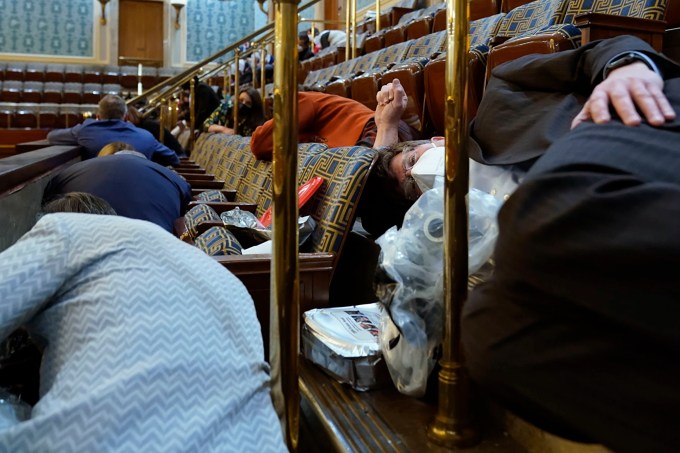
            There have always been divisions in this country, except perhaps during World War II. But aren’t they worse than ever? I can’t get over the feeling that disagreement has turned into outright hatred. How else can you explain January 6? There are people who don’t think it was any big deal. I ask them this – what would have happened if the mob had actually caught Vice President Pence?  A discussion? If I have any wish for 2022, it’s this – before we hate someone, can we just listen to what they have to say?

Copyright 2020, Patrick F. Cannon