By Patrick F. Cannon
It’s rare to find someone who shares my taste and ear for music; rarer still when he’s 30 years younger than me and has a column in the New York Times. His name is John H. McWhorter. When not writing for the Times and other publications, he’s a linguistics professor at Columbia University in New York.
He’s black, and much better known for his opposition to quota systems, and for holding the belief that African Americans should abandon victimology and separatism, and that affirmative action should be based on class, not race. You can see why these views may not be universally admired , but it’s his views on music that caught my attention.
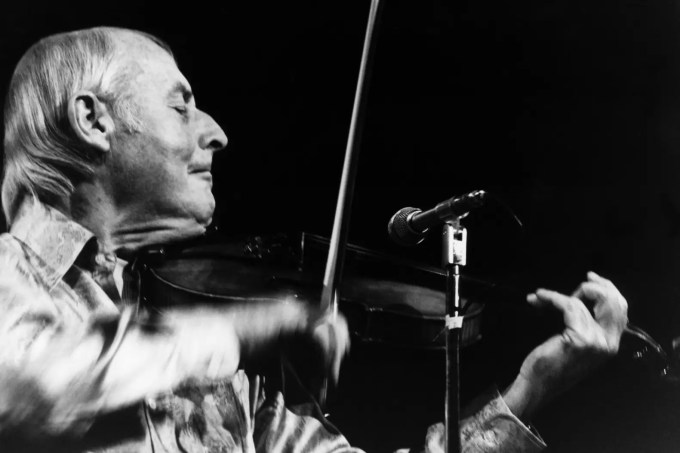
Like me, his ear isn’t attuned to today’s popular music, although he concedes that doesn’t make our shared taste in music superior (he’s more forgiving than I am). Coincident to reading his column on how people hear music differently, I started listening to a CD that I’d had for some time, but somehow overlooked. It was still in that plastic wrap that’s so difficult to get off. The title? Stephane Grappelli Plays Jerome Kern.
Grappelli (1908-1997), born in Paris, was that rare bird, a jazz violinist. He is often associated with the Roma (Gypsy) guitarist Django Reinhardt, his co-leader in the famous Quintette du Hot Club de France. You can find their recordings together and separately on the internet. You can also discover or rediscover Jerome Kern (1885-1945).
Along with George Gershwin, Irving Berlin, Cole Porter, Duke Ellington, Richard Rogers, Leonard Bernstein, Frank Loesser, Stephen Sondheim, and (add your favorite), he was one of the composers who defined American song for much of the 20th Century.
He is credited with composing about seven hundred, mostly for Broadway shows and movie musicals. Unlike Berlin, Porter, and Sondheim, he didn’t write his own lyrics. They were supplied by luminaries like P.G. Woodhouse, Dorathy Fields, and Ira Gershwin. Of the dozens of Broadway shows he did, only Show Boat is still occasionally performed. And you Fred Astaire/ Ginger Rogers fans will remember Swing Time, one of the best of their ten movies.
Grappelli plays “Can’t Help Lovin’ Dat Man” and “Old Man River” from Show Boat, and “The Way You Look Tonight” from Swing Time (for which he got the Academy Award). Other songs on the album include “Smoke Gets in Your Eyes,” “A Fine Romance,” “All the Things You Are,” and a special favorite of mine, “Long Ago and Far Away.” It was sung by Gene Kelley and Rita Heyworth (maybe dubbed in her case) in 1944s Cover Girl. If you look online, you can find that version, and Jo Stafford’s, which was a big hit for her.
These are the kind of songs that fit my ear, along with the works of Bach, Mozart, Beethoven, and Schubert. The thing all these great composers had in common was that they had to write music to eat and pay the rent. They had to please the public, not some foundation or university. In this regard, although their music might not fit my ear, performers like Taylor Swift and Beyonce earn my respect, because they work hard to know and please their fans. Of course, I can’t lend them my ears.
Copyright 2024, Patrick F. Cannon
 cannonnadedotcom
Memorable music you never tire of hearing. For the life of me I can’t remember a single Taylor Swift tune.
I wonder how many blacks (who aren’t politicians) actually subscribe to victimology and affirmative action. I’ve often suspected the concepts were the brainchild of condescending white liberals.
LikeLiked by 1 person
In the great songs, there’s more “you” than “me.”
LikeLike
Also, the era in which they were written.
LikeLiked by 1 person
“We have met the enemy and he is us.” Pogo
LikeLike