By Patrick F. Cannon
Occasionally, I’ve used this space to remind you that everything isn’t all gloom and doom; that many things in this world of ours are better than they’ve ever been. You may be pleasantly surprised to also discover that Americans agree about much more than they disagree, despite what reading and listening to the news might suggest.
Among my news sources are the emails I receive daily from Axios, which was started several years ago by former staffers of Politico. A recent issue stressed the issues that most Americans agree on. Although perhaps a vain hope, it would be nice if our elected representatives paid more attention to what we think, rather than what they want us to think.
Immigration is of course a hot topic. Seventy-nine percent of us think it’s a good thing, while two-thirds believe local officials should cooperate with federal authorities on deporting illegal immigrants who have committed crimes. Two-thirds also believe there should be a path to citizenship for illegal workers who contribute to the economy.
An astonishing number of us no longer trust the Federal government to do the right thing. Only two percent say they trust them “just about always,” with 15 percent trusting them “most of the time.” (As for me, I don’t know any of those gullible folks!) In 1958, 73 percent of us trusted the Feds. I was raised as a Roman Catholic, and we were encouraged to “examine our conscience” before we confessed our sins. Most of the people we elect to Congress wouldn’t think of doing such a thing, so they’ve richly earned our disdain. On the other hand, 59 percent of Americans trust their state governments, and 65 percent their local. They must not live in Illinois or Chicago!
It’s difficult to ignore (but our elected leaders have managed to) that 90 percent of Americans are concerned at the steadily mounting national debt, which stood at $38.8 trillion as I was writing this. It now stands at about 120 percent of our gross domestic product. In 1990, it was 41 percent; in 2000, 33.3 percent; in 2010, 85 percent; and in 2020, it reached 124.5 percent. Despite taking a meat ax to many Federal departments and agencies, the current administration has increased the national debt by $2.5 trillion in its first year. I call it robbing Peter to pay Paul. Before we blame one party or another, let me remind you that the last time we had a balanced budget was in 2001 during the Clinton administration.
Funny thing though. Despite widespread agreement on many issues, the country seems as polarized as ever. If we can’t agree on abortion, or sexual identity, or environmental issues, or soaking the rich, or you name it, then we refuse to agree on anything. And some of us even actively hate the other side, an attitude that’s ruined many a family dinner and even old friendships.
I don’t think anyone is going to change their minds on abortion, but just maybe Congress could pass immigration reform. After all, the Senate just passed a housing bill by 89 to 10. Yet it seems the House may not follow suit, or even if t hey do, the president might veto it. What’s the good of sending these knuckleheads to Washington if they refuse to listen to their constituents?
Copyright 2026, Patrick F. Cannon
 cannonnadedotcom
Politicians thrive on conflict. All too often are the very ones responsible for it.
Conflict gives them a platform and a voice. It keeps their names in the papers, and papers know what boosts circulation.
It’s the one thing that gives politicians meaning. What would political theater be without conflict?
Six characters without an author?
It matters little if they truly believe their lines. What counts is they convince their audiences they believe them.
The job can be lucrative. Many get quite wealthy on modest salaries. If you hold power, people want to be your friend, and pay for the privilege.
So it’s no surprise that once a politico gets a grip on a contentious issue, neither hell nor high water will move him (or her or them or whatever) to let go.
It matters little if the issue is grounded in reality or speculation. It just needs to appeal to that portion of the electorate that votes and makes donations (they’re tax deductible!).
The best issues are the ones that have no practical hope of a solution. Savvy politicians know this.
Defund the police! Abolish criminality! Free Palestine! Stop climate change! Open the borders! Confiscate billionaire wealth! Save the whales! The world is filled with injustices, just take your pick and choose your side.
Most people live under the delusion, taught in school, that representatives are elected to Congress to “get things done,” work together, find compromises and solve problems to help the country.
Maybe at one time this was true. Not any more.
As House Speaker, Nancy Pelosi threatened any Dem representative with permanent exile if they dared to think about bipartisanship. During and since her reign, by my recollection House Democrats have voted unanimously, as a solid bloc, on every piece of legislation that has come before the House.
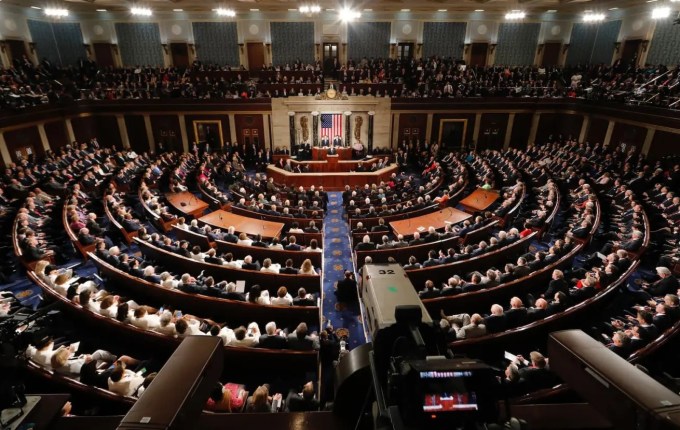
At State of the Union addresses, Dems are too lockstep even to stand and applaud a statement of the president that runs counter to the party line, even if what he says is obviously sensible, At one SOTU, Pelosi in an act of drama tore up her copy of the president’s speech while he was delivering it. The shrew is gone, finally and thankfully, and much richer, but the precedent and rancor remain.
The federal government spends money, it’s their bread and butter. Money not there? Simply tax more, print it or borrow it and pass the costs on to tax payers.
Can voters really expect them to undermine their reason for being? And so the national debt rises by the trillions.
State governments generally are more practical-minded, except the ones dominated by a single party like corporate behemoths. California, Illinois, New York and several others more closely operate like the entrenched federal government and predictably are deeply in debt.
Under such circumstances, what voices do citizens have? If their situations permit, they can move to a state that is less corporate and more citizen-focused (as we did).
Otherwise, they can follow the advice I once saw scrawled on a poster in a New York subway car: “Don’t Vote, it only encourages the bastards!”
LikeLiked by 1 person
I voted, but to my credit, no one I voted for won.
LikeLike
With so many on the city and state payroll, Illinois Dems have elections sewn up. In Chicago every teacher and staff member in the public schools is a fixed vote. We have that problem in Mayberry. When the schools want more money, they hold a referendum and close the schools on Election Day so every school employee can be sure to vote. Their last one raised property taxes for the second year in a row. It won by just a few votes.
In California, voters can get around the monolith via referenda. Now the Dems plan to use one to confiscate a percentage of billionaire wealth.
Who needs the mafia?
Any surprise people and companies are leaving? If you can’t vote by ballot, vote with your feet.
LikeLike