By Patrick F. Cannon
As I write this, President Trump has announced a cease fire in our war with Iran. Whether it finally leads to a lasting settlement is unclear, but it made me think about how many wars or military “actions” our country has been involved in just in my lifetime.
Born in 1938, I was three when World War II began for us with Japan’s attack on Pearl Harbor. Aside from the Civil War, it was our most consequential war, and the last waged after a formal Declaration of War by the Congress. It was the 11th and last time Congress has done so, despite the Constitution giving them that exclusive power. Giving up that power to the executive is perhaps its most glaring dereliction of duty.
I was about to enter the 7th grade when the Korian War started in June of 1950. Although it had all the hallmarks of a war, it was characterized as a “police action” waged under the auspices of the United Nations, which continues to labor away on its goal of ending wars. It has been just as successful in this noble goal as was the League of Nations.
When I was in the Army from 1961-63, I dodged the bullet. Both the Berlin Wall and Cuban Missile crises happened on my watch but thankfully come to nothing. In early 1963, I was offered the opportunity to extend my tour of duty by one year and work on civilian status at the US Embassy in Saigon. Our commitment to South Viet Nam was in its early stage, but I felt no urge to travel to distant lands, so declined. The next year brought the Tonkin Gulf Resolution and the beginning of the Viet Nam nightmare, which was not to end until March 1973.
Before I go on to more major conflicts, let me pause to remember the military actions that might be considered less than all out wars. In October 1983 we sent troops to little Grenada to rescue American medical students from the clutches of the Cubans. In early 1990, we invaded Panama, snatched its leader Manuel Noriega, indicted and convicted him of drug and other charges. Just this year, we sent troops to Venezuela to arrest Nicolas Maduro on similar charges. He awaits trial in New York, but his regime remains in power, since they seem willing to grant American energy companies’ greater access to their vast oil reserves. One could be forgiven for thinking that was the point all along. The people of Venezuela had perhaps hoped for more but should be used to disappointment.
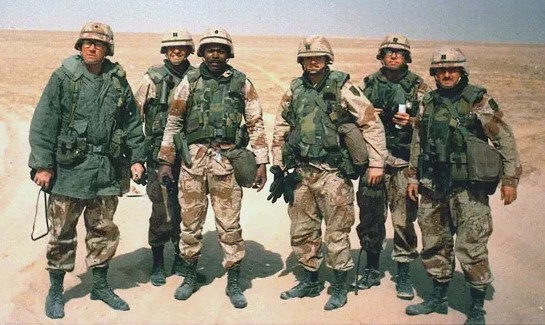
Iraq has been the target of more consequential wars. After they invaded and occupied neighbor Kuwait in 1990, then President George H.W. Bush put together a coalition that early in 1991 recaptured Kuwait and soundly defeated the Iraqi army in Operation Desert Storm. The president was criticized by some for not occupying Iraq and removing Sudam Hussein from power.
His son, George W. Bush, decided to do just that in 2003, when operation Iraqi Freedom removed Husein from power, but failed to find the weapons of mass destruction whose existence were the reason for the war in the first place. It was the end of 2011 before the last troops left. Can I suggest the years between were something of a mess? And that Iraq remains so?
There was widespread public support for the invasion of Afghanistan in the aftermath of 9/11. While we didn’t find Osama bin Laden then, we did remove the Taliban from power. By the time we left chaotically in 2021, the Taliban was lurking in the wings and soon returned to power. By the way, Osama bin Laden was finally found not in Afghanistan but in Pakistan, where he was found and killed in May 2011.
Now Iran. But let’s have a look at our record so far. World War II, victory. Korea, stalemate. Viet Nam, loss. Grenada, success sort of. First Iraq, success. Second Iraq, ambiguous. Afghanistan, failure. Invasion of the Body Snatchers (Noriega, Maduro), success. Iran? Who the hell knows. We were told weeks ago that we won. So why do we just have another truce? When you win, you get a peace treaty, not a truce to negotiate possible peace.
Through all this, the American military has done its best. The politicians? Not so much.
Copyright 2026, Patrick F. Cannon


War is hell.
Not in the abstract but in real life.
Much of the discourse about war, I’m afraid, frames war in the abstract, as a concept to be countered by other concepts like peace, truce, treaty and maybe memoranda of understanding, as a legal matter.
In any case, war is best avoided, whenever possible, because the human consequences are extreme.
And paradoxically, the most effective way of avoiding war is through dominant military strength.
Negotiations can go nowhere, treaties can be broken, appeasement and accommodation lead only to perceptions of weakness, but the prospect of facing an overwhelming military threat concentrates the mind most effectively.
Military superiority, however, is hardly a perfect solution. It haas its costs and once you have it, human nature can easily be tempted to use it. But once you use it, you’d better be prepared for the chaos and destruction that follow.
Politicians can’t be trusted. They are never the ones who do the fighting, make the sacrifices or suffer the casualties.
True, Congress, with its tendency to do nothing, can prevent a reckless president from dragging the country into war, but it can just as easily, in a frenzy of enthusiasm, do the opposite.
Also, times have changed. Events in today’s world move rapidly (unlike the world when the constitution was written). Congressional deliberations can take too long to address them, or result in indecision.
Whether it realizes it or not, the country has gained valuable experience with having a president and leaders who are not elites, academics or lawyers but businessmen and practical people from “bourgeois” backgrounds.
Business people focus on profits and benefits, what works best. They are motivated primarily to make their companies successful (great again!) and customers (voters!) happy. They are less interested in ideological debates, though they are bound to operate by ethical principles lest their reputations suffer.
This isn’t a simple matter of expediency but a positive approach in practical and common sense terms to what is most mutually beneficial. Adam Smith explains how self-interest somehow produces this outcome (Capitalism).
Business people do not like to make enemies. It’s bad for business. They understand that mutually beneficial transactions can be possible even with people they disagree with or dislike (Hence Trump’s willingness to work with Putin, Xi and prickly Iranians).
Before Trump, we got ourselves involved with (some say even promoted) Ukraine’s conflict with Russia as a strategic attempt to counter Russian influence. The Biden cabal poured billions into armaments and supplies for Ukraine, even as it prevented Ukraine from escalating to an all out war involving the US and Europe. Meanwhile, the dead, Russian and Ukrainian, piled up, as did the economic cost.
Trump put a stop to paying for the conflict — it wasn’t the U.S.’s war but Ukraine’s and Europe’s– and worked hard to get the two sides to see the economic benefits of negotiation and peace.
It hasn’t worked — the hatred between the two countries runs deep– but we’re no longer footing the bill and have given the EU a wake up call as to their own responsibilities. A work in progress.
The Iran and Venezuela interventions were meant to check the economic and strategic influence of China — in the Middle East and Western Hemisphere — more than to address hostilities with the two countries themselves.
This is a topic for another discussion but both countries are no longer a threat to the US as Chinese proxies. (Cuba will be next.) Venezuela is now a partner in our oil business and Iran is seriously degraded as a military threat. Meanwhile the US has asserted itself as the dominant power in both regions.
So all in all, not a perfect business deal but not a bad one either. Unlike Iraq, Korea and Vietnam, it incurred minimal loss of American lives (and those losses were incidental). Israel didn’t get what it wanted (regime change), but their problems are millennial and not our battle. Iranians are still oppressed by their religious fanatics, but we stopped pretending we are the avenging super heroes of comic strips. The price of oil is dropping. Americans and even disgruntled Europeans are happy. And who knows? The fractious Middle East with its religious frictions may even become a little less so and more cooperative. We’ll see.
In any event, don’t expect Trump to get any credit. No good deed ever went unpunished!
LikeLiked by 1 person
We’ll see how it all works out. I’m not optimistic.
LikeLike
Neither am I in such matters and with fanatics like these. Hope too often clouds experience. But what were the alternatives? Unconditional surrender, regime change and a peace treaty might have been preferable but that would have required Iran’s near total demolition, a prolonged commitment, and an extended disruption of oil supplies that would have impacted world economy, not to mention piles of bodies. The reliably cynical and hostile press is framing the MOU as a defeat, but Iran gets nothing unless it meets the terms of the agreement.
LikeLiked by 1 person
One lives in hope!
LikeLike