By Patrick F. Cannon
Over the winter, I happened to be in Chicago’s Loop, and found myself walking past the Federal center, which includes an office building, the courthouse, and a post office, all designed by the famous German-born architect, Mies van der Rohe. The complex includes a plaza, notable for a striking red stabile by artist Alexander Calder. But it was something else that caught my eye.
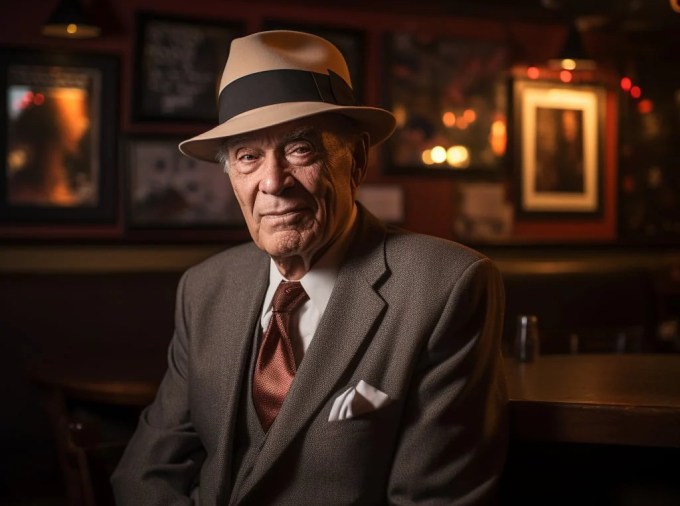
Two older men were walking across the plaza, clearly headed for the courthouse. Both were wearing dark blue full-length overcoats, with ties clearly visible. On their heads? Felt fedoras. When I first started working at a real corporate job in 1963, almost every man working downtown was dressed similarly. Now, they’re in the minority. I assumed these distinguished gentlemen were either Federal judges or lawyers practicing before them. The courts, it seems, are one of the last bastions of proper dress (although “proper” may now be considered an elitist word).
When I got that first corporate job, I was fresh out of the Army. I owned one suit, which clearly would need a friend or two. For some years, I bought my suits either at Baskins (owned by Hart, Shaffner & Marx) or Marshall Field’s. When I retired in 2001, I owned eight suits and two sports coats. Now, I have one blue-made-to-measure suit, suitable for weddings and funerals; and two sports coats, a navy-blue blazer, which I occasionally wear and a patterned one which I wish I hadn’t bought.
I lived for many years in Oak Park. When I moved back in 1974, there were at least five men’s stores – Baskins, Lytton’s, Marshall Fields, Bogarts, and Spaulding’s. Now? None. You must go across the street to River Forest, which has a Men’s Warehouse. The fashion in hats comes and goes, but you’re more likely to see baseball-like caps on men’s heads than fedoras, including the bright red version worn by the leader of the free world.
In addition to buying those suits in 1963, I thought I’d better get a hat too. Baskins had a hat section on the first floor of its downtown store, so I bravely ventured in. I didn’t see myself in the typical grey or brown fedora, so I chose something a bit younger and sportier (I thought). I remember it had a bright red band and a jaunty feather. I wore it a few times, but every time I looked in the mirror it looked goofier, so I stopped wearing it.
As it happened, John F. Kennedy was president then and was often seen sans hat, which caused consternation in the hat industry. Concerned that he might lose the hat vote, he was thereafter occasionally seen sporting a fedora. But it was too late. You would be hard pressed to remember seeing subsequent presidents – even stodgy Richard Nixon – wearing anything but a golf hat.
There was a hat protocol. Gentlemen took their hats off in elevators and never wore them in a restaurant or other public place. Older churches still have hat clips in pews so they could be safely stored. On the other hand, Roman Catholic and other denominations required women to have a head covering. No longer. I suspect that’s one of the reasons the folks who belong to the breakaway Society of St. Pius X broke away from the Roman church after Vatican II.
Fedoras make a comeback from time to time. Do hipsters still wear those tiny versions as they haunt the streets of hippier neighborhood like Chicago’s Wicker Park (or have they been gentrified out?)? And we can always count on black men and women to rise to the occasion, particularly on Sundays. The rest of us will just have to get used to seeing both men and women wearing baseball caps even in the finest restaurants. The ongoing vulgarization of American taste demands it.
Copyright 2026, Patrick F. Cannon


“Hats symbolize authority, power and social status.”
At least that’s what the AI assistant on my computer says.
They also serve as a form of self-expression and identity, the bot helpfully continues.
I own a variety of baseball-type caps (including a prized blue one with the Dodgers’ Brooklyn B on it) that I wear in cold weather to keep body heat from escaping into the atmosphere (my contribution to climate change), and in summer to shield the sun from my eyes and the area of my head where a natural tonsure has made its appearance.
Aside from a wool knit cap reserved for the coldest days, that’s it.
Back in the frigid wastelands of Chicago, I once purchased an astrakhan to keep my head warm on the walk from the parking lot to the office. It didn’t look half bad but it didn’t protect the ears. Maybe if there were ear flaps, I might have kept wearing it, dorky as it would have looked.
So much for power and authority.
As for social status, the baseball cap seems to be the most common and popular type of headgear here in fashionable Mayberry. People of all ages, including women, wear them. In Europe you would be ridiculed for wearing one.
Social rank? Aside from the town and gown divide, there doesn’t seem to be one here.
So I guess it comes down to self-expression. In that case, hats are no different, if less expressive, than tee shirts, which have become walking billboards for all types of messages, cryptic, funny, profane, stupid, you name it, the weirder the better
Unlike conformist Europeans, we are a nation of individualists, after all, as so many World Cup fans from abroad have discovered to their surprise and delight.
LikeLiked by 1 person
I guess it came as a surprise to visitors that we turned out to be so hospitable and even nice. They should come more often!
LikeLike
They will, as long as we have Ranch “sauce.”
LikeLiked by 1 person
And, of course, onion dip!
LikeLike