By Patrick F. Cannon
The first good watch I ever owned was a Hamilton that I got when I graduated from high school. It told the time in various time zones and had a 21-jewel movement. It would have been a real stretch financially for my mother then. It disappeared when I was in basic training for the Army.
Since then, I’ve owned a variety of timepieces, including a fine pocket watch my first wife Mary bought me. I had it on a watch chain and would fish it out of my pocket to find the time. I thought it was cool. It eventually stopped running and I never got around to getting it fixed. I replaced it with a cheap Timex, which served me well until my second wife Jeanette bought me a gold Seiko as a wedding gift in 1986. It needs a battery but keeps perfect time. It also tells me the date if I remember to adjust it every month.
My second watch is a Hugo Boss. It has a Swiss movement and was a gift from a Korean international director of Lions Clubs International when we had our convention in Seoul in 1995. His name was Tae Suo Lee, and he was the former Minister of Political Affairs in the Korean government. He became president of Lions in 2003-04, after I retired. I confess when I got it, I thought it was a “copy watch.” Cheap knockoffs of almost any prestige brand could be found in Seoul in those days.
Rolex was a popular brand to copy. They did look the part but had cheap domestic movements. I remember going into a public restroom and finding a fellow at a table selling a variety of famous brands. Unfortunately, one of my colleagues bought six of them as gifts; alas, US Customs confiscated them when he landed back in Chicago. They probably would have stopped running soon in any case. But my Hugo is still running after more than 30 years, so I assume it’s the real thing.
At some point, especially for young people, wrist watches went out of fashion, replaced by the ubiquitous cell phone. In addition to being an actual phone, it tells you the exact time, sends texts and emails; acts as your credit card; replaces your camera; stores tickets and boarding passes; gets you to your destination with as little fuss as possible; and no doubt occasionally reminds you what a fine and generous person you are. Have you noticed that more people never let it leave their hand? As if their life depended on its immediacy?
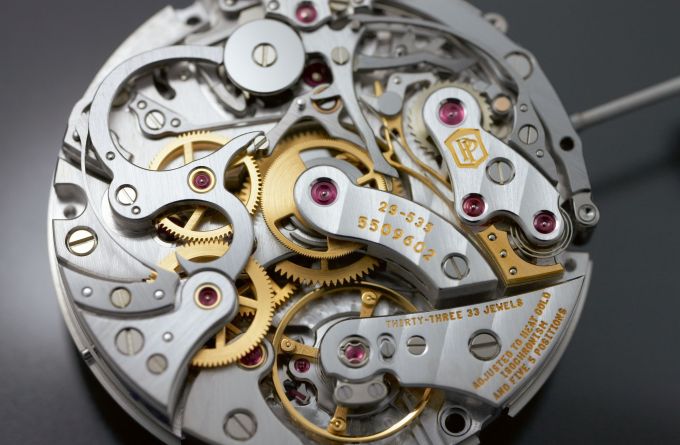
Many people predicted the end of watches, but they had forgotten the obsession that rich people have to own something no one else has. Watch collecting has become the thing. While the average Joe would love to have any Rolex – the least expensive is about $8,000 – the serious collector will lust after the Petek Philippe Grand Complications Dial Watch at $14 million, which of course includes the band. And it comes with a guarantee.
At a lower price point, the “smart” watch began to appear. At first, it was a hard sell, but as features were added, it began to catch on. It can’t completely replace the cell phone, but it can be used as a phone (and a watch), but most folks buy one because they can track their vital signs on a minute-by-minute basis. Why apparently healthy people need to know their blood pressure, heart rate, blood oxygen, and most important of all: how may steps they’ve taken in the day are beyond me.
Another area of collecting nostalgia is the fountain pen. As it happens, I once owned two – a Waterman and a Mont Blanc. I got the Waterman as a gift at a dinner at the Ritz Hotel in Paris from a PR agency we employed; the Mont Blanc was a gift from my wife Jeanette. She paid about $250 for it; I see now they go for nearly $800. I used the pens generally to sign correspondence, although I’m sure the recipient didn’t notice or care. After I retired, my son sold them for me on E-bay for a nice profit.
Anyway, feel free to ask me the time of day. I never go out without my watch. And I do carry my cell phone with me. If I recognize the caller’s number, I’ll even answer it. But if you ask me my blood pressure, I’ll have to tell you it was normal the last time I had it checked by my doctor.
Copyright 2026, Patrick F. Cannon


I remember you pulling out your pocket watch as a young girl! ⏱️
LikeLiked by 1 person
I didn’t know what time it was…….until Mamie gave me a Timex watch.
Apologies to Rodgers and Hart for commercializing one of the Great American Songbook’s timeless tunes. But it’s happened many times.
I especially like Sarah Vaughan’s sassy version of the song. I heard her sing it at the Chicago Theater, at one of Jane Byrne’s Jazz Festivals. Sarah takes it from a reflective “I didn’t know” to a riffing, finger-popping “And I know what time it is now!”……..and just keeps on ticking to the beat.
We have to thank the Earth’s daily rotation and gradual orbit around the Sun for our basic notion of time. They provide a reliable sequence to daily life. Without them, say if we existed in a flat world of unchanging light, we might not be aware of time’s passage at all.
It seems the first timepiece was the sundial, imported by Egypt from Babylon around 3500 BC. Hadrian erected one in Rome with an Egyptian obelisk functioning as the gnomon. Remnants of it are still visible underground.
Sand glass clocks and primitive water clocks came after, and later, crude mechanical clocks. A breakthrough occurred when Galileo discovered the properties of the pendulum in 1581. After new discoveries and inventions, personal watches and clocks entered mass production in the 1900s.
I’ve had various watches, including a pocket watch when they were briefly in style. The better ones were gifted (an elegant Tissot from a Swiss industrialist on the Lions board, who also gave me a silver Caran d’Ache pen I still use). When an aunt passed away, I received a box of old fountain pens that didn’t write, a few old coins and a “Longines” wrist watch with a cheap band that led me to assume it was a knock off. When I took it to a jeweler for a new band, it turned out to be a genuine Longines and 14k gold. Not a Rolex, to be sure, but it has a wind-up mechanism and handsome Roman numeral face.
No one can escape time. We live by it. We wear it. We have atomic clocks based on the vibrations of atoms, specifically the Cesium-133 atom, which oscillates exactly 9,192,631,770 times to define one second.
The Apple watch on my wrist, as well as my various other devices, must be linked to it as they always display the same time. The watch even accounts for time zone changes if I’m traveling.
We haven’t quite gotten a handle on time zones, however. Before 2006, Indiana didn’t change its clocks for Daylight Savings . This meant that for roughly half the year the state aligned with Central Time (Chicago) and for the rest of the year with Eastern Time (New York), except for the westernmost corners of the state which always conformed to Central Time and its DST. This avoided the nuisance of changing clocks twice a year but created confusion for interstate commerce and transportation. Now the state is on Eastern Time (and DST) except for those westernmost areas.
As a result, summer evenings can extend till after 9:00pm. On winter mornings, the sun doesn’t come up until around 8:00am. If the Senate bill passes to make DST permanent all year round, it will mean we won’t see daylight in winter till around 9:00am.
But what is more important, east coast golfers who like to tee off after work or some frozen kiddies waiting in the darkness for the school bus?
LikeLiked by 1 person
Goof old Indiana. I was late for a meeting in Indianapolis once because of my confusion about the time. Didn’t miss much though. Thanks Indiana.
LikeLike
Like a guardian angel, Indiana has your back, even when you don’t immediately realize it.
LikeLike