Less is, Well, Less

By Patrick F. Cannon

My partner, photographer James Caulfield, and I are working on a major revision – really a transformation – of a book we did nearly 15 years ago on one of America’s greatest architects, Louis Sullivan. The photo above by Jim is of the 1899 Bayard-Condict Building in Manhattan. As you can see, minimalism wasn’t Sullivan’s forte. In fact, it would have been inconceivable to  him not to enhance his buildings through appropriate decoration.

            Those angels are no thoughtless addition. When built, the Bayard-Condict was meant to house tenants mostly related to printing and publishing, messengers of the word if you will. Since angels are considered the messengers of God, and similar messengers exist in other religions and cultures, their use here is meaningful. And it was  no accident that Sullivan almost always used Lions – symbols of strength and dignity – in his many bank designs.

            By the time he died in 1924, architecture had already started its transition from the decorative to the functional. In this and other countries, Art Deco was in the ascendency. While “Deco” was part of its name, its decorative flourishes were pared down, almost cubistic in form. In the 1930s, forms were further pared down, not only in architecture, but product design as well. The “streamlined” railroad trains – the New York Central’s 20th Century Limited was typical – were good examples of what came to be known as Art Moderne, which encompassed not only trains, but buildings, coffee pots and toasters.

            Lurking in Weimar Germany during most of those years were young architects who would eventually make pure functionalism the dominant Western style – what has come to be known as the International Style after the 1932 exhibition of that name at the Museum of Modern Art in New York.  Among the architects exhibited,  Ludwig Mies van der Rohe and Walter Gropius fled Nazi Germany in the 1930s and ended up in America, Mies (as he’s commonly known) in fact settled in Chicago, where he headed the architecture school at the Illinois Institute of Technology. He also, beginning in the late 1940s after construction resumed after World War II, transformed commercial and institutional architecture. As he was quoted as saying, “less is more.” (Frank Lloyd Wright was quoted as quipping “less is less.”)

But Mies meant it. His 1950 860-880 North Lake Shore Drive apartment buildings in Chicago were copied over and over again, not only by Mies, but most of  America’s and Europe’s young architects. Alas, not all of them had the master’s genius for scale and detail. A perfect example is the soulless building that replaced Sullivan’s Chicago Stock Exchange Building, needlessly torn down in 1972. No one goes out of the way to see its lobby, but people do travel to see the recreation of the Stock Exchange Trading Room at the Art Institute.

   There are signs that the rational sometimes gives way to the urge to decorate or at least enhance. Post-Modernism had its day, consciously resurrecting some of the shapes and symbols of the past. And it’s a rare blank wall in Chicago and other cities that hasn’t caught the attention of the graffiti tagger or muralist. While much of this is mediocre or blatantly political, there are always exceptions, and some works of real talent.

Then there is Frank Gehry and his copiers. While not strictly speaking decorative in the Sullivan sense, they are decorative in form. It took him awhile to get there. Much of his early work is either aggressively industrial (his own home) or miscarried, like his deconsructivist “Fred and Ginger” building in Prague, which is supposed to show a dancing couple. But I have always thought Gehry was really a frustrated sculptor, and his famous Guggenheim Museum in Bilbao, Spain is really a piece of sculpture enclosing a building (one of his actual sculptures, the Gold Fish, adorns the sea front in Barcelona).

Of course, his work is only possible because of complicated computer-assisted calculations, carried out by this dedicated staff. When people go out of their way to see his work, there must be something there that touches them, just as so many travel to see Frank Lloyd Wright’s works. Wright could never quite abandon decoration, no matter how simple it might seem. And most people stubbornly prefer brick and stone over steel and glass for their own homes, to the consternation of many architects.

The kind of molded terra cotta ornament that Sullivan produced isn’t coming back, but just the other day I passed a steel and glass apartment building with a colorful mosaic applied to one wall. Passersby who would normally have walked past the building without a second glance, instead stopped to study it, just as do those who unexpectedly come upon the Bayard-Condict in lower Manhattan.

Copyright 2023, Patrick F. Cannon; photo copyright 2023, James Caulfield  

It’s For the Birds!

By Patrick F. Cannon

The National Audubon Society has been roiled by (or embroiled in, take your pick) a controversy about its name. It seems that the artist and naturalist it’s named after, John James Audubon (1785-1851), was once  a slave owner. He was actually born in Haiti, the son of as French officer, and lived there, for a time in France, and eventually in many parts of the United States. Although he resided for a time in the Philadelphia area, most of his life was spent in the South. His birth name was Jean-Jacques Rabin, but he changed it after he cast his lot with the new country.

            He tried his hand at many businesses, but eventually spent most of his time finding, cataloging and painting birds. Between 1827 and 1838, he issued installments of his hand-colored copper-plate etchings, that would eventually number 435 when published together as the Birds of America in what has come to be known as the Double-Elephant Folio. The prints are 39.5 by 28.5 inches each. About 200 bound sets are thought to exist. One recently sold for $9.5 million.

            Most people have seen at least some of the prints in reproductions, even if they didn’t know what they were looking at. Audubon’s particular genius was to show the birds in their actual habitat, the landscapes and plants just as accurately drawn as the birds. Even in smaller-scale reproductions, they are stunning. You should be able to find a good selection on-line.

            But none of the great man’s accomplishment matter to some of the members of the Audubon Society who are demanding the organization change the name because its namesake once owned a few slaves. So far, the National Audubon Society has resisted these demands. Some of its local chapters, however, have punished Audubon – the Seattle chapter is now “Bird Connect Seattle,” and the Washington, DC chapter has named itself  “Nature Forward.”

             The DC chapter might also want to demand that the nation’s capital change its name too. After all, George Washington owned many more slaves than did Audubon. And while we’re at it, let’s rename everything else named after him, and after Jefferson, Madison, Monroe, Jackson, and even Franklin. In Chicago’s Loop, only Adams Street would survive. There is actually a street named after me – Cannon Drive just east of the Lincoln Park Zoo. I wouldn’t object to removing my name there and moving it to replace Madison Street. State and Cannon as the crossroads of Chicago? Now that has a nice ring to it!

            Haven’t we had enough of this nonsense? Expecting historical figures to be as virtuous and altogether as perfect as we are? Perhaps if we taught context as well as facts in our history courses at all levels, then we might just look at things in a different way.

             For example: isn’t it wonderful how much better things are now than they were in Audubon’s time? Slavery was actually legal then. Even after it ended, the South – who after all lost the Civil War – managed to reinstate a version of it. Beginning in the 1960s, equality began to have real meaning for African-Americans. Racism still exists, but at least it’s no longer institutionalized.

            If we’re honest, we live in a world much richer than it’s ever been. Abject poverty was once widespread; now, it exists  mostly in countries suffering political upheaval. Likewise, actual hunger. Despite an increasing population, the world’s farmers produce enough to feed everyone. And based on a reading of man’s history, even climate change will eventually be controlled.

            So, instead of worrying about Audubon, let’s glory in his achievements and concentrate on solving today’s problems, instead of demonizing the dead, who are, after all, beyond punishment.

Copyright 2023, Patrick F. Cannon

War is Hell

By Patrick F. Cannon

I am tired and sick of war. Its glory is all moonshine. It is only those who have never fired a shot nor heard the shrieks and groans of the wounded who cry out for blood,  for vengeance for desolation. War is hell.

                                                William Tecumseh Sherman

Civil War general Sherman, who had personal experience in inflicting the horrors of war, is famous for this simple but true statement. His march to the sea in late 1864 from Atlanta to Savannah was meant not only to destroy crops that might have fed and sustained his Confederate enemy, but to make its citizens directly feel the pain of war; or as he put it, to “make Georgia howl.”. While international conventions might forbid making war on civilians, they have always suffered. While only estimates, approximately 15 million combatants died during World War II; and 45 million civilians.

            The United States and its allies were responsible for some of those deaths. After Hitler began the indiscriminate area bombing of London and other British cities in 1940, the British eventually abandoned the policy of bombing only industrial targets, and simply decided to bomb cities and “unhouse” its residents. While the US persisted in targeted bombing in Europe until nearly the end of the war, it had no compunction in targeting civilians in Japan, culminating in the atomic-bombing of Hiroshima and Nagasaki, which finally convinced Japan to end the war.

            With the release of director Christopher Nolan’s Oppenheimer, the decision to use the atomic bombs against Japan is once again being questioned. Without going too deeply into the historical details, let me just say that based upon the Allies experience in fighting the Japanese, it’s perfectly understandable that President Truman chose to do so.

             So, based on the scale of civilian deaths in World War II, which the Soviet Union did more than their share of causing, I find it ironic that Vladimir Putin seems to be accusing Ukraine of war crimes for dropping a few bombs on Moscow and killing a handful of Russians. In his mind, invading a neighbor who used to be part of the former Soviet Union and targeting civilian and cultural targets – and killing more than 9,000 non-combatants so far – is a fair tit for tat for the few dozen Russians who may have been killed by Ukrainian attacks. 

            Of course, Russians have a long history of killing Ukrainians. The forced agricultural collectivization of the 1930s under Stalin killed approximately 4 million Ukrainians by starvation and outright murder. Then in 1941, the Germans invaded and killed another 4 million, including a million Jews, fully 25 percent of the population. So, “war is hell” has true meaning for Putin’s victims.

            Compared to this suffering, the number if Confederate deaths due to Sherman’s march pales. It is estimated that the total civilian deaths in the South during the Civil War was about 50,000, mostly from starvation or disease, although the shelling of cities like Atlanta surely killed some civilians. 

             By the way, many of the folks down yonder call it “The Second War of Independence.” I recall many years ago being told by two southern belles that I should visit a cyclorama in Atlanta portraying the Battle of Atlanta. As they described it, tears come to their eyes. I took a pass. I didn’t shed any tears when they recently decided to rename three Army posts where I had spent some time, all named for traitorous Confederate generals – Benning, Gordon and Hood. 

            But, back to Putin. He was born in 1952, several years after the “Great Patriotic War,” which is what the Russians call World War II. He grew up during the heyday of the Soviet Union, when it was one of the two great world powers. Then, as a KGB officer, he saw it all come tumbling down. To him, Ukraine belongs in a new Soviet Union he’s trying to recreate. Like Stalin before him, human life has no meaning if it stands in the way of his ambitions.   

            No wonder Donald Trump admires him. No pesky legislature or courts to rein him in. Only his neighbors who used to be part of that lamented USSR, and will do anything to avoid being forced back in. Even Sweden has come to its senses. Sweden, which managed to maintain its neutrality even in the face of Hitler!   

Copyright 2023, Patrick F. Cannon

I Hate Them, I Loathe Them, I Despise Them!

By Patrick F. Cannon

Dorothy Lamour said those words under hypnosis in the silly Bing Crosby/Bob Hope 1947 film, Road to Rio. I won’t go into the reason she said them; you can look it up for yourself. I quote them because they seem to have become the anthem for our age. In almost every aspect of society – social, cultural and political – there is not only a great divide in opinion, but real animus, and actual hatred.

I’m old enough to remember a time when political compromise was possible. Members of Congress could disagree about policy, and fight their side passionately, but found it perfectly possible to have friendships across the aisle, and to enact legislation that might just be good for the country as a whole. The Senate cloakroom was a famous venue for these discussions. I understand it’s mostly empty these days.

Apparently, the country is divided between the so-called “educated elites,” who live on the coasts; and the “traditional values” folks who occupy the heartland. If you’re in one or the other (obviously these categories are only handy simplifications), you are inclined to think that the folks on the other side are not just misguided, but malignant.

Abortion is clearly one of the issues that divides the country. It rarely occurs to pro-choice supporters that people who oppose abortion might be doing so for sincerely-held moral and/or religious convictions. Yet, aside from some politicians who oppose abortion altogether or would place severe limits on it simply because it helps to get them elected, and not because of any real conviction (see Donald Trump), there is a significant percentage of Americans who really believe that all life comes from God, and is thus sacred.  If we can start a discussion by granting the sincerity of the other side’s opinions, might we not have a more rational discussion?

On the other side, devout religionists need to recognize and accept that not everyone shares their beliefs, and that there is some wisdom in the old saying that “you can’t legislate morality.” As it happens, nearly 70 percent of Americans believe abortion should be legal for at least the first three months of pregnancy. Instead, many states have or intend to pass laws forbidding abortions after six weeks, or even banning it outright. While I normally believe states should decide most issues locally, this is not one of them. But will the Congress step up and provide clarity? Not a chance.

A few days ago, a poll showed that more than 50 percent of possible Republican primary voters support Donald Trump. Despite multiple indictments (or because of them?), his support is actually increasing. Given this, it’s unlikely that Republican members of Congress will suddenly defy their voters and reach across the aisle to work with Democrats on anything, much less abortion. This is not the same kind of  Republican leadership that told Richard Nixon he had to resign or would certainly be impeached and convicted.

(In my ideal world, decisions like abortion would be left to the individual, but that world doesn’t and never has existed. And let me point out that most people who are so worked up about “wokeness” live in communities that are mostly fast asleep.)

 Animus on both sides of the aisle also prevents any meaningful immigration reform. The far right demonizes immigrants from Mexico and Central America, taking their lead from Trump, who called them rapists and murderers. These are the same rapists and murderers who did the landscaping at my former house and still do the same at my condo and where I play golf; who largely cook and serve the food at the nation’s restaurants; and who clean my condo twice a month. If they didn’t do this work, who would? I don’t employ them directly, so I don’t know if they’re illegal or not. And, by the way, including even the so-called Native Americans, all of our forebearers came from somewhere else. My father, for example, was born in Ireland. And, believe me, not everyone was happy he came.

If we were rational, we would confront two issues: what to do with the 11 or 12 million illegal immigrants who are living and working among us; and how to prevent that number from constantly rising. While there might not be any perfect solution, doing nothing because of the presumed political cost, is just that – nothing.

I see that there is another third-party effort underway under the “No Labels” banner. I frankly don’t think they should run a candidate for president, even if we’re stuck with Trump/Biden again. They would be wise to start locally, to see if voters really are as fed up with the current parties as they claim to be.  It would be interesting to see what would happen if they could win even 20 seats in Congress. Talk about being in the catbird seat!

Copyright 2023, Patrick F. Cannon

Goes Around, Comes Around

By Patrick F. Cannon

Back in the mid-1960s (they really did exist), I worked for an integrated paper company. “Integrated” in that case just meant that they grew or bought the trees, made wood pulp into paper of various kinds, then made  the paper into bags and boxes (they also made finer paper for writing and printing). I was in the part of the business that sold bags to people like Ralston Purina, Quaker Oats, Quickrete, MiracleGro, Organic Compost (“Number One in the Number Two Business”), and Kingsford Charcoal, among many others. We also sold a lot of paper potato and onion bags.

            I remember being somewhat flabbergasted when some environmentalists began to accuse the paper industry of murdering trees in their greedy quest for profit. The lunatic fringe even drove spikes into trees soon to be  harvested, causing serious injury to loggers. This confused me, since I knew that my company (Union Camp) actually grew most of the trees they used on the one million acres of forests they owned, or bought trees from tree farmers. While obviously it takes a lot longer to grow a Pine tree than a stalk of corn, the idea is much the same. You harvest, then plant. Although I had long left the industry by then, eventually plastic bags began to replace paper for many uses.

            Nevertheless, recycling paper became a hot topic, especially newspapers and magazines. I think it can be said that these efforts were the beginning of today’s recycling industry. Today, most paper products include at least some recycled material. Metal recycling actually predates paper. Today, 40 percent of steel comes from scrap; and fully 60 percent of aluminum comes from those beer and soft drink cans you throw in the recycling bin.

The percentage for glass is 31, but only 5 for plastic. I’m not sure why this is so low. I put all my plastic in the recycling bin, but it doesn’t amount to much, since I don’t buy soft drinks or water in plastic bottles. Our refuse hauler does pick up garbage and recycling in different trucks, but I have no idea what happens to it after that.

            Once upon a time, fast-food restaurants relied on paper for cups, plates, wrappers and straws. Slowly but surely, as with grocery and commodity bags, plastic began to replace paper. The reason? Much cheaper. But unlike paper, most plastic stubbornly resists decomposition. Added to this is the ubiquitous plastic water bottle. I have never quite understood why people with access to safe drinking water insist on buying water, but unreasoning fear has always encouraged irrational behavior. In this country at least, some folks are starting to use refillable water bottles.

            Of course, if the world’s population was the same as it was in the 1960s – about 3 billion – the scale wouldn’t be as acute, but it’s now 8 billion and growing. At least if all that plastic ended up in landfills, it wouldn’t be able to create vast islands of plastic in the world’s oceans (that’s the Pacific). So, the once irrationally despised paper is now making a comeback. So, you might want to hug that tree for different reasons! Or buy paper company stock. By the way, Union Camp later merged with International Paper, which is now the world’s largest pulp and paper company. Their future looks bright.

Copyright 2023, Patrick F. Cannon
Still the Same

By Patrick F. Cannon

Last weekend, for the first time in 5 years (Covid intervened; it’s usually held every  two years), I attended the Donnelly Family Reunion at the Seven Springs Mountain Resort, located about 50 miles east of Pittsburgh in Pennsylvania’s beautiful Laurel Highlands. The family originated in the Pittsburgh area; the majority still live in Western Pennsylvania or Ohio, but some came from Chicago, New York, Florida, and even California.

            Attendees were all descendants of the children of Frank and Catherine Donnelly, my mother’s parents. All of their children are now gone. I’m in the next generation, and  the second oldest of nine surviving cousins. I didn’t count, but there must have been 50 or 60 people there from four generations. To be honest, I didn’t know who some of the little kids belonged to, but they all had a ball.

            We had group dinners on Friday and Saturday evenings. Although some folks brought special dishes, the meals were catered, as befits the family’s increasing prosperity. The 2016 reunion marked the 50th anniversary. The early ones were held at Renziehausen Park in McKeesport, PA.  In those days, dinners were pot luck. There was always fried chicken, potato salad, baked beans, pickled beets and eggs, Jell-O molds, and cold beer and pop. My cousins and I were younger then, of course, so a softball game before dinner was traditional.

            The reunion is now being organized by my children’s generation.  No softball game is possible, but the kids are kept busy with various games. One of them was a three-legged race, which some of the adults also gave a shot, with hilarious results. The reunion and many of these games were organized by Jill Spear, the daughter of my cousin Jim Suttman and his wife Linda.

            As usual, the finale was the traditional multi-generational egg toss. For many years, the major domo has been another Suttman cousin, Bill. I’m ashamed to say that my daughter Beth and I were the first out. She was blameless; it was I who dropped the egg. It was held in a light rain. Only thunder, lightning and torrential rain who have caused cancellation!

            One of the reasons I love going to Seven Springs is that nothing seems to change in the area. Once you get off the Pennsylvania Turnpike, everything is familiar. You pass no Walmart’s, or large retailers of any kind. You stop for groceries at Sarnelli’s; beer and wine are sold on the lower level. It’s very much like the corner grocery used to be; it has everything you actually need for a short stay, and the people are friendly. Up the road is a farm stand where the justly famous local peaches are sold.

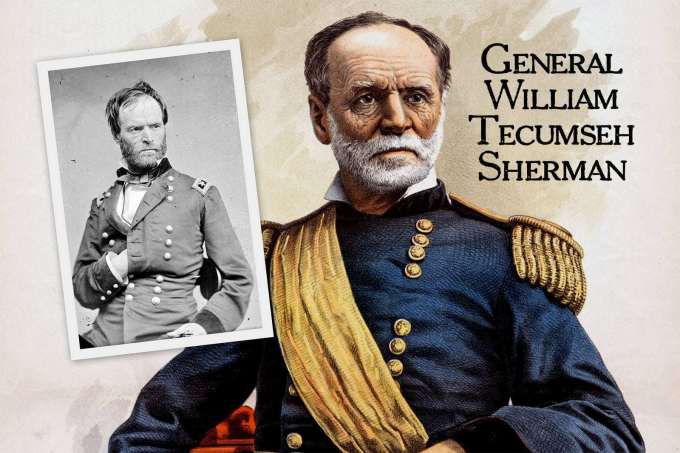
            Maybe there’s just no room for big-box stores. Level building sites are few and far between. Seven Springs sits at an elevation of nearly 3,000 feet. The resort offers skiing in the winter. In the summer, there’s golf, tennis, pickleball (!), horseback riding, fishing, and skeet shooting. If you’re up to it emotionally, it’s near the Flight 93 9/11 National Memorial. This year, I again visited Frank Lloyd Wright’s famous Fallingwater, the summer home he designed for the Kaufmann family of Pittsburgh department store fame (that’s it in the photo). Accompanying me this time were my son Patrick, daughter Beth and her husband Boyd. (By the way, the fall color rivals anything you’ll find in New England.)

            I think the first reunion was in 1966. At 85, I’m  the second oldest; my cousin Jim Goldstrohm is nearly 87 and I was pleased to find him as healthy and talkative as ever. I look forward to seeing him two years from now at the next reunion, where I fully intend to catch the egg at least once!

Copyright 2023, Patrick F. Cannon

Is Two a Collection?

Is Two a Collection?

By Patrick F. Cannon

I get the digital edition of the New York Times. Because I once visited their web site to check on something, one of the ads that pops up regularly is for the auction house, Sotheby’s. The other day, the ad led me to information about an auction of wrist watches in Hong Kong. The estimates quoted were in Hong Kong dollars. My feeble math conversions told me that many of the time pieces were expected to fetch US$250,000 or even more.

            As it happens, I own two watches, both getting on in years. One is a Seiko, which adorns my wrist as I write this. My wife Jeanette bought it for me as a present nearly 40 years ago. Every once in a while I have to change the battery, but it keeps perfect time (or near enough for me). The other – a Hugo Boss – was a gift from the former foreign minister of the Republic of Korea. I don’t recall exactly, but I’m thinking it’s about 25 years old. My benefactor was then an international director of Lions Clubs International; he later became its international president.

            Although it says “Swiss” on the dial, I was initially suspicious, since Korea then was notorious for what are called “copy watches,” which look like the real thing, but stop running about the time you get them home. Not so in this case; the watch still keeps perfect time, and I alternate wearing it with the Seiko.

            It would never occur to me to have a collection of watches that I didn’t wear. Don’t get me wrong. Some of the watches in the Sotheby’s auction are quite stunning, combining art with precision technology. If you’ve ever seen the workings of a Patek Philippe, Breguet, Omega or Rolex, you can’t help but admire the skill that went into the manufacture and assembly of those teeny tiny parts. But I would have thought that all of that artistry is wasted if the watch is never actually used to tell the time of day, or to time one’s racehorse.

            Automobiles are another area where the highest prices are often paid for cars that have never been driven. I like cars, but it would never occur to me to buy one and put it in the garage. In many cases, the intent is to hold it (and I’m sure that holds true for many collectibles) until the value goes up, then sell it to another collector who won’t drive it either. Believe me, if I bought a Ferrari, it would be tearing down the road almost immediately.

            I’m told that one of the hottest areas for collectors is sneakers. Again, they should be unworn unless they had been worn in battle by someone like Michael Jordon. A pair of his recently sold for a record $2.2 million. When I was a lad, you got a pair of sneakers (we called them tennies) at the beginning of Summer, and wore them out by the time school started again in September. As I recall, they had to be disposed of as hazardous waste.

            But people, and markets, are fickle. You might get caught holding the bag if the market for fancy purses collapses. As for me, I do have quite a few books. Who knows, maybe one or two are worth more than I paid for them. The water colors, etchings, lithographs and photographs on my walls are there because they remind me of the places I’ve been, and the books I’ve written. I even have a framed photograph of a Cow Moose that I bought at an outdoor art fair in Crystal Lake, Illinois. That Moose was standing in the water in Maine, looking directly at me and saying “take me home.” So, I did. I wonder if I should start collecting Moose pictures?

Copyright 2023, Patrick F. Cannon

Supreme Dismay

By Patrick F. Cannon

I can understand the dismay that many people felt when the Supreme Court told President Biden that he couldn’t forgive student loan debt without Congressional action. Announced prior to last year’s elections, the forgiveness  would have cost the country’s taxpayers $430 billion. Since Congress passed the laws that established the grant and loan program in the first place, the Court held that only they could modify its terms through new legislation.

            When President Biden first made the announcement, a great many people – and not just Republicans – predicted that the courts would take a dim view of his executive order. Not least among them were the millions of former students who had diligently paid off their loans. Despite them and expert legal opinion, the president did it anyway. Some cynics even suggested he did it purely for political reasons!

             Frankly, I never understood why the Federal government got itself into the student loan business in the first place. Much of the money went to enrich schools of dubious reputation with abysmal graduation rates. Many of them eventually went out of business, leaving students with nothing but debt. It should come as no surprise that Donald Trump got into the action. It would have been cheaper in the long run to simply give needy but deserving students outright grants.

            Perhaps even more controversially, the court told Harvard University and the University of North Carolina that they could no longer use racial preference in recruiting entering classes. The court’s decision was based primarily on the 14th Amendment, in particular the clause that reads: nor deny to any person within its jurisdiction the equal protection of the laws. The clause was meant to give constitutional reality to the end of slavery. In this case, it was cited to prevent universities from denying equal protection to a different group – Asian Americans. Whether you agree with the decision or not, it’s going to profoundly affect access to the so-called elite schools, but will have little or no effect on the majority of schools that are happy to accept a majority of applicants.

            (Since I first wrote this, in a bit of “tit for tat,” a group of African-American and Latino students have sued Harvard over its practice of giving preference to so-called “legacy” applicants, the children of alumni or large donors. About 40 percent of Harvard students, many of them legacy admissions, pay the full tuition and fees of $57,261 per year. If the student’s family makes $85,000 per year or less, they pay mothing. It’s hard to escape the irony that legacy admissions are helping to subsidize the education of minority and low income students.)   

            Of somewhat lesser impact was the decision that said it was OK for a person to refuse to provide a service that conflicted with their religious beliefs. In this case, a web developer refused to create a site for a same-sex wedding, since her religion teaches that such unions are immoral. Instead of respecting this sincerely-held belief, and simply finding a developer who had no such qualms, the couple sued, giving the Supreme Court an opportunity to look at the proper balance between freedom of speech and freedom of religion. In this very narrow and specific case, it chose religion.

            All of this took place as the integrity of the court has increasingly come into question. Both Justices Thomas and Alito have received expensive trips from “friends” who appear to have had business before the court. Both deny these gifts had any influence on their decisions. They may be telling the truth, but it has brought to light that the Court has no real code of ethics. For this, and for purely political reasons, only 18 percent of us have a great deal of confidence in the court, according to a report by the Association Press (AP). 36 percent have “hardly any,” and 46 percent have “only some.” The Court has never been held in lower repute, nor has the Congress for that matter.

            My opinions about all of this are of no importance. What is important, it seems to me, is the knee-jerk demonization of the “other side.” For example, none of the Supreme Court’s decisions in these cases is without legal justification. But based on comments that you find on the air, in print and the internet, you would be forgiven for thinking the justices in the majority were an evil cabal of heartless brutes.

            These attitudes extend to every corner of our political discourse, making it impossible to solve the solvable problems that face the country. Almost every day, my computer in-box is full of shrill invective from both sides of the political divide. Some of you are responsible for sending this stuff to me. I wish you would think a little  before you press the “forward” key.

Copyright 2023, Patrick F. Cannon

Now Showing!

By Patrick F. Cannon

“It’s a wonderful modern world we live in,” said Captain Jack Aubrey in director Peter Weir’s movie Master and Commander, based on Patrick O’Brian’s novels about the British navy during the Napoleonic Wars. He was commenting on a new American ship design. I could make the same comment about television streaming services that permit you to find at a whim just about any movie you might like to see, including that one, which I highly recommend.

            Just the other day, I watched 12 Angry Men, a 1957 movie about a jury wrestling with the verdict in a murder case. Written by Reginald Rose and directed by Sidney Lumet, it has an extraordinary cast, headed by Henry Fonda, but including Lee J. Cobb, Martin Balsam, E.G Marshall, Jack Klugman, Jack Warden, and Ed Begley. I can think of few films with so many quality actors. If you haven’t seen it, you should.

            If you would like to focus on a single actor, who better than Spencer Tracy? Like the team of Fred Astaire and Ginger Rogers, Tracy is often linked with Katherine Hepburn, and the movies they made together are certainly worth seeing. But I would also recommend three of his later roles: Bad Day at Black Rock, in which he uncovers a murder while searching for the father of a soldier who had served under him in World War II (Robert Ryan is great too as the villain); Inherit the Wind, a thinly fictionalized story about the famous Scopes Monkey Trial, in which he plays the role based on Clarence Darrow (Fredric March is also superb as a fictionalized William Jennings Bryan); and The Last Hurrah, where his Irish-American  mayor of Boston makes one final run for office.

            Although he appeared more on stage than in films, the British actor Paul Scofield is best known here for his Academy Award-winning role in the film version of  Robert Bolt’s A Man for All Seasons. He also won a Tony Award for the stage version that tells the story of Sir Thomas More’s refusal to support Henry VIII in his difficulties in getting the Pope to agree to his divorce. As a result, he lost his head, but was later made a Saint.

In another role with religious overtones, he played the chilly Judge Thomas Danforth in the movie version of Arthur Miller’s The Crucible. A special favorite of mine is John Frankenheimer’s The Train. Scofield plays an obsessed Nazi Colonel, who packs up a museums worth of French paintings and puts them on a train bound for Germany just before the Allies liberate Paris in 1944. His nemesis is a French railway worker played by an indominable Burt Lancaster. Burt doesn’t know a Monet from a Miro, but he’s determined to stop this demented Nazi from stealing French culture.

Finally, in the female actor category, no one was bigger from the 1930s through the 1950s than Bette Davis. Before Meryl Streep came along, Davis had the most Academy Award nominations, ten (she won twice). One of her wins was for 1938s Jezebel, whose title says it all. I would also recommend The Little Foxes, based on Lilian Hellman’s play; but especially All About Eve, which was 1950s Best Picture Academy Award winner. In it, she plays veteran actor Margot Channing, who is challenged by the devious Eve Harrington, played by Anne Baxter, who, coincidentally, was Frank Lloyd Wright’s granddaughter.

So, if you’re tired of streaming series that never seem to end, why not search into the past for the work of some very great actors?

Copyright 2023, Patrick F. Cannon

Smell the Roses!

By Patrick F. Cannon

Last Thursday, I was leading a tour of Frank Lloyd Wright’s Chicago-area sites called “Wright Around Chicago.” It begins in the lobby of the Rookery Building in Chicago’s Loop, which Wright remodeled in 1905. A bus then takes the group to Oak Park for a tour of his Unity Temple; after that, the group walks to the architect’s Home and Studio a few blocks away.

            During the walk, I describe several Wright-designed homes we pass on the way. Last Thursday, we passed a home with Roses growing along its fence. Several members of the  group actually stopped to smell those roses, so I did too. It was a sunny day. The rose bushes were in the shade of one of the most beautiful residential streets in the world. Why wouldn’t I stop and smell those roses? Things aren’t all that bad after all, I thought to myself.

            Usually, it’s all too easy to smell the rot instead of the roses. Just to take one example, have we ever had a sadder group of politicians? Maybe we have,  but in the past they hid their ignorance better, or at least didn’t insist on it. The Chinese want to dominate Asia; and the Russians want their empire back. The Earth is warming, and we don’t yet know for sure what that means. And the Cubs and Sox seem to be back to their old ways.

            But when I turned the radio on early Saturday morning, I was greeted with one of Mozart’s thrilling horn concertos. At my whim, I could play CDs that would yield the genius of Beethoven, Shubert, Bach, Brahms, Gershwin, Porter, Cohen and Berlin; and the voices of Bennett, Sinatra, Fitzgerald, Armstrong, Astaire, Pavarotti, Flemming, and even Blossom Dearie. You may prefer the Smashing Pumpkins, Kiss, Led Zeppelin, the Stones, Alexisonfire, The Sadies, Beyonce, or Taylor Swift. It’s all out there, and much more.            Any day I want, I can take myself by EL or car to the Art Institute, where I can be reminded of the creative genius of men and women who live both today and a thousand years ago or more. They saw something in people and places that they thought were worth preserving for all of us. And the Institute has a school that encourages talents that may be remembered a thousand years from now.

            In about a month, I will travel to the Laurel Highlands of Western Pennsylvania for the Donnelly Family Reunion, the first to be held since Covid. The attendees will be descendants of my Grandparents, Frank and Catherine Donnelly and their seven daughters and one son. I will be the second oldest; the patriarch is my cousin Jimmy Goldstrohm (no actual Donnelly’s are left). The 50th Anniversary Reunion took place in 2016 at the Seven Springs Resort; the first was a picnic held at Renziehausen Park in McKeesport, PA. As I recall, the men of my generation – still in the bloom of youth – played softball to work up an appetite. What can be better than to see once again the cousins you grew up with, and their children and (now) children’s children?

            Finally, when I opened my blinds this morning, the Sun was out, and the four pots of flowers I bought to hang on my balcony railing were in full bloom. The pots were planted by Pesches Garden Center in Des Plaines, and to tell you the truth, I’m not sure what all the flowers actually are, but they give me pleasure, and maybe also to passersby who look up. Throughout Chicagoland and where you live, people have planted and are tending gardens that we can all enjoy. If there are Roses, why not  stop and smell them?

Copyright 2023, Patrick F. Cannon