Frankly, I Don’t Give a Damn
By Patrick F. Cannon
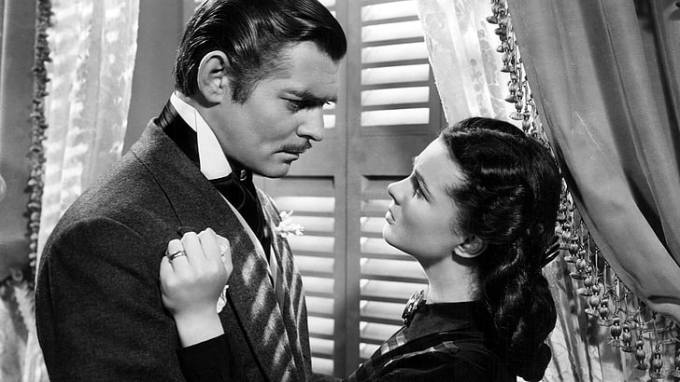
At the end of Gone with the Wind, Rhett’s final words to Scarlett – who begs him to stay – is the classic: “Frankly, my dear, I don’t give a damn.” It’s hard to believe now, but that was pretty racy stuff for 1939.
I know how old Rhett felt. At my age, I find that there’s a lot I don’t give a damn about anymore. There’s music, for example. Much of contemporary music, both popular and serious, doesn’t make sense to my ears. There are exceptions, but I find most rock, hip hop and rap vulgar and sometimes incomprehensible. I understand it takes talent to do complicated guitar riffs, but must they always sound the same in the end? Is a lyric a lyric if it’s not lyrical?
Modern “Folk” music sounds as if it were composed and sung by the same person. Both the male and female performers play and sing as if real melody and poetic lyrics had been banned upon the death of Woody Guthrie. Listen to “Folk Stage” any Saturday evening on Chicago’s WFMT and you’ll see (and hear) what I mean. I’m not a fan, but Country music at least seems understandable and melodic. Finally, so-called serious composers have been indoctrinated by their teachers to believe that any sound is actually music, and that beautiful melody and regular rhythm are passe. Much of jazz has fallen into the same rut.
The visual arts seem caught in a market-driven quandary. What is selling? What might be selling tomorrow? I kept up with the art scene until people like Andy Warhol and later Jeff Koons were taken seriously. Art as a factory; art as repetition. And while I can admire some its practitioners and their work, hasn’t abstract art run its course? Isn’t much of it just design, rather than fine art? By the way, if you want to read mostly incomprehensible prose, try art criticism. Thank God the museums haven’t taken down the work of those old white men (yet).
As to the movies, I went more or less regularly before they closed. They still make movies about human beings and their struggles, but the real money comes from blockbusters based on comic book super heroes, and even super heroines. I stopped reading comic books when I was about 12, and see no reason to start again. But I am thankful that some directors are still concerned with the struggles of actual humans, so I will continue to seek these movies out.
I know good and serious works of fiction are being published, but I no longer feel obligated to read them. I tend to read non-fiction, or reread favorites from my younger days. There is a tendency to devalue even great works of fiction because attitudes and beliefs in them don’t square with the so-called “woke” culture of today. Not to read Hemingway, Steinbeck and Faulkner – Nobel Prize winners all – because they sometimes expressed beliefs and attitudes we might now find distasteful, is to deprive oneself of some of the high points of American literary achievement.
Which brings me back to Gone with the Wind. Apparently, when it is shown on television in the future, it will be preceded by a preface explaining that its depiction of African-Americans was an unfortunate reflection of a more racist time. I think it was the 1960s when I saw it for the first time. Amazingly, nobody had to tell me that it had been condescending to its black characters. I was educated enough by then to figure it out for myself. But if most people need to be protected against their historical ignorance, well, frankly, I don’t give a damn.
Copyright 2021, Patrick F. Cannon






 cannonnadedotcom