Hide and Seek

Hide and Seek

By Patrick F. Cannon

David E. McCraw, the in-house lawyer who advises the newsroom of the New York Times on legal issues that could impact their coverage, has written an interesting book – Truth in Our Times – about the trials and tribulations of his job.

As you might imagine, Donald Trump looms large, both before and after his election. He has long been famous for threatening to sue for libel, but for never actually following through. The bar for libel is particularly high for public figures, which Trump knows, but I suspect he loves the publicity he gets for yelling about it.

As amusing as the instances McCaw cites are, much of the book discusses more serious matters. One is the presumed liberal bias of the Times. He frankly concedes that the newsroom staff is largely liberal in their politics, but that reporting standards mostly work to prevent obvious bias. I think they generally do succeed on a day to day basis; it’s more in the choice of what is covered that bias creeps in. No newspaper, not even the Times, can cover everything. But they obviously do a better job than Fox News and MSNBC.

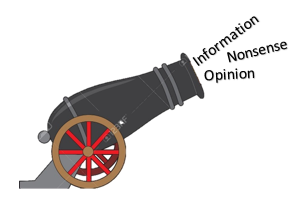
McCraw pointed out something I hadn’t thought of that unintentionally feeds the perception that his newspaper has a liberal bias. Many people only know the Times from their web site. I hadn’t noticed it before, but if you open it, the left side features straight news stories, with opinion columnists at the right. Now, the paper’s editorial board and most of the opinion columnists have a liberal slant (David Brooks is one exception). In the paper, opinion pieces are grouped in the last pages of the first section. Since I suspect that most readers rarely or never see the print edition, the web layout would certainly reinforce the liberal bias perception.

But whatever their bias, almost all newspapers have to battle governments at all levels to gain access to public information. In case you think liberals are innocent of this chicanery, the Obama administration brought more indictments for “leaking” than the previous three combined. And you might recall Hillary Clinton’s private e-mail server when she was Secretary of State, a clear violation of the law. It was the Times who relentlessly covered her arrogant disregard for the public’s right to know. I think every serious journalist should wake up in the morning with the assumption that all politicians are liars and scoundrels, and act accordingly.

Let me leave you with some sobering statistics, then some words of wisdom (not mine, alas). During the Obama administration, 790,000 people in government had top secret clearances (I once had one, but for good cause). Over-classification of documents was then, and still is, epidemic. In 2016, a congressional committee discovered that an average of $10 billion a year was spent on classification activities, and that more than 50 percent of materials were improperly classified. In 2011, there were 92 million separate decisions to classify material.

In the 1971 Pentagon Papers case (was it really that long ago?), in which the Times sued the government for the right to publish the secret documents they had obtained, Justice Potter Stewart wrote:

“I should suppose that the moral, political, and practical considerations would dictate that a very first principle of that wisdom would be an insistence upon avoiding secrecy for its own sake. For when everything is classified, then nothing is classified, and the system becomes one to be disregarded by the cynical or the careless, and to be manipulated by those intent on self-protection or self-promotion. I should suppose, in short, that the hallmark of a truly effective internal security system would be the maximum possible disclosure, recognizing that secrecy can best be preserved only when credibility is truly maintained.”

Of course, the New York Times is sometimes biased in its coverage. So are the Washington Post, Chicago Tribune, Los Angeles Times, Boston Globe and Baltimore Sun. But if we didn’t have them, bias and all, who then would keep a jaundiced eye on governments at all levels?  Would no news really be good news?

######

Copyright 2020, Patrick F. Cannon

Things are Great, Aren’t They?

Things are Great, Aren’t They?

By Patrick F. Cannon

I was born in 1938 and many people born then often wax poetic about how things were better in the “good old days.” Now, I’m sure I was a bright little fellow, but I doubt I was bright enough to realize that unemployment had risen to 19 percent the year I was born; and that the frightened leaders of Britain and France had managed to buy only one more year of peace by betraying the Czechs at Munich. My “good old days” also included World War II, Korea, Viet Nam, and the numerous smaller wars we seem addicted to.

In many ways – sorry about that Bernie Sanders and Elizabeth Warren – these are the good old days. Instead of 19 percent, unemployment is at 3.5 percent, and real income continues to rise. The homeless population has declined every year since 2007, when it was 643,258, to 553,830 at the end of 2018.  Worldwide, extreme poverty is now below 10 percent. Economies in Africa and Asia are experiencing much faster growth than Europe and North America. Although there are worrying pockets, child mortality rates have fallen to record low levels.

I have said this before, but it’s worth repeating – farmers can easily feed the world now, and for the foreseeable future. Indeed, advances in agricultural science – most of which came from the United States – will enable large areas of land to be taken out of production and added to the expanding forests. News on the health front continues to be good, with great progress being made in the eradication of polio; and the steady decline of deaths from malaria, heart disease and cancer.

Advances in communications technology have been astonishing, if sometimes a mixed blessing. I type this on a laptop, which cost me about $550, or $30 in 1938 money. That might have bought you a radio then. I can search the world with my computer. Next to the laptop is my cell phone, which would have set me back about six bucks in 1938. I can do almost everything with it that I can do with my laptop, and call just about anyone in the world on a whim, whether at my desk or strolling down Michigan Avenue in Chicago.

Yet, we also live with a continuing sense of dread, most of which we can blame on our elected officials. A significant number of our fellow citizens voted for a totally unqualified man to be their president. In the three years he has been in office, he has brazenly proven just how unqualified. He ended the year deservedly impeached by the House of Representatives, in an action that was admittedly as much political as judicial; and will be disposed of the same way in the Republican Senate. That he retains the support of his “base” in the face of his outright lies and vindictiveness says as much about his supporters as himself. It also says much about Republican senators, whose wish to be re-elected trumps their obligation to serve their country.

The general rot reaches closer to home too. Tuesday’s Chicago Tribune rang out the old year by reporting that Illinois had lost more residents – 159,700 – than any other state since 2010. In the same period, every state that borders Illinois had gained population. Yet, in the face of constantly growing pension debt, no Democratic politician – not Governor Pritzker nor Chicago’s touted reform mayor Laurie Lightfoot – supports the only way it can be addressed: a constitutional amendment that would permit sensible changes in the future. Instead, they do what modern politicians are seemingly born to do: they raise taxes.

Oh well. As with most years, 2019 was a mixed bag. Against all logic and experience, I will hope for a better 2020. I know it’s better here in the Cannon household. And I can certainly wish it for you. Happy New Year!

######

Copyright 2020, Patrick F. Cannon



Don’t Feed the Monster!

Don’t Feed the Monster!

By Patrick F. Cannon

It would be difficult to make the case that the more government we have, the better off we are. In Illinois, it would be impossible to make that case – indeed, you could make the case that Illinois is in the mess it is largely because it has more governmental units than any state in our debt-ridden Union.

But Illinois isn’t unique. Let’s face it; if they were corporations, the Federal government and most states would have to declare bankruptcy. The ability to find ever-new ways to tax us is the only way they can survive. And when they grab our cash, the inefficiency with which they spend it only compounds the problem.

U.S. Welfare Programs (that’s how they’re described on the government’s web site) total at least 13, not including Medicaid. All are designed to provide benefits to low-income families and individuals. I won’t list them all, but they include the negative income tax (also called the earned income tax credit), which provides cash to employed people who actually pay no income tax; the SNAP nutritional assistance program, often called “food stamps”; school nutrition programs, which provides free meals to low-income students; Pell Grants for college students; Head Start; and various housing assistance programs, one of which provides vouchers that lower rent payments.

Although I might not have them all, Federal agencies that administer them include the Departments of Agriculture, Education, Housing and Urban Development, Health and Human Services, and Labor; and the Internal Revenue Service, Social Security Administration, and Federal Communications Agency. Each of these departments and agencies have staffs dedicated to these programs. And, in almost every case, state and local agencies are created to assist the Federal government in deciding who qualifies, and for how much.

Most of the families and individuals who receive assistance probably deserve it (and when was the last time the government actually eliminated one?). Of course, there is fraud, human nature and greed being what they are. Because of the occasional report uncovering instances of chicanery, many of our fellow citizens think the poor should be made to shift for themselves. After all, “nobody ever gave me anything – I earned it all.” Nonsense. There is almost certainly more fraud in the commercial arena than in the public (again, with human nature and greed being what they are).

Since the programs are unlikely to be eliminated, why not at least try to make them more efficiently and economically administered?

I believe that all welfare-related programs should be consolidated into one department. Let’s say a family qualifies for income, food and housing assistance. Depending on where they live, a total dollar value would be decided. Then, instead of multiple agencies issuing checks and vouchers, and each deciding on eligibility, a single monthly check would be issued to the head of household. Simply put, a single agency would review your income tax return. The amount of the check would be based on the family’s income, the number of dependents, and the cost of living in the city or town of residence.

The argument I hear most against such a plan is that recipients can’t be trusted to spend the money properly. Really? Upon what evidence do they base this? I doubt if the number of people gaming the system would be any higher than currently. But think of the hundreds of thousands of Federal, state and local salaries we would no longer have to support with our tax dollars? I have no idea how much would be saved, but I do know that those savings would go back to the general economy, instead of disappearing into the insatiable maw of Leviathan.

######

Copyright 2019, Patrick F. Cannon


Happy Holidays, Folks!

Happy Holidays, Folks!

By Patrick F. Cannon 

Well, another year has passed, so I thought I’d bring you all up to date on the family as the holidays approach. As usual, there wasn’t a dull moment for our relatives. First the bad news: old Uncle Abner won’t be with us this year – once again, the Parole Board turned him down. I guess he’ll have to serve the full sentence. Heck, he’ll only be 70 when he gets out. If he watches his health, he ought to be able to enjoy some of the cash he has stashed away.

He still refuses to tell me where it’s hid, despite me telling him inflation is eating away at it, and I’d be happy to invest it for him. Oh, well, he’s as cantankerous as ever. He did tell me though that he still enjoys singing, and he’ll be doing caroling again on Death Row with the Sing Sing Singers. Says it’s nice to have a new audience every year.

Daisy Mae is pregnant again. Not sure who the father is this time either. As you know, all her kids look just a little different. I call them the rainbow coalition. She’s a worker though. Taking an online course in beauty culture, using money borrowed from the government. She says no one every pays off them loans, so it’s like a free education. Aren’t these young folks smart?

As you know, young Georgie is in the army. He made it all the way to corporal before he got busted back to private for drinking on duty. At least they didn’t give him a dishonorable discharge like his brother Amos. I guess they treat drunkenness and attempted murder different.

You probably heard that Aunt Nellie got married again. You kinda lose track, but I think this might be number six. I’m sure it’s just a coincidence that her former husbands all died suddenly.  At least they all left her some money. Maybe she’ll have better luck this time. The new husband looks healthy enough.

I’m proud that the family remains on the cutting edge of social change. Cousin Charlie announced that he was changing his name to Charlene. Guess we’ll all have to bone up on our pronouns. I suggested to Charlene that the beard might be considered odd for a lady, but he’s (she’s?) quite fond of it, reminding me that the carnival that comes through town still features a bearded lady. So, it looks like a career change might be in the offing too.

I’m sure you’ve seen all the media stories about son Ralphie. As you know, he’s the only member of the family to graduate from college – and Harvard no less. He’d already graduated by the time they found out he’d phonied up his transcripts and ACT scores to get in, and by then they were too embarrassed to go public. Ralphie says the trick is to get in. After that you don’t have do much, since they think you’re already smart enough.

Anyway, Ralphie’s now holds the record for the greatest Ponzie scheme in history. Unlike old Madoff, he got away to Russia with the dough before it was discovered, so all that education sure paid off.  That picture of him and Putin riding those white horses bare-chested made all the papers. Funny though, when we tried to get a passport to visit him, we got turned down. I complained to our Congressman, and he told me he was surprised too, since he thought they would be happy to see us leave the country. Not sure what he meant by that.

Finally, I hope you won’t believe that story about wife Rosie being found naked with the preacher. She told me it was just a new way or praying; something about going back to the innocence of Adam and Eve before they ate the apple. She said it made her feel so good she might try it again.

Oh, and don’t worry, I’ll still be making my famous fruit cake, laced with my home-made white lightening. Believe me, Santa prefers it to milk and cookies!

Well, that’s all for this year. You have a Merry Christmas and Happy New Year. As for me, I can’t wait to see what the future has in store for Yokum family.

######

Copyright 2019, Patrick F. Cannon


Is No News Good News?

Is No News Good News?

By Patrick F. Cannon

(This piece was occasioned by the news that Alden Global Capital had bought 31 percent of the Chicago Tribune’s stock. They have drastically cut the editorial staffs of every paper they control, most recently the Denver Post. I believe in Capitalism to my core, but groups like Alden dishonor it, for they gut rather than build companies.)

When I moved to Chicago in 1946, there were 5 daily newspapers – Herald-American (the Hearst paper), Daily Times, Sun, Daily News and Tribune.  The Sun and Times merged and survive, as does the Tribune. When I began riding the bus to work in the Loop in 1956, almost everyone was reading either the Sun-Times or Tribune; on the way home, they picked up either the Herald American or Daily News. Newsstands were common and convenient.

            Now, when I ride the train downtown, as I do two or three times a month, it is rare to see anyone reading a newspaper; almost everyone, however, is staring at their phones. Are they reading a digital edition of a newspaper? No doubt a few are. While its print circulation has tumbled, the Tribune has seen increases in digital subscribers, as have The New York Times, Wall Street Journal, and Washington Post, among others. And it’s easy to see a future when only digital editions of these and other newspapers will be available. Frankly, I’ll miss turning those pages every morning, but I guess people missed the town crier too.

But what about local news? Between 2004 and 2018, 516 rural newspapers closed, as did 1,294 in urban areas. And almost every surviving newspaper has seen cuts in its editorial staff. In hundreds of counties, there are no newspapers of any kind. Which means no one to regularly keep tabs on the activities of local governments. Perhaps you live in Shangri La, where the politicians always have your best interests at heart; but I live in Illinois, where ex-governors and aldermen spend their declining years in prison.

Although actual figures are difficult to come by, the total daily circulation of the Tribune – print and digital – is now about 550,000; the Sun-Times less than half that. In their heyday, their print circulations were about 850,000 and 450,000 respectively.  Where then are the missing readers getting their news?

Network news programs make some effort to cover national news, but can only scratch the surface in the 30 minutes they have (actually, more like 22 after you deduct the commercials and promos). As you’ve probably noticed, I think local TV news is laughable. Of course, there is no lack of “news” available on the cable channels and on-line. Thus, consumers are able to shop for the point of view about news that agrees with their own. While both Fox News and MSNBC give us a bit of straight news, most of their content panders to the existing biases of their viewers. No rational person would watch either.

There are any number of paid sites that cover politics exclusively, but most people aren’t interested in diving that deeply. In the end, only the daily newspapers have the staff and resources to broadly cover the news, both local and national. Let’s say right here that none of them is perfect. Let’s also concede that most of their staff members tend to the liberal side of the spectrum. They make mistakes, sometimes serious ones that lead their critics to discount the great majority of their coverage that is actually accurate and unbiased.

With a few exceptions, mainly Fox News, President Trump accuses most of them of trafficking in “fake news.” I define “fake news” as the news you don’t want to hear, whether you’re on the left or the right. The President is notably adverse to the truth. He has lied so often that it’s probably pointless to any longer keep track of them, as the Washington Post does (for the record, they stood at 13,435 in October).

As for me, I’ll continue to read the paper every day. If it goes all digital, I’ll read it that way (as I already do when travelling). If I want an up-to-date weather forecast, and breaking entertainment news, I’ll tune in to the local news, whose news directors read the newspapers to see what’s actually going on around town. So should we all.

######

Copyright 2019, Patrick F. Cannon


A Sporting Solution

A Sporting Solution

By Patrick F. Cannon

As recently as October 17, I came up with what I thought was a sensible solution to providing additional income to the downtrodden college athletes who were forced to get by with full scholarships and all the free clothes they could wear and the juicy steaks they could consume.

Pay them minimum wage for their mandatory practices, I suggested, which should provide them with all the pocket money they might need. This sensible idea was in response to California legislation that would permit athletes to hire agents and earn the income from endorsements that now go to their schools. After my piece appeared here, the NCAA announced they would indeed consider such a policy. Sportswriters, who mostly live in a parallel universe, applauded this development, while conceding that only a handful of the most talented athletes would actually benefit.

I won’t here explore the shockingly low graduation rates at some college football powerhouses; or of the elite basketball programs that knowingly recruit players they know will only play for one year. I will, however, put in a word for the majority of scholarship athletes who make up the supporting cast, but whose names and likenesses will never earn them a buck.

I played organized football for several years, but never at the college level. I was a lineman, primarily because I was big for my age, and maybe a bit on the slow side. I learned how to block and tackle. Even in high school, it was the quarterbacks and running backs who made the girls swoon and got their names in the local paper. But those headlines only came because we grunts did our jobs – made holes for the running backs and kept the barbarians from sacking the quarterback.

Thus it is at all levels of the sport. When you watch Ohio State, you see mostly the starters. At any given moment, there are 22 players on the field, 11 on each side. But because some players rotate in and out depending on their position, there are probably more like 30 regular players. But here’s the thing – a major college can have as many as 85 players on scholarship. What do they do?

Many will someday become starters. In the meantime, they will labor on practice squads, providing opposition to the starters, often emulating the known plays and defenses of the next opponent. Others will be on “special teams,” who play only on kickoffs, punts, and field goal attempts. Many others will only get in actual games when the team is far ahead (this is true of other sports as well). But all will do their part in making the team successful.

Which brings me to my typically elegant solution of whether or not to permit athletes to benefit financially from endorsements. By all means, let the stars sign endorsement deals, but with all proceeds from all revenue sports going into a fund to be shared equally by all team members. After all, why should the Heisman Trophy candidate get all the dough, and not the muddy, bloody bruiser who paved the way?

As you know, these stars always say they couldn’t have reached the dizzying heights of glory without their team mates clearing the path. Well, here’s a way to prove they actually mean it.

######

Copyright 2019, Patrick F. Cannon


Give Thanks

Give Thanks 

By Patrick F. Cannon

Note: This is my familiar Thanksgiving message, with changes as necessary. It still expresses my thoughts about my favorite day.

It has always been good advice to stay away from politics while you’re enjoying your Thanksgiving turkey dinner. The holiday is meant to be a time to give thanks for our blessings, which our politicians have decidedly not given us for many years. So, let’s toss them on the trash heap of history where they belong and celebrate Thanksgiving properly.

First of all, let’s give thanks for the amazing turkey. Over the years, farmers have taken a wild bird of amazing toughness and developed one that, properly cooked, can be sublime. I can say that because I have been responsible for making the family turkey for many decades, and it always turns out to be edible, despite my feeble culinary talents.   Were Keats alive today, he would certainly write an “Ode to the Gobbler.”

(Of course, the noble bird isn’t perfect. I had a neighbor during my brief period of living in Albert Lea, Minnesota, who had been the county sheriff. He was part Native American and had a dry sense of humor. After he retired, he decided to raise some turkeys on an acreage he then owned. One night, there was a violent thunderstorm. His herd of turkeys became frightened and herded together, to the point that they smothered each other and mostly died. Sheriffy, as the locals called him, never ate turkey again. He told me their stupidity lost him a lot of money and thereafter he only ate ham for Thanksgiving.)

By tradition, so many side dishes are made that the most finicky of eaters can be satisfied. Even the vegetarians (how sad to be one on Thanksgiving) can find enough to eat. And when all are satisfied, my wife Jeanette and I have at least two more turkey dinners to enjoy, not to mention the turkey soup that the carcass so generously provides.

Around the dining table today will be our daughter Elizabeth and her husband, the inimitable Boyd; Boyd’s nephew Riley, now domiciled in Chicago, and niece Rachel, in from Madison with her fiancé Peter. We’ll also welcome Boyd’s sister and our good friend, Cathy; and my son (yet another Patrick in a family that likes that name) in from Florida. If politicians are discussed at all, it will be only to make fun of them.

In addition to being thankful for our families and friends, we can find much else to be grateful for. Amidst all the world’s problems, there is cause for optimism. For example, abject poverty in the world has been reduced from more than 50 percent 50 years ago to less than 15 percent today. In addition to inventing the more obvious technologies that have transformed computing and communications, American scientists and engineers have developed medicines and techniques that have helped people around the world live longer and healthier lives. And our agricultural scientists, despite the science deniers who oppose advances like GMOs, are helping farmers feed an increasing world population with an ever-declining availability of tillable land.

Our own country is now essentially energy independent; indeed, we are in a position to export fuel. Free market capitalism and some government programs, even though often poorly run, have helped reduce actual poverty to about five percent. Unemployment is about as low as it can get. Recent research has concluded that dysfunctional families are the only remaining significant cause of childhood hunger.

Finally, I would like to remind everyone that Americans are the most generous people on earth. Our donations of cash and labor help not only our fellow citizens, but people around the world. In addition to social services, our cultural institutions and great universities – the best in the world — are the creations of generous philanthropy.

I am personally thankful for my extended family and friends, and for their support during Jeanette’s year-long battle with leukemia, which she is winning. My dear brother Pete is now facing a battle of his own, knowing that his family and friends will return to him the love he has lavished on them.

I could go on. Just remember if you will that Thanksgiving is just that, a day to, as the old song says “accentuate the positive.” Let politics and other cares intrude on another day.

#####

Copyright 2019, Patrick F. Cannon


Bad News from Local Television

Bad News from Local Television 

By Patrick F. Cannon

(Note: This post originally appeared in 2016. If anything, things have since gotten worse.  I then failed to mention the increasing use of “cute” or weird video clips that have absolutely nothing to do with news, either local of national, but are run so that the anchors can say “wow, that’s the cutest things I’ve ever seen.” These used to be the kind featured only on “Funniest Home Videos.” In the best traditions of Capitalism, companies were soon formed to provide packages of them to local TV stations. One wonders if journalism schools are now preparing their graduates to properly read and report non-news with a straight face.)

Some of you may remember Floyd Kalber and Len O’Conner, the long- ago anchor and commentator respectively on Chicago’s Channel 5 News. I remember both with fondness as entirely professional, no nonsense newsmen. Kalber – who had started as a print journalist – was a particular hero of mine, as he once talked the folks at Channel 5 into letting him just read the weather report, rather than having a dedicated weather person stand in front of a map and parse the forecast for valuable minutes that could have been devoted to real news.

Predictably, his good sense approach to the weather forecast was doomed. Eventually, Kalber decamped for New York and the Today show, where he did the news every morning and reported occasional stories for NBC News. He later returned to Chicago and ended his career at the local birthplace of “Happy Talk” news, WLS-TV, Channel 7. It must have been bittersweet capitulation.

While the local ABC affiliate was the groundbreaker in softening and cheering up the news, all of the local Chicago stations now follow its lead. In a 30-minute newscast, with approximately 22 minutes devoted to content, there will be two weather forecasts. The first one will give the basics, but if there are any rain, snow or temperature extremes within 1,000 miles of the city, it will end with “the teaser of doom.”  In the later forecast, always longer and more detailed, the impending winter storm will turn out to be flurries. This is not to say that the weather folks don’t do a good job when there is an actual weather event; they do. But is there any excuse for devoting so much time to the weather when it’s just normal for the season? And for the seeming competition among female meteorologists to see who can wear the tightest dress?

While the overemphasis on weather is annoying, the flagrant promotion of network entertainment programming as part of the newscast is infuriating.  If ABC wants to promote “Dancing With the Stars,” it should do so in a commercial, not have its news anchors, presumably professional journalists, debase themselves by pretending that what fading actor is attempting to rejuvenate his or her career by dancing the tango with some hard body, is actually just as worthy of coverage as the latest failure of the political class to solve the state’s fiscal mess.

The local ABC affiliate also pretends that the latest Disney movie is worthy of news coverage, as long as it ends its blatant hucksterism with the phrase “Disney is the parent company of ABC News.”

Thank God for newspapers, even though declining circulation and ad revenues make them a dubious investment for their corporate owners. What would television news directors do if they couldn’t depend on their local newspaper to uncover the stories that they piggy back on for their own content? Their own “investigative” teams are largely a joke.

Thirty years ago, newspapers were a hot investment item. Family-owned papers began to sell out for the exorbitant amount’s corporations were willing to pay for what were then considered cash cows. Then appeared the internet and a new generation that seemed unwilling to tear themselves away from their computer and phone screens, and who seem increasingly unable to tell the difference between unbiased reporting and opinion.

If great newspapers were still privately owned, they might be better able to weather revenue declines without having to worry about panicked stockholders.  I wish someone would buy the Chicago Tribune as a civic duty, just as Jeff Bezos of Amazon has bought the Washington Post. In the meantime, everyone who cares about unbiased reporting should subscribe to their local paper for the real news, and then depend on their local TV news for entertainment and the weather forecast.

#####

Copyright 2016, 2019, Patrick F. Cannon

In Flanders Field

In Flanders Field

By Patrick F. Cannon

                       In Flanders Field the poppies grow

                        Between the crosses, row on row

                        That mark our place; and in the sky

                        The larks still bravely singing, fly

                        Scarce heard amid the guns below.

These lines by Canadian physician, soldier and poet John McCrae – who himself died of pneumonia near the end of World War I in 1918 – are the reason the poppy became associated with Remembrance Day in the British Commonwealth and Armistice Day in the United States.

Armistice Day has now become Veterans Day here, but the sale of fabric (now plastic) poppies by members of the American Legion seems to be dying out. When I was young, it was rare to see people not wearing a poppy just before, during and shortly after Armistice Day, always commemorated on November 11, the day the war ended. Now…well, how many poppies did you see on Monday?

In this country, poppies are sold by the American Legion, with the funds raised going to programs to support veterans. The Legion, like its British counterpart, was formed after World War I.  As with so many similar organizations, membership has slowly declined as veterans of World War II – which after 1945, made up its largest cohort – died. This despite the fact that membership is now open to any veteran or active service member of the Federal armed services. The Legion is not alone – membership continues to decline in service and fraternal organizations as well.

So, it’s now rare to see a Legionnaire selling poppies. This is not the case in the United Kingdom and Canada. It would be rare to see a politician in either appearing without a poppy on November 11. I once arrived in London on that day, and was immediately confronted by a red-coated military pensioner selling poppies. I bought one, thus joining almost everyone I saw that day with a red flower in their lapel. From recent news reports from London, I see it’s still much the same.

Ditto Canada. Indeed, a legendary Canadian hockey commentator was just fired for shaming immigrants who didn’t realize they should have bought and worn the red symbol.  Don Cherry, described as “Canada’s most polarizing, flamboyant and opinionated hockey commentator,” discovered that his 85 years didn’t immunize him from being fired by Rogers Sportnet for calling out recent immigrants to our northern neighbor for not buying and wearing a poppy. As he so elegantly put it: “You people…who love our milk and honey, at least you could pay a couple of bucks for a poppy…”

Few people in this country any longer realize the significance of November 11, 1918. Or how many million soldiers and sailors died in the four years leading up to it. Perhaps one of the reasons why poppy sales persist in the United Kingdom and Canada is that their casualties were so much higher than ours. 116,000 Americans died in the war (or 0.13 percent of the population); the UK had 887,000 combat deaths (2.0 percent) and Canada 64,000 (1 percent, all volunteers). Both Australia and New Zealand lost approximately 1.5 percent of their populations.

In all of our wars, combat and related deaths have been approximately 1.1 million, with the Civil War accounting for nearly half of the total. One wonders if that many of our citizens now pause on Veterans Day to think about these losses, or the troubled lives of those who survive. Watching this year’s parade on the evening news, the now mostly elderly marchers far outnumbered the watching crowd. To be sure, the politicians spent the day mouthing the usual platitudes, but few of them have actually served, unlike the post-World War II generation. President Trump, like Bill Clinton before him, did everything he could to avoid service. How hollow their patriotic blather always sounds.

######

Copyright 2019, Patrick F. Cannon


A Sad Tail

A Sad Tail!

By Patrick F. Cannon

People in charge of public relations for major organizations – particularly those with hundreds or even thousands of locations – live in constant dread of that one employee who has the power to ruin its reputation in an instant of clueless stupidity.

Such was the case recently when a manager at a Naperville, IL Buffalo Wild Wings asked a group of 15 African-American customers to move to another area of the restaurant        because their current table was too close to a regular white customer “who didn’t want to sit near black people.” Predictably, they took umbrage to this request and eventually their business elsewhere. And, just as predictably, hired a lawyer and made their outrage public.

The wing king’s predicament brought memories of similar shocks I suffered during my more than 20 years managing public relations and other communications functions for the International Association of Lions Clubs. When I retired in 2001, it was the largest community service club organization in the world, with some 40,000 clubs and 1.3 million members. It still is, with even higher numbers.

Considering those numbers, there were very few public relations catastrophes during my tenure, but I didn’t escape unscathed. I remember these in particular.

Although he was re-elected, Canadian Prime Minister Justin Trudeau had to survive the publication of a photo showing him with brownface and a turban at a costume party when he was a teacher. As you may recall, Virginia Governor Ralph Northam had to admit being in blackface at a medical school party. Their tribulations remind me of a Canadian Lions club in a remote area of Saskatchewan that put on an annual minstrel show using, you guessed it, blackface. Almost inevitably, a big city newspaper found them out, and outrage ensued.

After I contacted them, they agreed to find another fundraiser, and even publicly apologized for being insensitive.  Another club to the south in Montana never quite understood what they had done wrong. This time it wasn’t a fundraiser, but, to their minds, a public service. It seems their area was infested with Prairie Dogs. Now, as you’ll agree, these are among the cuter rodents, but apparently can be a real nuisance in their millions. To help the cause, the club said it would pay a 50-cent bounty for every Prairie Dog tail produced on a given weekend.

To gain maximum participation, they advertised their intent in the local paper. A member of the ever-vigilant People for the Ethical Treatment of Animals (PETA) saw the item and blew the whistle. A very loud whistle as it turned out, but too late to save the pesky rodents. As it happened, this was not our first experience with PETA’s outrage. Over the years, Lions clubs had sponsored circuses with animal acts, and – particularly in the west and southwest – rodeos.

We could, and did, advise clubs that they might want to reconsider sponsoring such events, but, as they were perfectly legal, could do nothing to prevent them. Eventually, PETA got bored with us and found someone else to hector. But early in 1989, I learned how truly clueless a Lions club could be.

David Duke, former Grand Wizard of the Ku Klux Klan, ran for a vacant seat in the Louisiana legislature. As I recall, it was a largely white New Orleans-area district, and Duke eked out a narrow victory.  To celebrate his victory, his supporters rented a local Lions club hall. Now, these Lions routinely rented out the hall for social events, and used the income to support their charitable programs. And likely no one would have noticed the Lions connection, except that the club neglected to remove their handsome Lions logo from the podium.

To cover the event, the New Orleans Times-Picayune sent a reporter and photographer. The next morning, the paper’s front page had a very large color photograph of Mr. Duke, smiling above a large and unmistakable Lions emblem. Many other papers around the country, including the New York Times, picked it up. I can still hear the phones ringing!

I wrote a letter over the then-president’s signature explaining the association’s non-political policy and the Times and many others published it. But, as you probably know, letters to the editor are nowhere near the front page. Buffalo Wild Wings has apologized and fired the offending employees. But, as they’ll find out, that won’t be the end of it. I learned that lesson all those years ago, and didn’t in those days even have to contend with Facebook, Twitter and all the other insidious branches of the internet. But maybe they’ll think of better ways to wing it.

######

Copyright 2019, Patrick F. Cannon