Step Right Up, Sucker!
By Patrick F. Cannon
Illinois has both an official slogan – Land of Lincoln – and nickname – The Prairie State. It also has much to recommend it. Chicago is one of the country’s great cities, despite its problems. Illinois is bordered by two great bodies of water – Lake Michigan and the Mississippi River. It has many fine state parks and a National Forest. Two of America’s top universities are in the state, the University of Chicago and Northwestern. And if you like corn, Illinois is heaven on earth.
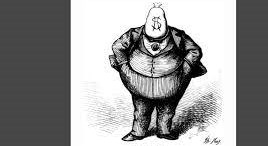
It also, I’m sad to say, has perhaps the most dysfunctional politics in the country. Just the other day, yet another Chicago alderperson was indicted by the Feds for taking bribes. She joined literally dozens of her fellow legislators in being caught with a greedy hand in the till, including one whose wife is the Chief Justice of the Illinois Supreme Court (which, strangely enough, has prevented any number of citizen’s initiatives to improve things from getting on the ballot). And need you be reminded that in my lifetime, no less than four former Illinois governors have gone to jail?
Lincoln, who was after all born in Kentucky, might well agree with me that it’s high time we changed the state’s motto back to one that was in common use early in its history, when Illinois was commonly known as the “Sucker State.” Other than the obvious reason, why was this so?
Various derivations were explored in a 2004 article by Dave Kulton in Springfield’s Illinois Times. One posits that it came from the practice of early inhabitants of the prairie of thrusting hollow reeds into crawfish holes to get water (I can’t recall ever being that thirsty). A just slightly more plausible explanation says that many of the early settlers were from the tobacco growing states of Kentucky, Virginia and Tennessee. It seems that the sprouts around the main stem of the tobacco plant are called suckers. Bear with me here. The sprouts were stripped off and discarded lest they sap the plant of its nutrients. As we know, immigrants have always been looked down on as somehow inferior, and the more established Illinoisans assumed they would fail and perish, much as the suckers on the plant did.
The most accepted explanation involves the discovery in 1824 of lead in the northwest corner of the state near Galena. Much like the later California Gold Rush, hordes of men rushed to the area in search of work. Most were from Missouri and Southern Illinois. They would arrive in the Spring, work through the Fall and return home. Most travelled to Galena (which now mines tourist dollars instead of lead) up the Mississippi River. Missourians took to calling them “suckers” after a fish of that name that also migrated upstream each Spring.
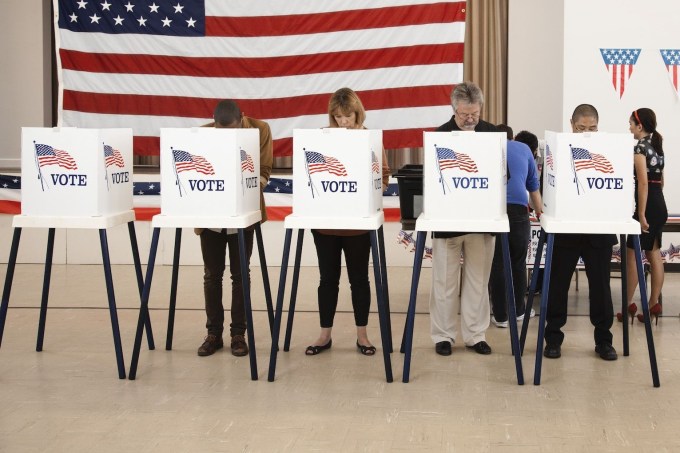
Revival of the “Sucker State” motto would recognize the millions of Illinoisans who, despite the dismal record of the Democratic Party that has governed the state since 2003, continue to cast their votes for Democrats, both those who have gone to jail and those who may or may not be honest, but who all go along with a leadership that has spent the state into near bankruptcy. Perhaps you noticed that the state’s Inspector General, Carol Pope, resigned on July 14 in frustration with her lack of power to actually investigate legislators. Anyway, you gullible Illinois voters, thanks for continuing to vote the rascals back in. They’re amusing, if nothing else.
Copyright 2021, Patrick F. Cannon