By Patrick F. Cannon
Chicago has one three-star Michelin restaurant – Smyth – and two two-star: Oriole and Alinea. Alinea once had three, so must be doing a lot of soul searching and teeth gnashing! One thing they have in common is cost – all charge about $450 per person. Add the least expensive wine flight at about $150 per person and mandatory 20 percent service charge (tip to you and me) and you’re looking at nearly $1,500 for you and your spouse, sweetheart, or whatever.
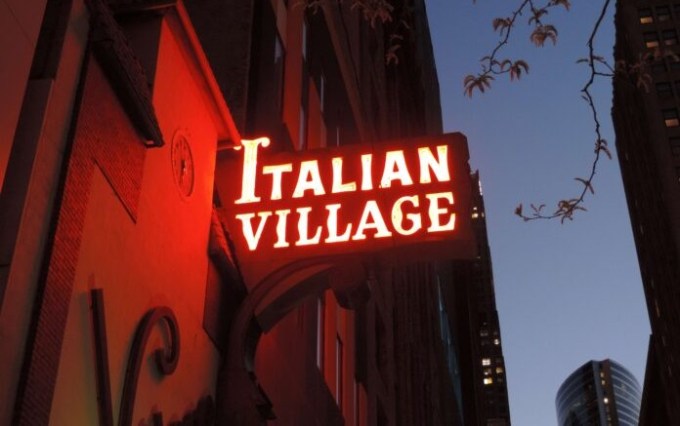
Now, I’m old enough to have eaten at a good many Chicago restaurants that are long gone. It’s easier to name the survivors – Berghoff and the Italian Village come to mind. Another favorite German restaurant I favored, Zum deutschen Eck on Southport, is long gone, as is Agostino’s at State and Delaware. It was the first restaurant where I used valet parking. I later got a parking summons in the mail! I dropped it off at Agostino’s, and they duly paid it!
If you don’t mind a little degression about Agostino’s, I went to a business dinner there with the man who was responsible for setting up trade shows for the company I then worked for. He ordered Steak Parmesan, which was of course not on the menu. But they made it for him. It looked surprisingly good too!
I got to wondering what “fine dining” cost when I was young. Opened in 1964 in the DeKoven mansion on Dearborn just south of Division, Biggs was the place to go, and the first restaurant I remember with a fixed price menu. In the early 1970s, it was $13.50 per person. I remember one meal that started with lobster bisque, continued with rack of lamb, and finished with chocolate mousse (the first time I had any of them). Before you get too excited, that $13.50 would translate into nearly $120 today. Expensive sure, but $120 would get you well fed at a great many exceptionally fine Chicago restaurants today.
I’m not temped to spend $750 for a meal, but I have eaten at a great many legendary Chicago area restaurants over the years, alas all now closed. Perhaps the most famous was Les Francais in Wheeling. Once called the best restaurant in America, I ate there three times, once on someone else’s dime. My first Franch restaurant was Café de Paris, located in the Dearborn Park Hotel. It was famous for Duckling a la Belasco, flamed at your table! It was bit of a stretch for my wife Mary and I, but worth it!
Although then and now I eat most often in Italian restaurants, I do like French cuisine as well. Another favorite was Le Perroquet on the near north side. To save a buck, we used to go for lunch, always wonderful but a bit less expensive. Chez Paul, also near north, was another lunch favorite. I ate once at Everest, a wonderful French restaurant with an Alsatian flavor. It closed in 2020 because it actually lost its lease! The chef was the wonderfully named Jean Joho!
I can’t end without mentioning The Bakery on Lincoln Avenue. It opened in 1963, and cost about the same as Biggs. The chef had another wonderful name – Louis Szathmary. He was a bit rotund and had a snowy white walrus mustache. A Hungarian, the menu was more continental than French, with specialties like Beef Wellington and Roast Duckling. I remember once having stuffed roast pork. While you were eating, Chef Louis would roam the room, charming his customers.
I haven’t eaten at the Berghoff for a while. In the old days, the grumpy German waiters bought the food from the kitchen and sold it to you, for cash only. And the bar was men only until 1969. The Italian Village was opened in 1927 and has a legendary wine list. It’s just as good as it ever was and won’t cost you $750! Buon Appetito!
Copyright 2026, Patrick F. Cannon


We knew the owners of the Italian Village. My mother, who lived in Tuscany before returning to the US, met the family (don’t remember how or where) and became friends. They lived in River Forest.
The Italian restaurant scene in Chicago roughly comprises two main regional immigrant groups.
One is known as “Tuscan.” Tuscan is generally applied to Italian food and things that have as much connection to Tuscany as French fries (Belgian), French kissing (originally Florentine) and French toast (ancient Rome) have to France.
The Italian Village, restaurants in the neighborhood at 24th St and Western (beloved Il Vicinato is now permanently closed), and several groceries along the Harlem Avenue strip fall into this group. Their proprietors may tell you they’re from Lucca, but actually most trace their origins to a small hill town in the province of Lucca called Barga. But at least it’s in Tuscany!
The other group hails from the region of Puglia, namely Bari on the Adriatic coast in southern Italy, but more specifically a smaller port town down the coast called Mola di Bari. Chances are, if an Italian restaurant in Chicago features seafood, it is run by people from Mola!
Immigrants from other regions like Sicily also opened eateries in Chicago, not to mention non-Italian entrepreneurs. Spacca Napoli in Ravenswood offers genuine Neapolitan pizza and is run by Jon Goldsmith. Forno Rosso, however, I think is run by the Mola clan. Non-Italian owners often do a great job at recreating actual regional Italian cooking. Just ignore the fictitious “Northern Italian” nonsense. It has no connection whatever to culinary traditions in the five northern regions of Italy.
I’m glad the Italian Village has survived. So many old favorites, way too many to list, have vanished: Nielsen’s on North Avenue, Le Provencal, Lawry’s Prime Rib. Is the Cape Cod Room still at the Drake?
I’ve dined at my share of elegant, pricey restaurants (almost always when someone else was paying!) but never developed an enthusiasm for them. This is especially true of French restaurants. Basic food in France is very good: fresh produce, outstanding breads and cheeses, and consistent quality. But the manipulated, deconstructed, overly complicated, fussily presented and, yes, pretentious, dishes never clicked. Too many ingredients.
There’s an ongoing debate over French and Italian cuisines. Food historians point to how France learned cooking thanks to Catherine de’Medici in the 16th Century when she married Henry II. The French claim their own tradition. Of course, it comes down to de gustibus.
But I know this. There are many good Italian restaurants throughout Paris. In Rome, or most anywhere in Italy, good luck finding a French one.
LikeLiked by 1 person
As it happens, many of the waiters and other employees at the Italiian Village lived in the 24th and Western neighborhood. The Cape Cod Room, alas, is no more. It was really the only place in Chicago to get true Sole. You can usually find an Italian restaurant wherever you travel. We ate at a decent one in Nairobi — the owner had once lived in Chicago!
LikeLike
Miss the tasty sole at Cape Cod Room, sad it’s gone. True about finding Italian restaurants everywhere, not always the product of immigration. Very good ones in Japan, Singapore, Korea, Taipei. In the US it’s usually Italo-American, good in its way, or else the globalized corporate horrors of Darden’s Olive Garden. Folks, olives grow in groves, on trees, not in gardens. Beware! In Florence you are more likely to find dishes with rabbit, wild boar, tripe, beans, or grilled polenta and rice dishes with artichokes or mushrooms. Spaghetti Bolognese? Doesn’t exist, even in Bologna! It’s too disturbing to mention what passes for Italian in Mayberry.
LikeLiked by 1 person
My Italian brother-in-law had a hunter friend who would occasionally provide a rabbit or two. He would then make robbit cacciatore. Very tasty as I recall, but a, lot of little bones!
LikeLike
My mother used to make it when she lived in Tuscany. I had an Italian colleague in grad school who ran over a rabbit, put it in his trunk, took it home and cooked it, to the horror of his American wife. In the environs of Mayberry, rabbits and squirrels are known to end up as dinner when deer aren’t available. Remember the cartoon where Elmer Fudd hunts down Bugs Bunny for Easter rabbit stew?
LikeLike
Poor Elmer. He never did catch that wascully wabbit!
LikeLike