By Patrick F. Cannon
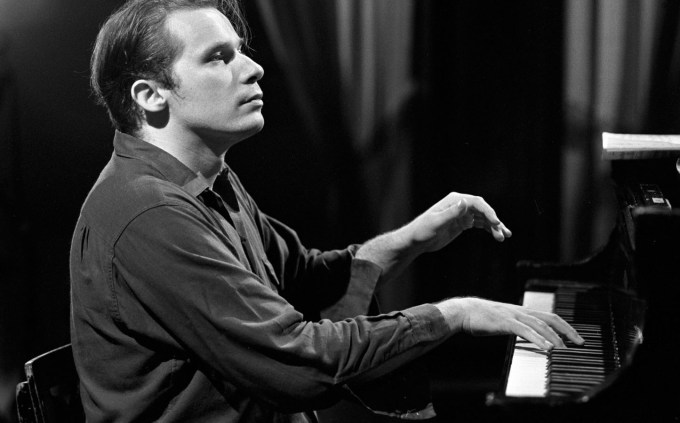
I just changed the CDs in my home player. I alternate them with listening to Chicago’s classical radio station, WFMT. Among the discs is the 1981 recording of Bach’s Goldberg Variations by the late Canadian pianist, Glenn Gould. It has a running time of 51 minutes and 18 seconds. Consisting of an aria (theme) and 30 variations, it was originally composed for the harpsichord but is now most often played on the piano.
It was published in 1741, and was named after Johann Gottleib Goldberg, thought to have been the first keyboardist to play it. There is a story, possibly true, that Goldberg was a court musician for Count Kaiserling, the former Russian ambassador to the court of Saxony. A reputed insomniac, he asked Bach to compose something that would cheer him up on his sleepless nights!
I suppose I have listened to it a hundred times or more. I never tire of it. It is one of the great landmarks of western music. It is not the only Bach work that I would include, just as there are numerous works by Beethoven, Mozart, Gershwin, and others that are part of our musical heritage. And not only music. I would add great visual artists like Da Vinci, Rembrandt, Valazquez, Titian, Monet (and many others!). In my ideal world, students as young as 10 or 12 would be exposed to the arts, not as credit courses, but simply as experiences.
Literature is a different matter, connected as it is to mastering and appreciating the English language. When I was in high school, we read two Shakespear plays – Julius Caeser and Macbeth. They were good choices, reasonably short and easy to understand. But how much better would the experience have been if we had also seen performances? In 1955 and 1956, this would have been nearly impossible. Now, you can find recorded performances of most of his plays online or on streaming services. My favorite Shakespeare play is King Lear. I have seen performances by Ian Holm, Paul Scofield, and Anthony Hopkins. You can study a play on the page, but it is only truly real when it’s performed.
I recently wrote about English and its worldwide importance. It is our language, and learning to speak and write properly is of the utmost importance. Students therefor need to be tested on both its use and literature. But I believe we should expose our students to the other arts for enjoyment only. To return to the Goldberg Variations, if you played a recording for a group of students, asking them to simply close their eyes and listen, with the understanding that nothing else was expected of them, many or even most might well be bored, but some would be moved.
I have told this story before, but when I was about 15 years old, I had spent a Saturday morning oiling and buffing the bowling alleys at the McKeesport, Pennsylvania Elks Club where I was a pinsetter during weekday evenings. The alleys were in the basement. Upstairs were a bar, restaurant, and pool tables – and a TV room. As I was leaving the club, I passed the TV room just as the opening bars of Beethoven’s Fifth Symphony were being played by the NBC Symphony Orchestra conducted by Arturo Toscanini. I don’t want to be overdramatic, but the next 30 minutes changed my musical life.
In the visual arts, so did a visit to the Art Institute of Chicago when I was 18. Although I took music and art history courses in college later, nothing I learned had the same impact as those first exposures. Why not give our young people the same kind of exposure, but without the pressure of getting that “A.” In Chicago, I have often seen school groups at the Art Institute; and the Chicago Symphony does have an outreach program. Less favored cities and towns don’t have these resources, but they do have the means to bring the arts to their children. Technology improves access: and art abides.
Copyright 2026, Patrick F. Cannon

