Mine Those Riches
By Patrick F. Cannon
Whenever I want to punish myself for some transgression, I need only go to Taylor Swift’s web site and read some of her song lyrics. They are so uniformly bad that reading just one seems penance enough for any sin. To spare you too much pain, here is just a brief example:
“Untouchable, burning brighter than the sun,
And when you’re close, I feel like coming undone.”
Ms. Swift, in common with many of her fellow performers, writes songs about breaking up with men who have somehow done her wrong. Among the most self-involved people in the history of the world, she seems to have love affairs with young men just as self-involved as herself. This clash of personalities is bound to end ill, thus providing Swift with more grist for her composing mill.
Now, she is a singer of some, if limited, talent. Why does it never occur to her and her ilk to mine the riches that actually talented song writers have left for posterity? It could be because she has had only the sketchiest of educations, deciding at an early age that she was going to devote her life to becoming famous. So, perhaps she is unaware that there exists a proud history of popular American song.
One wonders if she (and the many others who think the world was created when they were born) have ever heard of Stephen Foster, George Gershwin, Cole Porter, Jerome Kern, Irving Berlin, Richard Rogers, Leonard Bernstein, Frank Loesser, Frederick Loewe, Jule Steyn, Jimmie Van Heusen, Woody Guthrie, Steven Sondheim, Randy Newman, Jerry Herman, Paul Simon, John Lennon, Paul McCartney, and so many others – and the talented lyricists who collaborated with some of them.
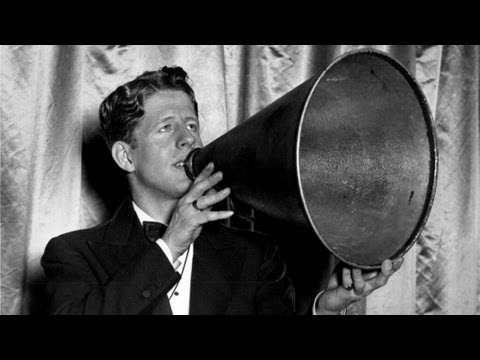
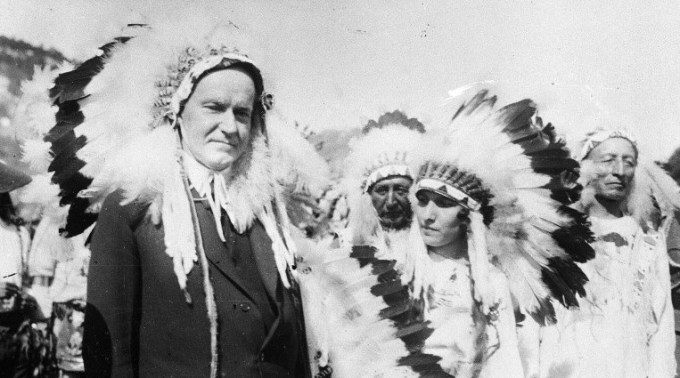
Of course, there could be a practical reason for performing only your own songs – you don’t have to pay royalties (although copyright has expired on some great songs). And perhaps they’re afraid to sing songs that would cause people to compare them with the great singers who interpreted them in the past. The list would be very long, but just let me mention Bing Crosby, Frank Sinatra, Fred Astaire, Ella Fitzgerald, Billie Holliday, Rosemary Clooney, Sarah Vaughn, Mel Torme, Louis Armstrong, Anita O’Day, Peggy Lee, and even Rudy Valee (that’s Rudy in the photo), to name just a few. Almost none of them wrote their own songs. Why would they, when there were such riches available to them?
While I’m on the subject of artistic interpretation, how many of our actors have ever appeared in a classic play (or any play, for that matter)? I was reminded of the reluctance of so many American actors to test themselves in the classics by the recent death of the Canadian-born Christopher Plummer. In a long career – he died at 91 – Plummer played most of the great Shakespearian roles, including Hamlet, Iago and Lear; but he also tried his hand at Chekhov, Brecht, Arthur Miller, Eugene O’Neill, Pirandello and Shaw.
With a few exceptions – Jason Robards, Al Pacino, Dustin Hoffman, Brian Dennehy, and Stacey Keach come to mind – once American actors make it in the movies, they rarely return to the stage. Let’s face it. Why would you want to memorize a part like Edmund Tyrone in O’Neill’s Long Day’s Journey into Night, when you could easily learn a page of dialog for a movie scene? And how frightening would it be to stand upon a stage in front of 1,000 people and convince them you really are Hamlet? Or Hickey in The Iceman Cometh? Or Willie Loman in Death of a Salesman?
But if you’re a serious actor, or a serious singer, you should want to play the great roles, or sing the great songs. But I guess “serious” is the operable word.
Copyright 2021, Patrick F. Cannon





 cannonnadedotcom