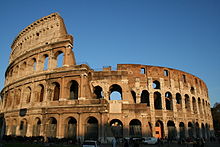
A History of the World

A History of the World – Opening Notes

By Patrick F. Cannon
(In case you’re wondering – and why should you? – this is my 140th post for www.cannonnade.com. I started it about the time I finished my fifth book on Chicago architects and architecture. Before I got the contract for the first one, I had been tinkering with a history of the world. I put it aside after I started work on the book – all done by the way with my partner, the gifted photographer Jim Caulfield – but from time to time published the odd chapter in this space. To spend more time on our sixth book (I’m a glutton for punishment), I thought I would edit the finished chapters and publish them here in the correct sequence. So, for the next couple of months, prepare to be educated.)

A Note on “Recorded” History

There is a widely held misconception that so-called Recorded History began when Thomas Alva Edison used his newly-invented gramophone to record William Jennings Bryan’s famous “Cross of Gold” speech. This is, of course, utter foolishness. After all, Edison was a Republican.

Like so many English words, “record” has many meanings. One can “record” the Concertebow Orchestra of Amsterdam playing John Williams’ theme from Star Wars and thus produce a “record.” One can also “record” ones travel expenses in a notebook for further manipulation and enrichment.

While all of the above may form part of recorded history, they are only a small part. While not presuming to be exhaustive, I would define recorded history as anything written down, drawn, painted, built, photographed, filmed, chiseled in stone or eliminated through the bowels. This last may surprise you, but only if you don’t watch the Discovery Channel. For archeologists not only dig up old pots and pans, but also examine ancient feces for evidence about what people like the Assyrians ate for lunch. It appears it was mostly goat and alfalfa.

One can also aspire to set a record. I recall with horror Will and Ariel Durant, who surely set a record with their six-million-word history, often foisted on new subscribers of the Book of the Month Club (also part of history now). It is my intention to set a different sort of record: for the shortest history of the world, but one that leaves nothing of importance out.

Another Note – What’s in a Name?

Some years ago, I was driving from Munich to Vienna. The day was fine and the road splendid. After traveling for some time, I thought I should soon see a sign heralding my imminent arrival. Nothing of the kind. Thinking perhaps that I had somehow gone astray, I pulled into a rest stop and sought information from the Information kiosk. I explained my dilemma to the attendant, who laughed heartily, as Austrians often do. When he caught his breath, he told me that Vienna was actually Wien in German (pronounced “Vine” to further confuse the unwary tourist). Why then do English speakers call it Vienna I asked? Warming to the subject, he said that the Italians called the city Vienna and that since the English seemed to prefer the Italians to the Austrians, they had taken to using the Italian word.

I was on the point of asking why the Italians thought it necessary to come up with their own name, but decided I might never actually get to Wien, so I decided to leave well enough alone. I heartily enjoyed my visit to Wien, but it has caused me problems ever since. When extolling the virtues of Wien to my friends, I am often greeted with blank stares. Wien? Never heard of it! After patiently explaining that it’s often called Vienna by English speakers, I often have the feeling that they think that perhaps I had too much wine in Wien.

What to call things is a serious problem for historians. The French call London “Londre”, the Italians “Londini.” On the other hand, the English spell Paris just like the French do, although they pronounce it with an “iss” instead of an “eee.” A Spaniard thinks he’s going to Nueva York instead of New York, but generally manages to get there anyway. One often wonders, of course, why there’s no Spanish word for “York.” Nueva Yorka has a music that Nueva York lacks.

Germany also presents problems. If you go there, you’ll discover that the locals call it Deutschland, which must mean “land of the Dutch.” I had always supposed that the Dutch lived in Holland, but perhaps I’m mistaken. It may just be that the Germans grabbed the name first, leaving the Dutch to settle for Holland, which must be a made up word. By the way, the French call Germany, Allemande, which makes no sense to anyone.

What one should name people is also a problem. Italians persist in calling Julius Caesar “Julio Cesare.” But the English seem perfectly content to leave Benito Mussolini as it is instead of changing it to “Benny Muscles.” I wondered if the Italians call Alfred the Great “Alfredo il Magnifico,” but didn’t bother to check.

To give another illustration, we call the saint who could charm the birds out of the trees, Francis. The Italians call him Santa Francesco and the Spanish San Fernando. You would think that we would call the famous valley in California the Saint Francis Valley instead of the San Fernando Valley, but we don’t.

And I’m sure many of your friends have told you that “I’m off to England for a vacation.” But aren’t they really going to the United Kingdom, or is it really Great Britain? If you’re planning a trip to Ireland, is it the Republic of Ireland, or Northern Ireland, which is part of the United Kingdom, but not Great Britain?

Since I have been unable to find any reasonable explanation for these and other paradoxes, I have decided to exercise my best judgment. In cases where I think the reader might be confused, I have tried my best to help him along.

(Next week – Chapter 1!)

######

Copyright 2018, Patrick F. Cannon


Bad Luck Billy

Bad Luck Billy 

By Patrick F. Cannon

If your name is William Hall Bush, you should be destined for great things. After all, your great grandfather was a distinguished senator; your great uncle a president of the United States; one of your cousins also a president, and another the governor of Florida. But you were the rebellious type, called yourself Billy and became a disk jockey and eventually a celebrity journalist (with apologies to real ones).

Because he was handsome in a cutesy sort of way, Billy’s career prospered. He eventually caught on at that “Red Carpet” titan Access Hollywood in 2001, rising to co-anchor in 2004. For part of those years, Billy also had a radio gig as the Billy Bush Show. Then, in 2016, he hit the jackpot. The legendary NBC Today morning show came calling and made him the third-hour anchor (the third hour is when they give up all pretense of being a serious news show). Everything seemed rosy, but there was trouble lurking in the wings.

It seems that in September 2005, charming Billy was interviewing Donald L. Trump on NBC’s Hollywood lot regarding his coming appearance on a network soap opera. Unbeknownst to him and the glittering star of Celebrity Apprentice, the mic was, as they say, “hot” (or on, if you don’t know the jargon). In a wide ranging conversation, Trump explored his philosophy of sexual relationships. He mentioned to Bush that he had tried to seduce Bush’s Access Hollywood co-anchor, Nancy O’Dell. Amazingly, she resisted his legendary charms. Trump suggested it may have been because she was married, but I guess we’ll never know.

I won’t bore you by quoting the entire conversation. If you missed it and want to wallow, you can look up the transcript as published by the august New York Times, the paper of record for those who wish to know it all. Here is just a sample:

Trump: …and when you’re a star, they let you do it. You can do anything.

Bush: Whatever you want…

Trump: Grab them by the pussy. You can do anything…

Now, Bush was not as forthcoming as his interviewee regarding his own achievements, but it must be said that he never questioned the propriety of Trump’s boasting, and himself made some comments regarding female anatomy that some might have found vulgar. The story of the tape broke in the Washington Post on October 7, 2016. When it finally became clear to Today that Billy might have become a liability, he was fired on October 17.

In November of the next year, his fellow morning show anchors Matt Lauer and Charlie Rose also lost their jobs, not for pandering to Donald Trump, but for more direct sexual harassment. Must have something to do with the curse of threes.

Just recently, as a response to President Trump saying it wasn’t his voice on the infamous tape, Billy Bush wrote an op-ed in the Times confirming again that it was indeed the leader of the Free World spouting his accomplishments. But who are we to believe? A discredited celebrity journalist or the man who – in case you haven’t noticed – occupies the same Oval Office as Franklin Delano Roosevelt?

Anyway, it’s clear that Billy Bush’s media career is probably over. He joins a long list of people associated with Trump who have been tainted by the association. Although his stupidity isn’t a criminal offense, others – General Michael Flynn, Paul Manafort, and Michael Cohen, among others – may yet find themselves in jail.

In the meantime, Donald J. Trump is still president of these United States.

######

Copyright 2018, Patrick F. Cannon


I Hate Guacomole!

I Hate Guacamole! 

By Patrick F. Cannon

I cannot now remember the first time I experienced guacamole. It may have been at a party of some kind, where some revolutionary hostess decided to forego the classic onion dip for something more exotic. “Hello,” I said to myself when I saw the green sludge for the first time, “what could this be?”

My fellow partygoers seemed to be scooping the stuff out of the bowl with corn chips of some kind. Being the kind of fellow who’s willing to try anything once, I chose a sturdy-looking chip and dived in. I was perhaps too ambitious, as I dug down fairly deeply; too deeply in fact, resulting in the chip breaking, leaving a piece in my hand and the rest in the bowl. I popped the virgin half in my mouth, and gingerly plucked the guacamole-encrusted half out of the bowl. Into my mouth it duly went.

How can I describe this experience? It was clear to me that the mixture contained some onions and chiles, along with some other seasonings. But the thing that impressed me the most was the base – it was slimy and even greasy. I was told that this was a fruit called the avocado or (if you want to be precise, persea americana). While the fossil record indicates that versions of the fruit – technically a berry – existed in other parts of the world, the version we now eat is probably native to Mexico.

Anyway, my first exposure to the now ubiquitous fruit was not a happy one, and I have seen no reason since to change my opinion. In addition to being slimy and greasy, it has no flavor of its own (don’t give me that “it has a delicate, nut like flavor” nonsense, I’m not buying it). If you think it’s so great, why not just eat one like you would eat an apple or a peach? No? I thought not.

I do concede that the avocado is nutritious, although rather high in saturated fats. But there are more nutritious foods that also have some taste: almonds, carrots, snapper, ocean perch, cherries, tangerines, scallops, and my special favorite – pork fat! In no top 25 list of the healthiest foods that I could find did I discover the avocado. Nor did I discover the chickpea, the basis for another disgusting mess, hummus, which has joined guacamole in the hors d’ oeuvre spreads of the culinarily deluded.

Of course, one can avoid the guacamole bowl, but the avocado increasingly appears hidden in other dishes. Just the other day, I ordered a chopped salad. When it arrived, I discovered to my horror that little cubes of avocado were mixed in with the more traditional ingredients (which generally include chopped lettuce, broccoli, bacon and cheese, among others). As I was with a group, I didn’t feel I could gingerly pick out the avocado bits, so I manfully ate the salad, slime and all. The tasty dressing at least helped me get through the ordeal.

Be warned also that the dreaded green stuff is sneaking into sandwiches. You would be wise to read the entire ingredient list before ordering. After the turkey, Swiss, lettuce, tomato, and bacon often lurks the green monster. And I understand that the latest fad among people who read too many food blogs is to spread avocado on their breakfast toast instead of strawberry preserves. Imagine, your day ruined before it starts.

######

Copyright 2018, Patrick F. Cannon


Getting Clipped

Getting Clipped

By Patrick F. Cannon

I’m afraid the corner barber shop may someday be as rare as the local blacksmith. They are being slowly replaced by places called Super Duper Cuts or Hairem Cairum, establishments that cater to clients of all ages and sexes. Often, the person who cuts the hair is youngish with purple hair. Many only charge 5 bucks or so, as opposed to the $17 plus tip that I’m currently paying. There are, of course, tonier salons that “style” ones hair for more like $50 or even $100. I can understand women putting up with this, but when did men start caring so much about their hair? Was it the same time they decided that having five o’clock shadow was de rigueur?

I may outlast this trend. My current barber is younger than me, so may still be clipping away when I no longer require a barber. His name is Frank, and I call him “Frank the Albanian” to avoid confusing him with my former barber, “Frank the Sicilian,” who recently retired.

The first barber I can recall with any clarity was Tony Bazzone (pronounced like baloney), who’s shop was a few doors from my father’s office in McKeesport, PA. Now, McKeesport was then a thriving steel and industrial city near Pittsburgh, and Tony’s customers tended to be steelworkers and the like. I was about 12 at the time, and it was the first establishment were I can recall profanity used in bulk. It was also the first place I ever saw a bikini. Tony subscribed to the Police Gazette, which was as racy as it got in 1950, at least to my innocent eyes.

He also had standards. One day when I was waiting my turn, he refused to cut a customers hair because it was filthy. “I’m not putting my hands in that shit,” he said. “Wash it before you come back.” I remember hoping my hair was clean enough to pass muster.

After my father died, we kind of fell on hard times. Often, my Uncle John would cut my brother Pete’s and my hair. Since we generally had crew cuts anyway, it hardly mattered. During my high school years, I was more or less continuously employed and began to actually care about how I looked, so it was back to Tony. Those were the days of the greasy pompadour, and perhaps are best forgotten.

I moved back to Chicago when I was 18. I lived in the Italian neighborhood around 24th and Oakley, and for many years Mario – an Italian from Tuscany – was my barber. He also happened to be a good friend of my sister and her Italian husband, so I often saw him socially as well. When I married and moved away, I returned to Mario from Oak Park, Rogers Park and Glenview rather than risk finding a new barber. I did stray once. I decided to see if I could find a nearby barber in Oak Park. I noticed a shop near the Jewel Foods on Madison Street, and thought “why not?” The barber was another Italian, but elderly. When I noticed his hands shaking, I saw the error of my ways.

I won’t bore you with a litany of my various moves over the years, but by the time I moved back to Oak Park in 1974, Mario had retired. I was working in Chicago’s Loop at the time, so usually got my haircut near the office on company time. But because my son Patrick was now getting regular haircuts, I decided to seek a local shop and found Sicilian Frank in about 1977. He remained my barber until he retired about two years ago, or just short of 40 years.

He was a gentle soul and relatively quiet for a barber. Many years ago, he had bypass surgery, but returned after a couple of months. I almost panicked, but only had to go elsewhere once. He was proud of his two children – a boy and girl – and of their successes. The boy later graduated from Harvard Law. He never lost his heavy Italian accent, so I only understood about half of what he said. Even after my son Patrick moved away, he always asked after him. He occasionally would bring in another barber to the shop, but he was never happy with them. He had a good location on Oak Park Avenue near the El, but they kept raising the rent on him, so a few years ago he moved in with Frank the Albanian in Elmwood Park. As far as I could tell, every one of his Oak Park customers followed him. After he retired, he moved to Florida to be near his daughter.

His retirement coincided with our move to Forest Park. As it happened, there was a barber shop only one block away from our building. Why not, I thought? I went twice, but the barber was a moody sort. When you have to initiate a conversation with a barber, it’s time to move on, so I went back to Albanian Frank, who is never at a loss for words.

He escaped from Albania as a young man. It was then one of the darker Communist countries. Now that it’s free, he returns every year to visit his family. He is not tempted to move back. To him, the United States of America is the greatest country in the world. He has no illusions about our problems, but they pale in comparison to those in his native country, even though it’s now relatively free. He also owns another barber shop and, like Sicilian Frank, has raised successful children. What would our country do without immigrants like the two Franks?

The traditional barber shop is one of the few remaining men’s clubs. Most days, everyone in the shop – barber and customers alike – explore the issues of the day. Can you do that with the purple-haired missy at the Super Duper Cuts? I didn’t think so. Frankly, I wouldn’t be tempted to stray from Frank’s even if there were a return to the topless barber shops that had a brief vogue many years ago.

######

Copyright 2018, Patrick F. Cannon


There She Is, Miss America!

There She Is, Miss America! 

By Patrick F. Cannon

I see the folks who run the Miss America pageant have eliminated the bathing suit parade from the annual event. High time, I say. While the original intent of the festivities was to encourage people to crowd the beaches at Atlantic City – thus the parade of bathing beauties – I fear that nothing will now help that dreary oasis.

Over the years, the pageant has tried to go up market. While the young ladies have still strutted across the stage in evening gowns and bathing suits, they have also been asked to show off their brains and talents.  May I suggest that the results have been decidedly mixed? When questioned about their aspirations, most have earnestly wished for world peace; and one has heard many a soprano sing a show tune, sometimes on key, or a pianist attempt a showy rhapsody. I confess that the occasional budding bird caller has been a relief.

I have not seen the pageant for some years, and apparently I was not alone. It seems the ratings decline had much to do with our heightened sensitivity to women’s issues. The spectacle of all these young women showing off their beauty to ogling men in the audience was considered the very definition of objectification, a word fraught with evil meaning. In my day, they wore demure one-piece bathing suits, but I understand that recently they had started wearing – horror of horrors – bikinis!

Miss America, Inc. now touts the event at a showcase for character and talent. They emphasize that the ultimate prize is not the recognition of beauty, but the academic scholarships that are provided. While entirely laudatory, one wonders if this new direction will enhance the ratings as much as its feminist credibility.

One possible side effect of this political correctness might be to embolden women to stop exposing so much flesh in public. Based on a news clip I saw, the bikinis worn by Miss America aspirants seem like bloomers compared to the ones you can see on any beach these days. What once would have caused an immediate arrest now seems perfectly acceptable. Bottoms like g-strings and tops with the merest strips of fabric are becoming the norm. For young men, it must seem like the golden age of ogling, but shame on them for noticing.

If we can eliminate skimpy beach attire, then perhaps there is also hope for some modesty from those Hollywood thespians that grace the red carpets during the endless “awards” season. Even those who can actually act seem happy to wear dresses that show a good deal of cleavage, a shapely leg and even an occasional navel. While you might consider some of these dresses just a bit on the vulgar side, there is no denying the skill of the dress designers in showing oodles of flesh without the whole ensemble collapsing in a heap to the scarlet carpet below.

Now, I’m told that women are just as much interested in these events as men. Shame on them. Their point of view is likely different, however. While they seem to enjoy the flesh parade for its fashion value, young men (let’s be honest, all men) only watch because their raging hormones demand it. So, if there is some kind of  general cover up, I feel sure that men everywhere would stop objectifying the object (if that makes sense), and knuckle down to more sensible pursuits like putting together an unbeatable fantasy football team.

######

Copyright 2018, Patrick F. Cannon
 

A Day at the Beach

A Day at the Beach

By Patrick F. Cannon

Today is the 74th anniversary of the landings in Normandy of the American, British, Canadian, French and other Allied troops, who came early that morning to begin the liberation of Europe from the frightful tyranny of Hitlerism. I spent last Friday visiting the landing sites at Omaha Beach, and the American cemetery that overlooks it.

Over the years, I have been to many cemeteries. My wife Jeanette and I spent several hours one day in Paris’s Pere Lachaise Cemetery, where one can see the tombs of Oscar Wilde, Chopin, Balzac, Proust, Edith Piaf, and even Jim Morrison. In our own beloved Chicago, Graceland Cemetery contains the graves of George Pullman, Marshall Field, Ernie Banks, Ludwig mies van der Rohe, and Louis Sullivan, among many others. It’s a must visit for anyone interested in Chicago history, but only Sullivan’s evoked any emotion. The greatest American architect of his time, he died broke; his modest monument paid for by his friends.

The Normandy visit came at the end of a small-ship cruise to Scotland, Ireland and Wales. Among the lecturers aboard were D-Day commander Dwight Eisenhower’s grandson David, a professor at the University of Pennsylvania; and Allen Packwood, head of the Churchill Archives at England’s Cambridge University. Their talks gave context to our day at Omaha Beach.

Our first stop was Pointe du Hoc, where U.S. Army Rangers scaled the sheer cliffs to prevent the Germans there from firing from above on Utah Beach to the west and Omaha Beach to the east. To do this, they used ladders and ropes with grappling hooks. If you’ve seen the movie about D-Day, The Longest Day, you will have some idea of the bravery it took to climb Pointe du Hoc in the face of fierce opposition. They succeeded, but only some 70 of the 225 Rangers who went into action that day were fit for duty when it was over.

The majority of the 2,499 Americans who died on June 6 died on Omaha Beach, which now shows little evidence of what happened that day. Above it is the American Cemetery. Our group approached it from a parking lot. When the grave stones came into view, I had an immediate physical reaction. I had to work very hard not to sob out loud, but tears did come. Others, I could see, had similar reactions.  There are 9,387 graves there, marked with white crosses and Stars of David. They represent only a portion of the approximately 280,000 American men – and women too, let’s not forget – who died in the European Theatre of Operations during the war.

The 2,499 who died on June 6 were thus only a down payment on the cost of liberating Europe. When the war ended, France, Belgium, Holland, Norway, Denmark, Italy – and yes, even parts of Germany and Austria – had their freedom restored. It took longer – and thank God not another shooting war – to liberate the rest of Europe from Russian domination. I think it can be fairly said that Europe is freer now than at any time in its long history.

And the long process, and the sacrifices it took, all started on June 6, 1944, 74 years ago today. It was truly one of those days that changed the world. Think on it.

######

Copyright 2018, Patrick F. Cannon


Just What is Art, Actually?

What is Art, Actually? 

By Patrick F. Cannon 

In his opinion in a case involving the definition of pornography, Supreme Court Justice Potter Stewart famously wrote (in part): “I shall not…attempt…to define…hard-core pornography…but I know it when I see it…”

I wonder if he would have said the same about art, that most subjective of human endeavors?  I can imagine a prehistoric man looking at cave paintings and exclaiming to the struggling artist: “You call that a deer? Looks more like a cow!” And the critics have been at it ever since. I’m old enough to remember the reception Jackson Pollock got for his abstract expressionist drip paintings in the 1950s. “Why, a monkey could do that,” the average Joe said, whereupon some enterprising person got some chimps together with cans of paint and canvasses and, lo and behold, they produced their own brand of Abstract Expressionism.

You could check out the chimp’s paintings on the evening television news or in the movie newsreels (this was the 50s, after all), and chuckle along with the rest of us. But the folks who bought Pollock’s tortured musings eventually sold them for millions, while all the chimps got was some bananas.

Now, I’m not a fan of Pollock or the other Abstract Expressionists like Rothko and DeKooning, but I can appreciate there is a great difference between their paintings and the efforts of those who thought they could do the same thing by flinging paint against a canvas. While we may not like the results, we can see the skill and hard work involved in producing it. If, for example, you look carefully at one of Rothko’s apparently simple color-field paintings, you’ll see how carefully the paint is applied and how the different colors are related one to another. All of these artists were academically trained. They knew how to paint realistically before they chose another path.

So, my first rule for fine art (as opposed to “outsider” art, primitive art, or the art of spray painting squiggles on other people’s property) is that it is not done by amateurs. Fine art is intended, and is done by trained professionals.

In the 400 years or so since he wrote it, thousands of actors have played Shakespeare’s Hamlet, many admirably, but in the end it is the play that is really the thing. Thus, my second rule: art must be produced by an individual, not a factory.

Although he is not alone, Jeff Koons is perhaps the best living example of the factory approach to art (he owes a great debt to Andy Warhol). He has been unabashed in saying that he is the “idea” man who leaves the actual creation of the work to his employees. Thus, he decided it would be amusing to have balloon animals blown up to giant size and executed in colorful metal instead of latex. Sounds ridiculous, and is to me, but Koons sells this stuff for millions of real dollars, while the clown at the birthday party probably is lucky to get a hundred bucks for amusing the kiddies with balloon animals.

Contrast this with Rembrandt laboring over a sheet of copper to produce an etching. In some cases, we have various stages showing how he worked and reworked the plate until he finally got the effect he wanted. The end result – let’s say of his series on the Crucifixion – is both complex and emotionally powerful. And let us not forget that he had to do it all in reverse so that the print would present a positive image on the paper.

Many of Rembrandts etching plates were never destroyed; so impressions continued to be made after his death. But even an impression from his own hand might be bought for tens of thousands of dollars instead of tens of millions. A better bargain in every way, it seems to me.

And yes, I have heard the argument that many Renaissance artists had assistants who did some of the work. True enough, but what they mainly did was prepare the canvas or board, mix paints and sometimes paint in backgrounds, and then only for large-scale commissions. And I suspect no one helped Velasquez paint his famous portrait of Aesop, whose model is thought to have been an entirely human local beggar.

(I should mention that images of the Aesop painting and others mentioned here are easily found on the internet.)

About Koons, I could eventually be proved wrong. In 400 years, he may be as revered as Rembrandt is today.  Fashion in art is a funny thing. We now revere the somewhat overexposed Impressionists, and have largely forgotten their far more successful French contemporaries, much of whose work has been consigned to storage or the walls of small provincial museums.

I thought about those once famous artists when I recently visited the Art Institute of Chicago to view the new galleries of contemporary art, including many works recently donated by Stephan Edlis and Gael Neesson. It occurred to me that they were wise to donate these works at the height of their value, thus maximizing their tax benefits. I think it would be a safe bet that in 50 years some of them will have found their way to the Institute’s storage rooms.

I visited between Christmas and New Years, and it was interesting to see the reactions of the larger than usual crowd. Many were families with children, and it was amusing to see parents trying to explain abstract paintings to their confused children. The reality: the paintings usually have no meaning beyond the viewer’s personal reaction. What possible deep meaning could there be in an Ellsworth Kelly triptych of three squares of color?

Looking at it reminded me of the Pantone color system, which includes numbered color swatches of seemingly every possible shade of every possible color. Graphic artists and designers use the system to specify to a printer, for example, the exact color they want. Each has a number, and I suspect you could find a Pantone color to match each color that Kelly has chosen.

Which leads me to my final rule: the more human the art, the finer it will be. I have already mentioned Velasquez’s Aesop, whose subject convinces us that we are looking at a man whose experiences could indeed have resulted in the wisdom revealed in his fables. A late Rembrandt self portrait will also reveal a man who has suffered but nevertheless prevailed. Something of the same humanity has been revealed in the contemporary works of artists like David Hockney and Lucien Freud.

I mentioned the Impressionists. Their landscapes represent a human response to what they saw in the natural environment, as did the paintings of predecessors like Turner and Constable.  Now, if we didn’t know that Jackson Pollack was a tortured, neurotic alcoholic – and see his paintings as a reflection of his struggles – what we would think of them?  And what would we think of Rothko and Kelly if we knew nothing about them? But does it matter what we know of Velasquez when we look at his masterpiece, Las Meninas?

If you have seen this painting at the Prado in Madrid, you will have seen the work of a committed professional, who has stamped it with his particular vision. The human subjects are revealed to us as Velasquez saw them, with all of their qualities exposed. How different it is from Pollack, Rothko and Kelly. And in every way, it seems to me, finer.

While this essay has discussed painting, the qualities of professionalism, individuality and humanity are equally relevant to the other arts. You may not agree with me that these are the most important qualities of any work of art, but if you value the arts – and not everybody does – than you should at least have a set of standards by which you can judge them.

###

Copyright 2016, Patrick F. Cannon


What Could Possibly Go Wrong?

What Could Possibly Go Wrong?

By Patrick F. Cannon

Really, things were a mess. At first, there were the heady days, then the days when heads rolled – literally. Out with the old! In with the new! But who’s new? Robspierre’s? Marat’s? Madame LaFarge’s? After the guillotine broke down and the assassinations subsided, the exhausted French turned to their savior, a young Corsican general named Napoleon Bonaparte. At last, here was someone who could bring order out of the chaos!
And, you know, he did.

He built roads and canals; and an ingenious system of semaphore communications. He established a code of laws and an administrative system that still organizes and governs France. He also crowned himself Emperor of France, and placed lesser crowns on the heads of his brothers and other relatives. Oh, and in some 20 years of more or less continuous warfare, he caused the death of approximately three million French soldiers and a like number of civilians. For these accomplishments, he is still revered in France; a visit to his tomb is a must for every citizen. The famous Arc de Triomphe in Paris lists his many victories (Waterloo is naturally missing). As you can see, he was the greatest!
Another great man emerged from the chaos in Italy after World War I. Now, it’s true that the land of the Caesars ended up on the winning side, due mainly to the intervention of the British and Americans, but in many ways it was a Pyrrhic victory. The country, united for only 50 years, was broke and disorganized. Communists, anarchists, socialists and other dreamers roamed the streets demanding whatever it was they typically demanded.
When they tried to use the railway system to gather in the largest cities, however, they often arrived too late. Sensing their frustration, a minor journalist named Benito Mussolini entered the fray, promising to cause the trains to run on time, which also endeared him to Italy’s travelling salesmen. As all the usual party names were already taken, Mussolini came up with Fascist, named after some kind of Roman weapon gizmo. As a reward, he was given the title “Il Duce”, which may mean “the Dutchman”, but I’m not sure.
Alas for suffering Italy, Benito dreamed of reestablishing the Roman Empire. Early success with the spear-throwing Abyssinians emboldened him, but it was pretty much downhill after that. While 306,000 of his soldiers died during World War II, these numbers paled when compared with the millions of more prudent Italians who surrendered. For his trouble, Il Duce was killed in 1945 and hung like a side of beef in Milan. While Italy is still somewhat ungovernable, it’s a great place to visit, and I’ve heard the trains run on time to this day.
Difficult as it is to believe, to the North some Germans looked enviously at Il Duce’s iron grip on Italy, as compared with the non-Teutonic mess of the Democratic Weimar Republic. When a Mussolini copycat named Hitler emerged, German industrialists like the Krupp’s looked at him as someone who would put an end to this democratic nonsense, and send the Communists and Socialists packing. Once he got into power, they could be the puppet masters holding the strings! What, they theorized, could possibly go wrong?

######

 Copyright 2018, Patrick F. Cannon


At Random

At Random 

By Patrick F. Cannon

I didn’t have any thoughts this week worthy of 700 words, so here are some that rose to the surface, and then receded before I could fully hook them.

I had planned to travel to New York last September to see the Frank Lloyd Wright exhibit at the Museum of Modern Art (MOMA), which, with the Avery Library at Columbia University, is now the major repository of his work. Fate intervened and I had to cancel the trip. In conjunction with the exhibit, MOMA produced a catalog – Frank Lloyd Wright: Unpacking the Archive. Looking through its some 250 pages — which barely scratch the surface of an archive that contains some 55,000 drawings, renderings and sketches, which not even the three-volume Complete Works pretends to encompass – it once again became clear to me that Wright was the greatest architect of the 20th Century.

From time to time, it has become fashionable to denigrate him, particularly by disciples of Mies van der Rohe, Corbusier, Walter Gropius, or Louis Kahn, among others. But any fair review of the work, built and unbuilt, must lead inevitably to Wright, and even for some early doubters eventually does. I’m reminded of Philip Johnson, no mean architect himself, describing Wright as past his prime in the early 1930s, only to admit later in life that he had been mistaken; indeed, that jealousy had probably played a part in his earlier opinions.

President Trump is already preparing his acceptance speech for the Nobel Peace Prize, although he will modestly leave it to others to nominate him. He exhibits his inevitable and tiresome bravado because North Korea’s Kim Jong-un has agreed to meet with him to discuss the de-nuclearization of the Korean peninsula, among other issues.  Because he does not read, and the past is thus a mystery to him, he seems unaware of the baleful results of past negotiations with Kim’s father and grandfather. He should be reminded that in former agreements, we did what we agreed to do, and the North Koreans did not. Nevertheless, if an agreement is reached and this time they actually comply, I’ll nominate President Trump myself.

The #Me Too movement has broadened its focus on sexual harassment to once again call attention to gender bias in employment. In its ideal world, at least half of jobs in all professions and areas would be held by women. On the surface, this seems reasonable, but like all attempts at quotas, it doesn’t square with reality.

The real question should be this: how many women want to go into a specific profession or jobs? Clearly, they want to go to medical and law schools, for they now account for 51 percent of students in these schools. If this increases to 55 percent, should we be concerned about bias toward men? Within medicine, 82 percent of residents in obstetrics and gynecology are women. Could it be that this specialty appeals to more women than men?  And could it possibly be that women just aren’t interested in orthopedic surgery, where they make up only about 14 percent of residents?

The problem with quotas is that they simply ignore reality. We should be looking instead at areas where there is actual bias. For example, although there has been considerable progress, women have yet to achieve full salary equality. And we should certainly be looking closely at cases where qualified women are not being given equal access to available jobs that they want and are qualified for. But we should also accept that women prefer some kinds of jobs over others. Study after study has shown that women tend to choose fields that seek to make the world a better place. If this means they would rather teach than carry a gun, let’s be grateful. And at the risk of being accused of heresy, are there not women even now who think raising children is a worthwhile vocation?

######

Copyright 2018, Patrick F. Cannon


Would You Believe It?

Would You Believe It? 

By Patrick F. Cannon

I’m always amazed that some people persist in hanging on to ideas and concepts that have been proven false again and again. For such people, the scientific method and even simple common sense must not be allowed to intrude.

My son-in-law Boyd reminded me of one recently  in the AM Update he sends to his clients and friends every week day (he’s in the securities business, but in addition to market information and advice, he provides his  readers with great recipes, and progress reports on his garden. Let me know if you’d like to be added to his distribution list).  He pointed out the persistence of Marxist ideas despite their failure every time misguided souls trot them out. In my own lifetime, I need only mention Russia, China, Cuba, Venezuela, North Korea, and most of the countries of Eastern Europe, who finally escaped the baleful influence of Russia beginning in 1989.

I could also mention Great Britain, whose foray into “democratic socialism” after World War II resulted in a stagnant and even dying economy, only saved in the 70s and 80s by the free market ideas of the hated Margaret Thatcher. Even now, although she lost power in 1990 and died in 2013, Thatcher is still widely detested by the intellectual and creative classes in the UK, who appear to long for a return to state socialism, even though the unemployment rate in the UK is at 4.3 percent, compared to the rest of Europe at about 7.3 percent.

In this country, despite an even lower unemployment rate, the political science and history faculties of many of our universities are full of Marxist theorists who feel the creed deserves one more chance, as if practice makes perfect. Thus we have Bernie Sanders; and, yes, the hordes of students who shout down those who disagree with the party line. Really, it doesn’t take much to go from Marxist to Stalinist.

To change the subject only slightly, regular readers will know of my disgust at the increasing prevalence of the “Non GMO” labeling of food products. In case you don’t know, GMO stands for Genetically Modified Organism. Put simply, these are seed strains designed to resist damaging insects, require less water and be more productive. Good stuff, right? Not to the loony “environmentalists” who claim that GMOs are somehow a plot to destroy the planet, despite numerous studies over many years that have found no ill effects from the use of GMOs.

Ever suspicious of anything that is developed in the United States, the European Union has actually banned GMOs, claiming their long term effects are unknown, disregarding all evidence to the contrary. And to their shame, many food producers are pandering to the science deniers by labeling their packages with the crackpot approved “Non GMO” label.

In case you’re not aware of the fact, the agricultural scientists of the United States have helped farmers around the world increase crop yields, while reducing the need for chemicals and irrigation. The world’s population is now approximately 7.3 billion and growing; yet, actual hunger is almost always the result of political upheaval, not lack of food.  And although “organic” farming may be a desirable ideal, it can only feed those who can afford its high prices. Oh, and by the way, its benefits in actual nutrition have proven to be largely negligible.

And please don’t get me started on the folks who get their news and opinions from Fox and MSNBC. They are the greatest argument I know for immediately getting a subscription – either print or digital – to a reputable newspaper. Keep in mind that what many call “fake news” is just news they don’t want to hear.

######

Copyright 2018, Patrick F. Cannon