
Dogs, Part One

Dogs, Part One 

By Patrick F. Cannon

I have owned eight dogs, and almost a ninth. The ninth might have been the first, but it made a tragic mistake. Let me explain. I was living in Homestead, PA, and was either in the last part of first grade or the first part of second grade. My memory is a bit fuzzy in that regard. Anyway, as I recall, my brother Pete and I were ambling along an alley and came upon a stray dog, who defined perfectly the breed “Shaggy Dog.” He eagerly followed us home, perhaps helped along with a bit of rope.

We showed it to our mother, begging her to let us keep it (all young boys want dogs, as you must know). She was dubious, but decided to seek higher authority: “Tie it on the porch. Your father will decide when he gets home.” This we did, and left it there, perhaps repairing to the back yard (black steel mill soot only) to shoot some marbles. Thus, we were not there when my father trudged up the steps to the porch, to be greeted and then bitten by “Shaggy.” My father responded by giving the offender a good kick down the stairs. It wisely took off, never to be seen again.

Not long after, we moved to Chicago’s South Shore neighborhood, where my father was to manage a branch of a furnace company (he later started his own company). Dad was an outgoing, even charismatic, man and made many friends, quite a few in the nicer bars on 71st Street. One of them offered him a female Irish Setter named Rusty. Perhaps feeling guilty for kicking “Shaggy” back into homelessness, he actually accepted.

Now, there was some story told then about why she was in need of a home, but I later suspected that she had been used for breeding and had to be retired. Now, perhaps your image of an Irish Setter is of a proud prancing redhead with shining, flouncing coat. Rusty was in contrast a bit on the dowdy side. Her coat was somewhat faded, and it occurs to me now that she was probably at least 10 years old.

She was very sweet, and patiently put up with the attentions of two young boys who – along with their parents – didn’t have a clue about how to properly care for a dog. We fed her the cheapest dog food my mother could find, Rival, although my father would occasionally come home with some horse meat. She also was given leftover meat bones, which now is apparently a no-no. We did bathe her, which was a hoot, as she would shake wildly after we rinsed her, thus inundating anything within 10 feet.

We lived across the street from the Jackson Park golf course, and in the evenings we would take her there and she would endlessly chase birds. Once, she managed to catch a Mallard duck near a lagoon, which she proudly deposited at our feet. It was unharmed, if somewhat put out. She had, as they say of bird dogs, a soft mouth.

At first, we took her out for her walks. Eventually, however, we took to just opening the back door (we lived in a large apartment building, with the courtyard in the back) and letting her out. She would run down the stairs, do her business (did anyone pick up dog poop then?) and return.  One day, she didn’t return. When we eventually noticed this, we organized a search, both in the park and the neighborhood.

We never found her. Perhaps she went in search of a better brand of dog food, or someone who was more responsible. Or maybe her former owners had simply moved to far away Stangelville, Wisconsin and didn’t want to take her, so she took off on a months-long trek to find them. I like to think she finally arrived, and can imagine the headline in the Stangelville Daily Bugle: “Intrepid Setter escapes Chicago to find former owners!”   (To be continued.)

#####

Copyright 2019, Patrick F. Cannon

 

It’s Not Just the Jobs, is It?

It’s Not Just the Jobs, is It?

By Patrick F. Cannon

In Chicago’s recent mayoral election, the numerous candidates were almost unanimous in their call for “more development and jobs in the neighborhoods” (by which they meant the south and west sides, not Lincoln Park). One hears this so often that it has taken on the force of unarguable fact. I guess the idea is that no one should have to leave their neighborhood to go to work.

Really? Looking back on my own work life (I’m retired from any activity that actually makes money), I counted 11 jobs. Only two – setting pins at the McKeesport (PA) Elks Club bowling alley and working at Al “The Meat Man’s” grocery store – could I reach by walking. In both cases, that walk was from one end of town to the other, about three miles. I could have taken the streetcar, but even the 10-cent fare was a stretch when you’re making 50 cents an hour. Every other job – amusement park, steel mill, railroad and various offices – required either public transportation or private car.

I do realize that some people actually can walk to work, but the majority can’t. In Chicago, some drive, but most take public transportation. The CTA and Metra may not be perfect, but they do a pretty good job of getting people around the city and in and out of the suburbs. And the CTA fare of $2.50 is actually equivalent to the 25 cents I paid in getting to my first downtown Chicago job.

So, isn’t any job you can get to more or less conveniently a good job? And while the economy isn’t always as strong as it is now, Chicago’s unemployment rate is 4.1 percent, about as low as it’s likely to get. If a person is qualified by education and/or experience, he or she – regardless of race or ethnicity – is likely to find a job if they are actively looking for one. And even if it’s a minimum wage job (as of July 1, that will be $13 per hour in Chicago and $12 in Cook County), it will be bolstered by safety-net programs like Medicaid and food and housing assistance, among others.

Chicago’s “jobs” problem is more related to the people – mostly young black men – who aren’t really in the job market, either because they didn’t finish their education, or because they’re involved with gangs, whose main livelihood is the drug trade. Although it went up by two percent at last count, the graduation rate for black males in 64.7 percent. If you want to see where the 35 percent who don’t have a high school diploma – the minimum requirement for a decent job – are, just take a drive through the west side and you’ll see them hanging out on street corners as part of the “open air” drug trade.

I routinely drive through that west side, and occasionally through south side neighborhoods like Englewood, where the murder rates are the highest. I can tell you that there are vast stretches of vacant land in both. Yet, when former President Obama chose a site for his presidential “center”, did he choose to spur development of an underserved neighborhood by locating it in Englewood near the terminus of the Green Line El? Of course not; he chose a public park near the safer Hyde Park.

(Obama, as imperious and above the fray as always, has been criticized for not signing a binding agreement to provide jobs and contracts to the “community,” proving once again that, in Chicago, no good deed goes unpunished.)

Lame duck Chicago mayor Emanuel has been justly proud of luring corporate headquarters to Chicago. When McDonalds discovered that potential employees no longer wanted to trek to Oak Brook, did they choose to build on almost free land in one of the neighborhoods? Of course not. Instead, they bought an existing building in the increasingly expensive near west side, tore it down and built it in a difficult, congested area. They did so because they knew potential employees would be willing to go there.

If the city has any financial resources to spare, I would suggest they devote them to finding ways to reclaim the lost boys who are plaguing the neighborhoods that fearful African-American families who can are leaving as quickly as they can. A good way to start would be to stop dredging up the past to excuse the present.

######

Copyright 2019, Patrick F. Cannon


Busman’s Holiday

Busman’s Holiday

By Patrick F. Cannon 

Photographer Jim Caulfield – one of the premier architectural photographers in Chicago – and I have collaborated on five books on Chicago architecture and architects (and are working on a sixth). This has taken up a good deal of my time for the last 15 years or so. Because I spend much of my time reading, researching and writing about Chicago architecture, I decided that this blog would be a vacation from those concerns. I’m breaking that rule today, to encourage you to visit two great works of art.

Last Thursday, my wife Jeanette and I attended a reception and viewing in Chicago’s Hyde Park neighborhood of Frank Lloyd Wright’s newly-restored Robie House, his 1910 masterpiece of the Prairie style, this country’s first truly American architectural style. Its reopening for tours came less than two years after restoration was completed at Wright’s other Chicago-area masterpiece, Unity Temple in Oak Park.  (That’s Unity Temple in Jim Caulfield’s photo above.)

Harboe Architects was responsible for both restorations. Its client for the Robie House was the Frank Lloyd Wright Trust; and at Unity, the Unity Temple Restoration Foundation. Tours for both, however, can be booked at the Trust’s web site, www.flwright.org. or by calling 312.994.4000. Both buildings will be part of the Trust’s annual Wright Plus housewalk on Saturday, May 18.

While there are literally dozens of Wright designs in the Chicago area – Oak Park and River Forest alone have 27 – these two are the most important. The cost of their restoration, approximately $11 million for Robie and $25 million for Unity, is a bargain considering what far lesser works of contemporary art are fetching at public auction.

Chicago is justly famous around the world as a living museum of modern architecture. None of our great buildings is superior to Wright’s masterpieces. Other great works of art can of course be seen at the Art Institute, the Museum of Contemporary Art and other museums. But architecture is unique among the arts in that you can actually walk into a building and experience its form and space firsthand.

I have given many tours of both buildings and, even in unrestored state, visitors from literally around the world have been awestruck by these spaces. Now, restored as Wright would have wished them to be, they are simply breathtaking.

In 1957, the then owner of the Robie House, the Chicago Theological Seminary, planned to demolish it to make way for a new building. Wright, then 90, came to its defense, as did many others. On a visit, he was quoted as saying (and I paraphrase) that you wouldn’t think of destroying the Mona Lisa at the Louvre in Paris, so why the Robie House, which was a greater work of art than any painting could ever be! Typical Wright.

Ultimately, New York real estate developer William Zeckendorf bought the Robie House in 1958 to use as a temporary office while doing work in the area, then donated it to the University of Chicago, which still owns it, although the Frank Lloyd Wright Trust was and is responsible for restoring and operating it.

If you live in the Chicago area, or plan to visit, Robie and Unity should be on your “must see” list. So should the Mona Lisa, but that will cost you more and even then you’ll be lucky to get close enough for a good look. Here, you can not only see great works of art, but walk around in them, and even – in the case of Unity – take a seat.

######

Copyright 2019, Patrick F.Cannon


Will the Walls Come Tumbling Down?

Will the Walls Come Tumbling Down?

By Patrick F. Cannon

Whether or not President Trump gets his wall on the southern border doesn’t seem particularly important in the grand scheme of things, except perhaps as a waste of public funds.

What’s really needed are changes in our current immigration laws. I don’t wish to get too involved in the numbers game, but here are some basics. Although there is no way of actually knowing, most experts would accept that we now have approximately 12 million illegal immigrants. The current legal population of the United States is around 328 million; thus, fewer than four percent of the country’s 340 million residents are illegal.

The majority, 70-percent or so, are from Mexico and Central America. Fully two-thirds of all illegals have lived in the country for 10 years or more. As you might imagine, they go where the work is. If you live in a city like Chicago, they are cooking and serving your food, maintaining your lawns and gardens and putting a new roof on your house, among many other tough jobs. They are of course breaking the law, as are the employers who employ them, although some do have very convincing forged green cards and other documents.

What to do? Well, we could round them all up and send them back whence they came. All 12 million; except, of course, for any of their children who were born in this country. As citizens, they could stay if they didn’t mind being separated from their families. Free will, sort of. With the Federal government’s estimable reputation for efficiency, the deportation process shouldn’t take more than 100 years or so. Perhaps they could go to the US Army archives from the 19th Century to see how they rounded up the Native American tribes and deposited them in their less than happy hunting grounds. Perhaps the 7th Cavalry could be resurrected. And when they’re all gone, all those folks who said they were taking the jobs of real Americans could encourage their children to take up careers as landscape workers, roofers, line cooks and bus boys.

Or we could change the current immigration laws, which have been enforced or ignored at the whim of recent presidents. We once came close to doing so, then Donald Trump’s election stopped Democrats and Republicans from thinking rationally or even talking to each other. Here’s what I think might be done:

  • Give Trump his goofy wall, if he’ll agree to reforms.
  • Ban the euphemism “undocumented.”
  • Grant permanent residence to illegal immigrants who have never been convicted of any crime, and who pay a fee equivalent to the cost of processing their applications. Apply an additional, but reasonable, fine for every year the applicant did not file an income tax return. Exempt children under age 18 from fees and fines.
  • All applicants to be enrolled in the Social Security system. Employers to be required to obey all relevant wage and hour laws, including minimum wages. Those who continue to employ illegals to be subject to mandatory fines and prison sentences.
  • Assuming a clean record, all now-legal immigrants be permitted to apply for citizenship after 7 years.
  • Increase the number of guest-worker permits for seasonal workers who do not wish to become permanent residents. Adjust these number to suit actual – mostly agricultural — requirements.
  • Strengthen border security to minimize additional illegal crossings.
  • After a reasonable grace period, deport illegals who do not apply for residence.
  • Require those seeking political asylum to apply only at designated points.

A certain percentage of Americans will always oppose reforms like these, because they continue to think this country was founded for white people. Unfortunately, you can’t legislate away bigotry. And apparently you can’t legislate common sense for those who think we should eliminate the Border Patrol and simply let everyone in and even let them vote (on the assumption that they would of course vote Democrat).

Using that logic, we would then presumably stop checking passports and related documents at other border crossings, like airports for example. So what if the odd terrorist makes it through! We’ll probably have a net population increase anyway.

Is this kind of reform fair to those who have waited their turn to enter legally? Or who have little or no hope of even getting on a list? Of course not. But can you really argue for the status quo?

######

Copyright 2019, Patrick F. Cannon



You Get What You Pay For

You Get What You Pay For

By Patrick F. Cannon

If you live long enough, and pay attention, you’re bound to learn something. One lesson people seem to forget from time to time and to their peril is this: if it seems too good to be true, it probably is. Related somewhat to this pearl of wisdom is a special favorite of mine: You only get what you pay for.

I learned this lesson the hard way. All the suggestions that follow are based on bitter experience. Many of you will have learned similar lessons, and may find my advice a bit late for you. I urge you to forward it along to your children, grandchildren, and other of your young friends so that they may benefit from our mistakes.

Here’s an example. When I was 19 or 20, my brother-in-law dragged me along to what he claimed was a fantastic men’s suit sale. It was taking place at what we might now call a “pop up” store (the implication being that the suits came from a truck hijacked on its way to Saks Fifth Avenue). I ended up buying two suits I didn’t really need (my job at the time didn’t require one). The first time I sent one to the cleaners, it came back a different size and shape. I complained to the cleaners, who nicely told me that is was the fault of the cheap fabric and bad tailoring. I bought my next suit at Baskins in Chicago, now gone, which was owned by Hart, Schaffner and Marx. It was much more expensive, but on the other hand it lasted for many years. Lesson learned.

These days, one often sees a commercial claiming that a retailer’s “Snappy Man” line of suits – regularly $750 – can be had for $299, and not only that! the second one is free! Now, a real $750 suit, say at Nordstrom’s, might go on sale for $599 at the end of the season (if they have your size, which is doubtful). If the only time you’re going to wear the suit is to the occasional wedding or funeral – and you’re not going to take it to the dry cleaners too often – maybe Joseph J. Skanks $299 double bill will work for you, but of course you’ll have gotten what you paid for.

(Again, back when I was a callow youth of 19 or 20, I briefly worked with a man who would buy his clothes at Robert Hall – a long gone cheapo chain that catered to men who couldn’t see well – and sew in labels from Marshall Field’s. He had other quirks and so was soon fired, so I never got a chance to ask why he didn’t sew the labels on the outside?)

By the way, I don’t have a clue about women’s duds, but I suspect the same principle applies: if you want quality, you have to pay for it.

Furniture is another area where quality counts. If you buy something that you have to put together, don’t expect it to last forever. I realize young people just starting out often have limited funds, and are thus lured to trendy stores like Ikea. That’s fine, as long as they realize the stuff is eventually going to be consigned to the alley next to the garbage cans. They would be better served by shopping at one of the many resale shops that deal in used furniture. Bored rich folks often tire of their quality stuff, hire a decorator, and donate the despised but expensive pieces to a charity or resale shop.

(Just as an aside, I just celebrated my 81st birthday. In fact, I’m really only 75. But I reckon that six years have been taken off my life by putting together cheap pieces of furniture. Every time I do it, I swear it’s going to be last time. I mean it this time!).

How can you tell the good stuff? For wood furniture – say a dining room set – try lifting it. If it’s too easy, it’s probably pine or some kind of composition material. Real Oak, Walnut or Mahogany will be really heavy. On cabinets, dressers and the like, pull out a drawer. If they’re constructed of actual wood, with dovetails and mortice and tenon joints (you can look them up to see what they look like), you can expect them to last. If on the other hand all you see are little nails, take a pass. Upholstered furniture can be tricky. Suffice it to say, if that snappy-looking couch costs only $599, it’s going to end up in the alley too.

Automobiles are a special category. First of all, some young people can’t be bothered to have one at all. If they’re hale and hearty, they ride their bikes to work, regardless of the weather; or they use their omnipresent phones to summon Uber or Lyftt; or, as a last resort, use public transportation. I’m talking about city slickers here. If through some accident of fate they actually get married and have children, they often end up in the suburbs, where they discover that biking 40 miles to work can be tiresome and time-consuming. Reluctantly, they discover that they may actually need an automobile.

Here, I must somewhat qualify my “you get what you pay for” philosophy. To be sure, your best choice might be a Rolls Royce, for which you would require a live-in butler/mechanic. It would probably outlast you, thus becoming a family heirloom. If you’re of a more-jaunty disposition, a Ferrari might suit you (again, you might require a full-time mechanic). Either might well set you back $300,000 or even more. Truth be told, however, a $30,000 car, properly maintained, could last 20 years or more. It would provide utility, but no fun.

If you like to drive – if the lure of the open road hasn’t died in you – I advise you to get your miles in while you can. Your betters are planning to eventually trap you in a self-driving vehicle as part of their long-range plan to take all the fun out of life. In this regard, I heard somewhere that New Hampshire is planning to change its state motto from “Live Free or Die” to “If you want to live free, move somewhere else.”

Copyright 2019, Patrick F. Cannon


Better Not Yell Fire!

Better Not Yell Fire!

By Patrick F. Cannon

The first amendment to the Constitution of the United States – the first-ever national written constitution – has been a damn nuisance from the start. Here it is, in case you have forgotten it:

Congress shall make no law respecting an establishment of religion, or prohibiting the free exercise thereof; or abridging the freedom of speech, or of the press; or the right of the people peaceably to assemble, and to petition the government for a redress of grievances.

It’s part of the Bill of Rights, which went into effect in 1791. As it was the first of 10 amendments, James Madison and the other folks responsible obviously thought it might be the most important. It has certainly been one of the most argued over by our fellow citizens and the courts. And still is.

While the meaning of other amendments may be subject to debate – the Second Amendment, with its confusion about just what the phrase “A well-regulated Militia” actually means in relation to the “right to keep and bear Arms.” is a good example – I have always thought that the First Amendment simply means what it says. Read it again. What can “make no law” mean other than, well, make no law. Nevertheless, some people have always had a problem with some or all it.

There are still folks who think religious freedom means the freedom to be a Methodist, Baptist, Episcopalian or (more recently and grudgingly) a Roman Catholic. They’re not at all sure about Jews, and they wish Muslims would go back to the desert where they belong. The current president, although I doubt he believes in anything except himself, seems to be their spiritual (sorry about that) leader.

It’s that second clause, however, that seems the most confusing to many of our fellow citizens, including President Trump. Notice that “freedom of speech, or of the press” are grouped together. With a few exceptions – yelling “fire” in a crowded theatre, advocating the violent overthrow of the government, knowingly spreading lies in public about your sister-in-law – you can pretty much say what you want. That doesn’t mean that anyone is going to pay attention to you. I have always thought that the corollary of you getting to say what you want, is my right to ignore you.

Unfortunately, that doesn’t seem to work for everyone. For example, on university campuses throughout the Republic, what I would describe as the “Marxist Left” has decided that it isn’t enough to simply ignore speech that they find distasteful; they must actively prevent it from taking place at all. If a conservative speaker is invited by the university or an affiliated group, these groups will raise an outcry, and often have succeeded in getting the invitation withdrawn by craven university administrators. When this fails, they will show up at the event and prevent the speaker from being heard, even if it means resorting to violence.

Although they would deny this characterization, this is of course a classic totalitarian tactic. It was used on the right by Mussolini and Hitler, and on the left by Stalin, Mao, Castro, Chavez and the various Kims. The justification has always been the same – we must prevent the average schmo from being contaminated by false ideologies. Despite their demonstrable failures, the ideas of such luminaries as Marx and Marcuse refuse to die.

Widespread distrust of freedom of the press also refuses to die, particularly among politicians. I’m quite aware that even the most respected newspapers make mistakes, and may even show bias in some of their coverage. But in general, newspapers like the New York Times, Washington Post and Chicago Tribune have strict standards of accuracy for their news columns. Politicians do not like to be held accountable – President Obama didn’t like it, and President Trump actually hates it. He has convinced his deluded followers that most of what is written about him is “fake news.”  He thus subscribes to that other classic totalitarian dogma – say a lie often enough and some people will begin to think it’s true.

He thinks the press is out to get him, and they are. As they should. As they should with all politicians, regardless of party. It particularly rankles President Trump that the Washington Post has kept track of his demonstrable lies or misstatements. As of March 4, the total was 9,014. Well, I guess he really is the greatest.

######

Copyright 2019, Patrick F. Cannon


Redemption is Possible

Redemption is Possible

By Patrick F. Cannon

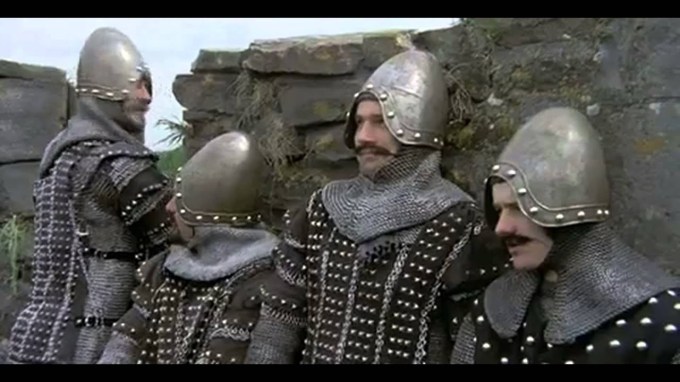
I’m just now reading Ron Chernow’s Grant, the most recent biography of the Civil War’s greatest general, Ulysses Simpson Grant. I have read others, but this will probably be the last. It runs to nearly 1,000 pages, and is well-researched and well written, as you would expect from a writer whose biographies of Washington and Hamilton are as near to definitive as is currently possible. Many years ago, I read Grant’s own Personal Memoirs, which may be the best-written first-person account of the war. More on that later.

One of the themes of Chernow’s book is redemption. If you know anything about Grant, you will know that he was, on balance, a failure before the Civil War. He had a credible record at West Point and in the Mexican War, but when he was stationed at a lonely outpost in Oregon, where he could not afford to bring his family, his drinking – he was and remained an alcoholic – eventually led to his forced resignation from the Army in 1854.

From then until 1861, Grant failed at everything he tried. When the war started, he was working at his father’s leather goods shop in Galena, Illinois. Initially, his offer to serve his state and country was rebuffed, but eventually he received a volunteer commission and it transformed his life. Unlike most of the officers in Illinois regiments, he was an educated and experienced military officer. His organizational ability became apparent, and eventually he would be given command of troops on active service, and a commission in the Regular Army.

His first possible battle never took place. The Confederate commander refused battle and withdrew. The lesson Grant took from this was that the enemy was just as afraid of him as he was of them. He never forgot this. He made his reputation with the capture of Forts Henry and Donaldson and thereafter actively sought to bring his enemy to battle, in sharp contrast with the dithering of Eastern generals like McClellan, Pope, Burnside, Hooker and others. Eventually, President Lincoln made him general-in-chief of the entire Union Army. Although he went on occasional drinking binges during the war, they only occurred when he was not actively engaged in operations, and never when his family was with him.

Grant commanded in the field, and personally supervised the Army of the Potomac, which directly faced the legendary Robert E. Lee. He was also responsible for overall strategy in all theaters, which was to bring the Confederates to battle, rather than just occupy territory. He was not a vindictive man, and treated the defeated enemy with respect, although he considered them traitors.

During the war and after he was a loyal friend, but that loyalty was not always returned. His presidency was marred by the actions of friends who took advantage of him to enrich themselves. He himself was never implicated in any of this.  After his presidency, he was swindled by his business partner and found himself in debt.

As a way of paying off his debts and insuring the future security of his family, he was convinced by Mark Twain to write his autobiography. He did so while dying of throat cancer (he was a constant cigar smoker). He finished it just before he died in 1885. Twain was right – it was a best seller and did insure his family’s future. Its simple, direct style is as readable today as it was then.

In those days, paying your debts and writing your own books was not exceptional. I urge you to read both Chernow’s book and Grant’s Personal Memoirs as a reminder of how a leader can and should behave.

######

Copyright 2019, Patrick F. Cannon


Let’s Have a Party!

Let’s Have a Party!

By Patrick F. Cannon

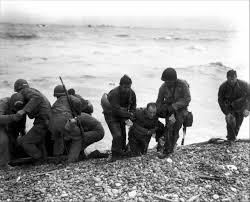
In case you haven’t noticed, we now have four political parties, so eventually we’re going to need names for them. As a public service, I will take on this responsibility.

I had thought I might look to France and Italy for inspiration – each, after all, has 40 or so parties – but I discovered that they had foreign-sounding names, so no dice there. Of course, you might ask why we would need names for four, since it’s well known that the United States has a “two party system.” What’s wrong with keeping it that way? Normally, I would be inclined to agree, since it has served us well since just before the Civil War, but I couldn’t help noticing that both the Democrats and Republicans seem to be breaking down into distinct factions. So why not help them along?

Sandernistas. The father (or is it grandfather) of the far-left wing of the Democrat Party is the Honorable Bernard Sanders, the junior senator from Vermont. When we think of Vermont, what usually comes to mind is Maple Syrup and Fall foliage, not Brooklyn-born socialists, but perhaps you haven’t been to Vermont lately. Bernie, as his mostly-young acolytes call him, is a graduate of the University of Chicago, where he earned his Marxist bonifides as a member of the Young People’s Socialist League, the Congress of Racial Equality and the Student Nonviolent Coordinating Committee.

Back in Brooklyn, he was only one of many socialists, so he headed north to greener pastures.  He first ran for office in Burlington as a member of the Liberty Union Party (Motto: Get Everything Free or Die), but now serves as an “Independent.” In the Senate, he caucuses with the Democrats, and ran for President in their primaries of 2016. Among other things, he is for a single-payer health system, free advanced education for all, and a guaranteed income whether you actually bother to work or not. He advocates having the rich pay for all of this largesse.

Sandernistas don’t read history, so Bernie may not be aware that this has been tried before. After World War II, Britain’s Labor Party got even with the aristocracy by imposing high taxes and death duties. Those who didn’t run out of dough just left the country for less taxing climes. Eventually, there was no one left to tax, the economy collapsed and the hated Margaret Thatcher was waiting in the wings. Oh, and don’t forget the glories of Venezuela, Cuba, North Korea, etc.

Some worry that Bernie is 77, but they should be heartened by the fact that waiting in the wings is 29-year-old Alexandria Ocasio-Cortez, the youngest ever member of Congress. She agrees with Bernie on almost everything, when she isn’t trying to figure out how to stop cows from farting, and keeping airplanes aloft without fuel.

Democrat. After the “progressives” decamp, there will still be sufficient old-fashioned Democrats to make a decent showing. Adaptation has always been one of their strong points. Andrew Jackson, who killed the odd enemy in duels and herded the Southeastern Native Americans to verdant Oklahoma, is one of their heroes. They were also the party of slavery and, later, segregation. To be fair, beginning with FDR, they made amends to the point where their Southern brethren no longer felt welcome (see Republicans below). With all the youngsters bolting to Bernie, they might have something of an age problem, although good old Joe Biden is only 76.

No Nothings. The far right of the Republican Party should leave a party that believes in free markets, free trade and personal freedom and revive the No Nothing party of the 1840s and 1850s. They too were anti-immigration, and wanted to make America great (and white and protestant) again. Donald Trump, who managed to graduate from college without learning anything, has been a natural leader, particularly since he not only wants to seal off our borders, but raise tariff walls as well. I’m sure he’s never heard of the Smoot-Hawley Tariff act of 1930, which raised tariffs to end the Depression. Like Socialism, maybe it will work this time.

Republican. If they rid themselves of the No Nothings, perhaps the Republicans can regain their souls and remember that they’re the party of Lincoln, Teddy Roosevelt, Dwight Eisenhower and Ronald Reagan. They might also remember that free trade and Capitalism have together vastly reduced abject poverty around the world, and that collective security kept the Soviet Union in check and ultimately led to its downfall. If they can do that, then we might begin to forgive them for their abject submission to one of the truly bad men to have served as President of the United States.

So, there you have it. Some of the old and some of the new. I’m sure you’ll be able to easily choose where you belong. As for me, I’m waiting for the formation on yet another party, which I would call the Liberal Party, but “liberal” in its original meaning.

######

Copyright 2019, Patrick F. Cannon


I Wish That Doggie Were Mine

I Wish That Doggie Were Mine

By Patrick F Cannon

If you had wanted this dog, you would have needed to bid more than the final selling price of $58.4 million that it fetched at Christie’s auction house in New York in 2013. At the time, it was the record price for a work of art by a living artist, in this case, the ubiquitous Jeff Koons. It has since been eclipsed by the sale last year of a painting by David Hockney for $90.3 million. Hockney’s painting included a swimming pool, three human figures and a French landscape, which no doubt accounted for the higher price. To be fair to Koons, his dog is 12 feet high and made of highly polished metal.

(By the way, I’m a free market guy. If someone was willing to pay $58.4 million for that dog, then that’s what dogs like that were worth that day, just as corn futures were at $3.6975 per bushel yesterday, but were $5.7900 in 2011. You buys your dog and you takes your chances.)

The other difference between the two was the Hockney actually did the work himself. He prepared the canvas, mixed the paints and applied them with brushes and other tools of his trade. Koons doesn’t do that. He has an idea, which his employees execute. Several years ago, he was interviewed by the late and acerbic art critic, Robert Hughes, about his famous sculpture of Michael Jackson holding his pet monkey, Bubbles. Hughes: “Did you do this yourself?’ Koons: “Oh no, I don’t do that.”

In explaining his dog and other balloon animals, he once said (I paraphrase) that he was intrigued by balloon animals because they were full of air, just as we are (unless we stop breathing of course). He is now famous for his banal comments, but why should he care?  You see, he has long had a factory and hundreds of employees to turn the stuff out. Recently, like other manufacturers, he has begun to lay people off, preferring to stake his future on robots.

We mustn’t be too hard on Koons. He is simply the culmination of trends in the market that have been developing for 200 years or so. While there have always been people who have bought and sold paintings and sculpture, they did not buy directly from the artist, but from the artist’s customer. In the early 17th Century, if you wanted Rembrandt to paint your portrait, you went to his studio. If you were willing to pay his price, you ended up being immortalized. Or you might be the member of the local militia, who decided to share the cost by ponying up your share to have Rembrandt do a group portrait. Although most folks now don’t now particularly care who you were, they will visit the Rijksmuseum in Amsterdam to admire “The Night Watch.”

In Spain and Italy, artists were employed mainly by the Roman Catholic Church and the aristocracy. Titian painted cardinals and vast religious scenes; DaVinci did “The Last Supper” for a convent and Michelangelo the Sistine Chapel for a pope; in Spain, Velasquez was court painter to the royal family, and most of El Greco’s paintings still hang in Spanish churches.

While dealing in art is nothing new – there is evidence of a thriving art trade in ancient Rome – its nature has changed over time. Auction houses like Sotheby’s and Christie’s have been in business since the 18th Century. Originally, much of their business came from British aristocrats selling off the family treasures to raise cash – often to pay gambling debts. This trend accelerated in the late 19th Century as land rich but cash poor Brits either married off their sons to rich American girls or sold off the country’s artistic treasures to their fathers. American museums are now full of these purchases.

But the main change was not the still-continuing trade in “Old Masters,” but the advent of dealers who bought and sold the work of living artists. On the surface, there doesn’t seem to be anything wrong with this, but eventually dealers began to encourage artists to produce works that the market seemed to be demanding. The “new money” likes cows, so why not paint cows? Or landscapes with cows? But wait, maybe pigs are coming into their own! Like the cows and pigs themselves, art became a commodity.

Even artists with the highest reputations were not immune. The legendary French dealer, Paul Durand-Ruel, who almost single-handedly made the reputations of the Impressionists, was actually responsible for suggesting to Claude Monet his series paintings of objects like haystacks and Rouen Cathedral that changed as light changed during the day.

Durand-Ruel, to his credit, actually kept many of the Impressionists going by buying their work and holding it for years as he championed their cause. Eventually, of course, it paid off and he made much more money than they did.

Dealers now “represent” an artist, much like an agent represents an actor or ballplayer. They organize exhibits and take a commission on any works that sell. It is thus to their benefit to hype the artist as much as they can, using the same tools that anyone selling any product might use. To them, art is a commodity like any other. It is a rare artist who can afford to go his or her own way without regard to the market. Thus, an artist can suspend a basketball in a glass case (our friend Koons again), and be perfectly confident that the critics (who are prepared to swoon over the craziest stuff) will go along and even cheer.

Anyway, if you want to know “how much is that doggie in the window,” you obviously can’t afford it.

######

Copyright 2019, Patrick F. Cannon


Tattoo Mania

Tattoo Mania 

By Patrick F. Cannon

I think tattoos are uniformly unattractive (I was going to use a stronger word, but I’m trying to be reasonable here). Let me also stipulate that people I’m related to and have great affection for have them, although fairly discrete ones. I also readily admit that you can be a fine human being and still have a tattoo.

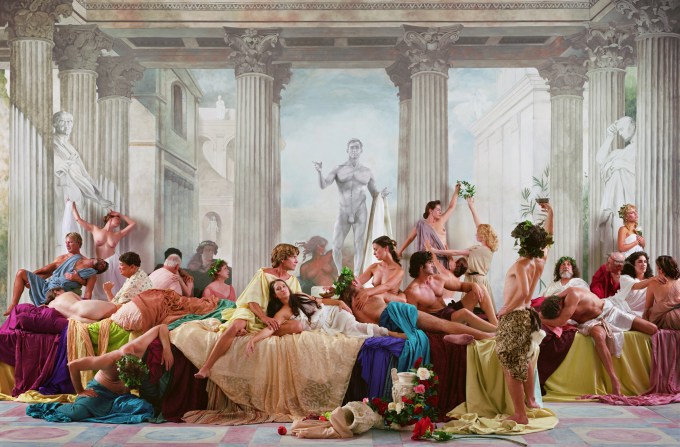
With these provisos out of the way, let me say that I have never seen a tattoo that improved anyone’s appearance. How does the old saying go: If God had wanted you to have a tattoo, you would have been born with one?  This leads me to explore the history of tattoos, to see if God fits in there somehow.

The first tattoo that we know about was found not too long ago, when intrepid Swiss mountaineers came upon a grizzly site as they traversed a melting glacier. What on initial appearance looked like a pile of old leather, turned out to be, on closer examination, human remains. Young Fritz was sent down the mountain to alert the proper authorities, while the others stood guard over the discovery. In due course, a helicopter from the Swiss Bureau of Mountain Cadaver Discoveries descended from the sky. Upon landing, a team emerged with a carbon fibre casket, into which they carefully placed the shriveled horror.

After a secrecy-shrouded period of extensive study, the Bureau announced to the world the discovery of a more or less intact body that was at least 20,000 years old, and whose relative preservation was likely due to being frozen in the glacier. How it could be 20,000 years old when many believe God had only created the heavens and earth some 8,000 years ago, they were loathe to explain. They did speculate that the “Swiss Mountain Man,” as they called him, had been the victim of foul play, as he had a hole in his skull. Perhaps, they posited, he had been headed for warmer climes when he had been set upon by wandering brigands.

But the most stunning revelation was the discovery that he had what looked like a tattoo on his upper right arm. While somewhat faded, it appeared to be a heart pierced by an arrow. Below the heart were some symbols that may have been words of a forgotten language. Linguists are now toiling away trying to find the key that would unlock the ancient tongue, but so far, no dice.

While there is no conclusive evidence, evaluation of bas reliefs at ancient ruins of Assyrian and Babylonian cities seem to show that some figures either have tattoos or are wearing Hawaiian shirts. And everyone knows that the Greeks were enthusiastic tattooists, since Homer wrote in the Iliad: “Brave Achilles, with ‘Mom’ proudly emblazoned on his manly pecs, hurled his lucky javelin at the cowering Trojans!”

When Rome came to power and subjugated the Greeks, tattooing was outlawed throughout the Empire. The guild of Greek tattooists had to go underground, but found a ready market for their talents in Egypt. While primitive tattoos were to be seen on early mummies, later mummies like the so-called “Sailor Pharaoh,” Wetses III, had quite sophisticated anchors on their biceps. Even these underground tattooists were victims of the Dark Ages that followed the Fall of the Roman Empire, but a few of the Greek tattooing families survived in the mountain fastness of the Pindus range.

In the meantime, so-called primitive peoples in the dark corners of places like the Amazon, New Guinea and the Outer Hebrides, continue to use tattoos to mollify their Gods and frighten their enemies. As they slowly become exposed to civilization, they do generally abandon tattooing in favor of Michael Jordon tee shirts.

Back to the Greeks. As the Dark Ages began to lighten up, they left their mountain hideouts and made their way to the world’s ports, where they once again began to ply their trade. There was no lack of drunken sailors, prime candidates for anchors and full-rigged sailing ships. After sobering up and reentering polite society, the former swabbies took to wearing long-sleeved shirts to hide their youthful indiscretions.

So, tattooing remained in the seedier back streets of the world’s ports of call until the now legendary Hellenic needle man, Aristotle Pennassis, changed his sign from “Tattoo Parlor” to “Body Artist.” This struck an immediate cord with rebellious youth, now as always on the lookout for ways to annoy their parents. Instead of a tattoo, they were now sporting “body art.” As with young people throughout the ages, they live only for the moment, not foreseeing that the bloom of youth will inevitably give way to the sagging wrinkles of age. And that today’s passion for Jessica may give way to tomorrow’s lust for Joe.

While I might not live long enough to see the coming horrors, it’s frightful to contemplate. Were I younger, I would put my money on the inevitable rise of tattoo removal technology. Someday, tattoos may be easier to remove than graffiti on the sides of railroad tank cars. But in the meantime, think twice before you mess with God’s handiwork (see, I did fit God in after all).

#####

Copyright 2019, Patrick F. Cannon