
As We Forgive?

As We Forgive?

By Patrick F. Cannon

“Forgive us our trespasses as we forgive those who trespass against us.” You may remember this noble sentiment from the Lord’s Prayer. It’s a concept ingrained in Christian theology. No less a personage than Jesus Christ taught that if the sinner repents, and promises to sin no more, he can be forgiven.

            In this supposed Christian nation, God may still forgive the sinner, but almost no one else does. In a recent instance, 27-year-old Alexi McCammond – herself an African-American — was forced to resign as editor of Teen Vogue for tweets she had posted 10 years before as a teen-age student. Some of them involved snarky remarks about Chinese fellow students and teaching assistants, so were deemed racist. Apparently, 17-year-old girls cannot be forgiven for being immature, even if they apologize later, as Ms. McCammond predictably did. Maybe Christianity Today will give her a job. She can forget about the New York Times.

            By the way, that august newspaper is among those calling for New York Governor Andrew Cuomo to resign. No more hypocritical than most politicians, Cuomo is accused of making unwelcome advances to young women, including some on his staff. Instead of giving the old coot a hearty slap on the face, or just telling him to act his age, they apparently make mental note of his transgressions until a braver woman comes forward publicly, then come out of the woodwork to pile on. By the way, Cuomo is a 63-year-old divorced man, old enough, I guess, to be considered a dirty old man.

            So far, he has refused to resign. If he does, it should be for fudging Covid nursing home death figures, not for being an idiot with women. After all, the country was happy to elect two serial sex offenders – Bill Clinton and Donald Trump – to its highest office. Talk about hypocrisy! I would guess that some of my readers voted for at least one of them in full knowledge of their sexual proclivities.

            Man’s inevitable sexual urges are now an issue in many now unforgiveable acts. Poor Charlie Rose was accused of luring women to his lair for immoral purposes and has all but disappeared from view. One day, the Charlie Rose Show; the next, reruns of Mister Rogers. Then there’s comedian Louis CK, who got his jollies by exposing himself and masturbating in front of bemused and/or appalled women. Pathetic, surely. Career ending? Why? He has apparently gone back to work. If he’s still funny, it should be OK to laugh at his jokes, just as people seem to enjoy Picasso’s work, despite his appalling treatment of women.

            As far as I can tell, none of these men committed an illegal act. If they did, why haven’t they been handcuffed and hauled off to the pokey? Being boorish and stupid has only ever been against the law of good taste, which is violated every day in every way by both sexes. Men who have crossed the line – Harvey Weinstein and Bill Cosby come to mind – have ended up in prison, as they should have.

            In the spirit of forgiveness, I’m even willing to offer absolution to Donald Trump, provided he admits his many sins, and promises to be better in the future. I concede I’m unlikely ever to be required to honor my generous offer. Who have you forgiven lately?

Copyright 2021, Patrick F. Cannon
Can You Repair the Past

Can You Repair the Past?

By Patrick F. Cannon

The question of reparations for the descendants of formerly enslaved Africans has returned to the front burner recently. Just a few days ago, Steven Chapman of the Chicago Tribune editorial board wrote a column about Chicago suburb Evanston’s reparation fund, which will be supported by citizen donations and its cannabis tax. Liberal Evanston – it voted more than 90 percent for President Biden – has an African-American population of approximately 15 percent, roughly the same as the country as a whole.

Coincidently, Monday’s Tribune included a letter to the editor from someone whose ancestors came to this country long after emancipation, never lived in a Jim Crow state, and couldn’t understand why he should have to pay for someone else’s sins. This is a common argument and there is some justice to it.

The more you know about the history of slavery in this country, the more complicated it becomes. Slavery was introduced in what is now the United States by the British, just as they introduced it in the Caribbean to provide cheap labor for sugar production. In addition to sugar, here it was tobacco and later cotton. It formed part of what became known as the “triangular trade,” which involved shipping goods from Britain to West Africa in exchange for slaves, which were then shipped to the West Indies and America in exchange for sugar, tobacco and other commodities.

The future slaves were largely provided by their fellow black Africans, who captured them during raids or as the spoils of war. Arabs were also involved in the trade, as were the Portuguese and Spanish. The British finally abolished the slave trade in 1833, or just 30 years before the Emancipation Proclamation. You can quibble with the numbers, but slavery existed in what was British North America for 264 years, and in the United States for 100. Taking all this in consideration, how would you apportion the blame?

Despite all this shared responsibility, if reparations are ever to be paid, it’s down to us. If we’re honest, we must admit that the Federal government and courts permitted Jim Crow laws to stand in the South, and did nothing to prevent more subtle segregation in every part of the country. The electorate, that’s us, was generally happy to go along. Anyone who has lived in Chicago should be aware that African-Americans were excluded from most white areas until fairly recently. And who can deny that many jobs were denied to them? Even when qualified?

Rather than pay reparations for the past (and how could you possibly compute that?), I suggest we invest in the future by paying the tuition and related costs for any African American  — regardless of age — who is accepted at any accredited community college, four-year college or university, or trade school. Since Congress is only too happy to send money to people who don’t actually need it, why not send some along to people who do?

In the meantime, if you don’t really need your Covid relief check, why not send part of it to the United Negro College Fund?  And, by the way, the answer to the question in the title? You can’t.

Copyright 2021, Patrick F. Cannon      

You Probably Don’t Care

You Probably Don’t Care

By Patrick F. Cannon

I thought I’d write this week about something few people are concerned with – Thoroughbred horse racing. It’s hard to believe now, but it was once the most attended sport in America. That was the case in 1957, when I first attended the races at Washington Park in south suburban Homewood. With its sister track in north suburban Arlington Heights – now Arlington International — it made the Chicago area one of the major centers of racing in the country.

            After Washington Park burned down in 1977, Arlington stood alone as Chicago’s preeminent track (both had been owned by the Lindheimer family). I won’t bore you with all the details (it involved bribing politicians), but the Lindheimer’s were forced to sell the track in 1968 to Gulf-Western, operators of New York’s Madison Square Garden, among other holdings. In 1983, it returned to local ownership when it was purchased by Richard Duchossois. In 1985, the original grandstand burned down; in 1989, the new grandstand opened. The track is now considered one of the most beautiful in the world.

            Some of the great horses who have raced at Arlington include Citation, Dr. Fager, Damascus, Buckpasser, Twilight Tear, John Henry, Round Table and Secretariat. Its Arlington Million was the first race in the world to offer that purse. This year, the purse has been reduced to $600,000.

            Alas, in 2000, Duchossois sold it to Churchill Downs, Inc. (CDI), in a deal that made him the company’s largest stockholder. Once race tracks were the only place to legally wager in Illinois, but by then it had competition from the lottery and casinos; now you can place bets on just about any sporting event, and play the slots at your local tavern.

            During most of the time they owned Arlington, CDI lobbied the state legislature to permit slots and other forms of gambling at the track, much as has been done successfully in other states. In the meantime, CDI bought Rivers Casino in DesPlaines. When the legislature finally passed a new gambling law in 2019, they declined to apply for a license, claiming the terms of the new law were unfavorable. The real reason was the track’s proximity to the Rivers Casino.

            Then, a few weeks ago, they announced plans to put the property up for sale, saying it was now too valuable for horse racing, and should be developed for a “higher and better use.” The complex, 386 acres in total, sits in Arlington Heights, IL, one of the Chicago areas more prosperous suburbs.  Arlington has promised to hold racing this year, and to find an appropriate place for its license. Since it was granted the license by the state, it doesn’t actually own it, so it’s a hollow gesture.

            The only track left in the Chicago area is Hawthorne, owned for some 100 years by the Carey family (I went to grammar school with one of them, Judy). Unlike Arlington, they have applied for a  gambling license and have plans to transform the track with a casino and more modern facilities generally. Currently, their purse structure is pathetic, even compared with tracks in Indiana, of all places. Their average purse is approximately $12,500 per race (on Saturday March 6). In New York, that average would be closer to $50,000. I checked on Gulfstream Park in Miami just yesterday and the average purse over 10 races was $37,500. You can imagine where owners and trainers with decent horses would rather race.

            The decline in Illinois has led to a decline in the state’s breeding industry. Doubling of purses at a revitalized Hawthorne (and at Cahokia near St. Louis) would not only attract owners and trainers, but might revive breeding as well. What the Illinois Racing Board should do in the short term is tell CDI “thanks but no thanks” and award this year’s desirable Summer dates to Hawthorne as a reward for their commitment to the Chicago area. Obviously, CDI – which of course still runs the Kentucky Derby – now sees thoroughbred horse racing as a business instead of a sport. When selling widgets makes more money than the thrill of a photo finish, you can kiss the “greatest two minutes in sport” goodbye.

Copyright 2021, Patrick F. Cannon 

Times Do Change

Times Do Change

By Patrick F. Cannon

Seeing a recent ad for the upcoming Master’s golf tournament brought back some memories of my time at Fort Gordon, Georgia. The fort is located – as is the August National Golf Club, home of the Master’s – in Augusta. It was then, as it still is, the location of the US Army’s Signal School.

            After basic training at Fort Benning – also in Georgia – I was sent to Fort Gordon in May of 1961 to train to be a cryptographer. (As an aside, both forts were named after Confederate generals.) Cryptography involves the coding and decoding of sensitive military (and other) information; to do it, you need a security clearance (Top Secret in my case). In addition to the FBI interrogating your friends  and neighbors, taking a lie detector test was then part of the drill. I passed it, but not everyone did.

            One of the members of my class was a young woman. She was intelligent, or she wouldn’t have been chosen for this training. She was also a lesbian, an orientation that was uncovered by the lie-detector test. She was not only removed from the school, but discharged from the Army altogether. Why, you might ask? As it happens, this was after the spy scandals in Great Britain, in which mostly gay men were discovered to have been Russian spies. The thought was that being gay would make you vulnerable to blackmail. Considering how appalingly gays were treated then, it seemed a plausible assumption.

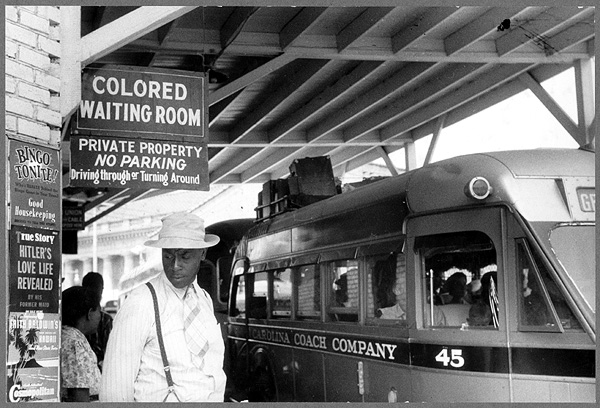
            Augusta was still largely segregated in 1961. I probably knew this, but cluelessly asked one of my African-American fellow students if he would like to join us when we were going to town for a restaurant dinner and some bar hopping. He was a nice guy, and it seemed a reasonable thing to do. He looked at me with amazement, then said: “Thanks, but there’s no place to eat in Augusta that will serve whites and blacks together. This is the South, man.”

            Augusta is still the South, but a South where whites and blacks can dine together. Not all of its white citizens are happy with this, but blatant segregation is clearly illegal. African-Americans can even vote, which was largely impossible until the Voting Rights Act of 1965. Even the Augusta National Golf Club – whose membership was all white and all male in 1961 – now has both female and black members. Interestingly, the first female member was golf nut Condoleezza Rice.

            The young woman who was thrown out of the Army for being gay was a member of the WACs (Women’s Army Corps), which was disbanded in 1978. Women now serve with men in regular units. Gays can now serve openly in all the services, as can transgender men and women. This has created its own set of problems, but clearly there’s no going back.

            The lesson here is a simple one: despite what people with no historical perspective might claim, progress in expanding rights to all citizens has been continuous and even inspiring. This does not mean that racism, gender discrimination, or sexual orientation bias have disappeared; in my view, they never entirely will. But who can reasonably deny that great progress has been made?

Copyright 2021, Patrick F. Cannon       

I Hate Guacamole!

I Hate Guacamole!

By Patrick F. Cannon

I cannot now remember the first time I experienced guacamole. It may have been at a party of some kind, where a revolutionary hostess decided to forego the classic onion dip for something more exotic. “Hello,” I said to myself when I saw the green sludge for the first time, “what could this be?”

            My fellow partygoers seemed to be scooping the stuff out of the bowl with corn chips of some kind. Being the kind of fellow who’s willing to try anything once, I chose a sturdy-looking chip and dived in. I was perhaps too ambitious, as I dug down fairly deeply; too deeply in fact, resulting in the chip breaking, leaving a piece in my hand and the rest in the bowl. I popped the virgin half in my mouth, and gingerly plucked the guacamole-encrusted half out of the bowl. Into my mouth it duly went.

            How can I describe this experience? It was clear to me that the mixture contained some onions and chiles, along with some other seasonings. But the thing that impressed me the most was the base – it was slimy and even greasy. I was told that this was a fruit called the avocado or (if you want to be precise, persea americana). While the fossil record indicates that versions of the fruit – technically a berry – existed in other parts of the world, the version we now eat is probably native to Mexico.

            Anyway, my first exposure to the now ubiquitous fruit was not a happy one, and I have seen no reason since to change my opinion. In addition to being slimy and greasy, it has no flavor of its own (don’t give me that “it has a delicate, nut like flavor” nonsense, I’m not buying it). If you think it’s so great, why not just eat one like you would eat an apple or a peach? No? I thought not.

               I do concede that the avocado is nutritious, although rather high in saturated fats. But there are more nutritious foods that also have some taste: almonds, carrots, snapper, ocean perch, cherries, tangerines, scallops, and my special favorite – pork fat! In no top 25 list of the healthiest foods that I could find did I discover the avocado. Nor did I discover the chickpea, the basis for another disgusting mess, hummus, which has joined guacamole in the hors d’ oeuvre spreads of the culinarily deluded.

            Of course, one can avoid the guacamole bowl, but the avocado increasingly appears hidden in other dishes. Just the other day, I ordered a chopped salad. When it arrived, I discovered to my horror that little cubes of avocado were mixed in with the more traditional ingredients (which generally include chopped lettuce, broccoli, bacon and cheese, among others). As I was with a group, I didn’t feel I could gingerly pick out the avocado bits, so I manfully ate the salad, slime and all. The tasty dressing at least helped me get through the ordeal.

            Be warned also that the dreaded green stuff is sneaking into sandwiches. You would be wise to read the entire ingredient list before ordering. After the turkey, Swiss, lettuce, tomato, and bacon often lurks the green monster. And I understand that the latest fad among people who read too many food blogs is to spread avocado on their breakfast toast instead of strawberry preserves. Imagine, your day ruined before it starts.  

Copyright 2021, Patrick F. Cannon

State of the Unions

State of the Unions

Patrick F. Cannon

Trade, craft, professional and industrial unions have done much to improve the incomes and working conditions of their members. It was a long struggle that began before the turn of the 20th Century, when workers were largely at the mercy of their employers. Through their efforts – and yes, suffering – we now have laws governing wages, hours and working conditions. Many of my relatives were union members; when I was younger, I myself belonged to two.

            And I support the right of employees to form new unions; indeed, this right is enshrined in the law. And reluctantly, I support these unions right to support causes and political candidates so long as corporations have this same right. It’s not my money (at least directly), so it’s none of my business. It is, however, my business when this support is paid for with my money clearly and directly, i.e., when it is spent by public employee unions.

            Frankly, I wish public employee unions had never been permitted, but, as they say, that train has left the station and it ain’t coming back. But I wonder why they should use my money to support political parties and candidates I oppose. In Illinois, those candidates are Democrats. Now, I do vote for some Democrats on the Federal level, but do my best to vote for Republicans locally. Why? Simply because the Illinois Democrats have formed an unholy alliance with the public employee unions.

It works this way: The unions provide money and bodies to Democrats; in return, the governor and legislators don’t do anything to diminish in any way the great deals they’ve given the unions over many years. One example is the pension debt. In the last year, it increased by $7 billion, and now stands at $144.4 billion. And despite the annual budget crisis – exacerbated by the pandemic – Governor Pritzker has not laid off a single state employee; or even asked them to take a slight pay cut or a few furlough days. This in a state that had unemployment spike to 16 percent! Shared sacrifice? You gotta be kidding!

Again, the public employee unions aren’t going away, but I believe they should not be permitted to donate money or time to political parties or candidates. This one step would instantly eliminate one road block to true fiscal reform in Illinois (and other states where public employee unions wield similar power).

It’s true that the Supreme Court has said that union members need not pay that portion of their dues that supports political causes or candidates. That’s, frankly, little more than a chimera. Let me put it simply: I don’t want my tax dollars to pay public employees whose union dues is used to support candidates I oppose (or even those I support). In essence, they are using my dough to get more of my dough. How can that be right?

Copyright 2021, Patrick F. Cannon

Mine Those Riches!

Mine Those Riches

By Patrick F. Cannon

Whenever I want to punish myself for some transgression, I need only go to Taylor Swift’s web site and read some of her song lyrics. They are so uniformly bad that reading just one seems penance enough for any sin. To spare you too much pain, here is just a brief example:

                        “Untouchable, burning brighter than the sun,

                          And when you’re close, I feel like coming undone.”

            Ms. Swift, in common with many of her fellow performers, writes songs about breaking up with men who have somehow done her wrong. Among the most self-involved people in the history of the world, she seems to have love affairs with young men just as self-involved as herself. This clash of personalities is bound to end ill, thus providing Swift with more grist for her composing mill.

            Now, she is a singer of some, if limited, talent. Why does it never occur to her and her ilk to mine the riches that actually talented song writers have left for posterity? It could be because she has had only the sketchiest of educations, deciding at an early age that she was going to devote her life to becoming famous. So, perhaps she is unaware that there exists a proud history of popular American song.

One wonders if she (and the many others who think the world was created when they were born) have ever heard of Stephen Foster, George Gershwin, Cole Porter, Jerome Kern, Irving Berlin, Richard Rogers, Leonard Bernstein, Frank Loesser, Frederick Loewe, Jule Steyn, Jimmie Van Heusen, Woody Guthrie, Steven Sondheim, Randy Newman, Jerry Herman, Paul Simon, John Lennon, Paul McCartney, and so many others – and the talented lyricists who collaborated with some of them.

Of course, there could be a practical reason for performing only your own songs – you don’t have to pay royalties (although copyright has expired on some great songs). And perhaps they’re afraid to sing songs that would cause people to compare them with the great singers who interpreted them in the past. The list would be very long, but just let me mention Bing Crosby, Frank Sinatra, Fred Astaire, Ella Fitzgerald, Billie Holliday, Rosemary Clooney, Sarah Vaughn, Mel Torme, Louis Armstrong, Anita O’Day, Peggy Lee, and even Rudy Valee (that’s Rudy in the photo), to name just a few. Almost none of them wrote their own songs. Why would they, when there were such riches available to them?

While I’m on the subject of artistic interpretation, how many of our actors have ever appeared in a classic play (or any play, for that matter)? I was reminded of the reluctance of so many American actors to test themselves in the classics by the recent death of the Canadian-born Christopher Plummer. In a long career – he died at 91 – Plummer played most of the great Shakespearian roles, including Hamlet, Iago and Lear; but he also tried his hand at Chekhov, Brecht, Arthur Miller, Eugene O’Neill, Pirandello and Shaw.

With a few exceptions – Jason Robards, Al Pacino, Dustin Hoffman, Brian Dennehy, and Stacey Keach  come to mind – once American actors make it in the movies, they rarely return to the stage. Let’s face it. Why would you want to memorize a part like Edmund Tyrone in O’Neill’s Long Day’s Journey into Night, when you could easily learn a page of dialog for a movie scene? And how frightening would it be to stand upon a stage in front of 1,000 people and convince them you really are Hamlet? Or Hickey in The Iceman Cometh? Or Willie Loman in Death of a Salesman?

But if you’re a serious actor, or a serious singer, you should want to play the great roles, or sing the great songs. But I guess “serious” is the operable word.

Copyright 2021, Patrick F. Cannon

Is No News Good News?

Is No News Good News?

By Patrick F. Cannon

(This piece was originally published a couple of years ago, and I have updated it.. Recently, Alden Capital has increased its stake in the Chicago Tribune. If it gains control, it will accelerate the decline of a newspaper that was once one of the country’s top five. It has gutted the staffs of every newspaper it has bought. The Trib has already cut its staff significantly; it now has no regular classical, jazz or even pop music critic, and has long been without a Washington bureau or any foreign correspondents. And just a few days ago, both the architectural critic and main restaurant writer announced they were leaving. But the movers and shakers in Chicago who could band together to save the paper don’t seem to care; perhaps they think it’s good riddance.)

When I moved to Chicago in 1946, there were 5 daily newspapers – Herald-American (the Hearst paper), Daily Times, Sun, Daily News and Tribune.  The Sun and Times merged and survives, as does the Tribune. When I began riding the bus to work in the Loop in 1956, almost everyone was reading either the Sun-Times or Tribune; on the way home, they picked up either the Herald American or Daily News. Newsstands were common and convenient.

            Now, when I ride the train downtown, as I do two or three times a month, it is rare to see anyone reading a newspaper; almost everyone, however, is staring at their phones. Are they reading a digital edition of a newspaper? No doubt a few are. While its print circulation has tumbled, the Tribune has seen increases in digital subscribers, as have to a much greater extent The New York Times, Wall Street Journal, and Washington Post.  And it’s easy to see a future when only digital editions of these and other newspapers will be available. Frankly, I’ll miss turning those pages every morning, but I guess people missed the town crier too.

            But what about local news? Between 2004 and 2018, 516 rural newspapers closed, as did 1,294 in urban areas. And almost every surviving newspaper has seen cuts in their editorial staff. In hundreds of counties, there are no newspapers of any kind. Which means no one to regularly keep tabs on the activities of local governments. Perhaps you live in Shangri La, where the politicians always have your best interests at heart; but I live in Illinois, where ex-governors and aldermen spend their declining years in prison.

Although actual figures are difficult to come by, the total daily circulation of the Tribune – print and digital – is now about 550,000; the Sun-Times less than half that. In their heyday, their print circulations were about 850,000 and 450,000 respectively.  Where then are the missing readers getting their news?

            Network news programs make some effort to cover national news, but can only scratch the surface in the 30 minutes they have (actually, more like 22 after you deduct the commercials and promos). As you’ve probably noticed, I think local TV news is laughable. Of course, there is no lack of “news” available on the cable channels and on-line. Thus, consumers are able to shop for the point of view about news that agrees with their own. While both Fox News and MSNBC give us a bit of straight news, most of their content panders to the existing biases of their viewers. No rational person would watch either. Even CNN seems to have been taken over by talking heads.

            There are any number of paid sites that cover politics exclusively, but most people aren’t interested in diving that deeply. In the end, only the daily newspapers – and the Associated Press – have the staff and resources to broadly cover the news, both local and national. Let’s say right here that none of them is perfect. Let’s also concede that most of their staff members tend to the liberal side of the spectrum. They make mistakes, sometimes serious ones that lead their critics to discount the great majority of their coverage that is actually accurate and unbiased.

            With a few exceptions, mainly Fox News, former President Trump accused most of them of trafficking in “fake news.” I define “fake news” as the news you don’t want to hear, whether you’re on the left or the right. The former president is notably adverse to the truth. He has lied so often that it’s probably pointless to any longer keep track of them, as the Washington Post did (for the record, the final count was around 20,000).   

            As for me, I’ll continue to read the paper every day. If it goes all digital, I’ll read it that way. If I want an up-to-date weather forecast, and breaking entertainment news, I’ll tune in to the local news, whose news directors read the newspapers to see what’s actually going on around town. So should we all. But what if that newspaper didn’t exist? Or its staff was so depleted that it could no longer cover all the important news? I guess we could all go to the beauty salon or barber shop for the latest scoop. You do still go to the barber shop, don’t you?

Copyright 2021, Patrick F. Cannon
A Dog’s Life

A Dog’s Life

(A one act play)

By Patrick F. Cannon

Scene: In a drab, institutional room, there is a counter; above it, a sign proclaims: “Bureau of Vital Statistics.” Behind the counter is a drab, institutional man of indeterminate age. Let’s call him the clerk (C). Facing him is a well-dressed younger man. He wears a suit and tie, and a fresh haircut for his full head of hair. Let’s call him the supplicant (S). Although there is no  one else in the room, the clerk ignores the supplicant until he rings a bell on the counter.

C – Can I help you, sir?

S – Yes, I need to change my birth certificate.

C – Is there some mistake on it?

S – Not exactly.

C – Would you want to be changing your sex? We get a lot of people who think they got the sex wrong when they filled out the Birth Certificate. The legislature passed a law that says it’s OK to do that now, so no problem. If you’ll give me your name and date of birth, I’ll pull up the record and fix it. Would you be going from male to female, or female to male?. Oh, I’ll need to see your driver’s license and Social Security card.

S – No, that’s not it, although if someone wants to pretend they’re the opposite sex, who am I to object? Live and let live, I say. Anyway, the Constitution guarantees equal rights for everyone, as it should. No, I want to change my species.

C (looking more than a little perplexed) – Your what?

S – My species. I want to change form Homo sapien to Canis familiaris.

C – I don’t understand. You what?

S – I decided I wanted to be a dog instead of a human. Dogs are loving and loyal; everyone loves a good dog, and I intend to be one of the best. So, if you’ll just change the record, that’ll make it official.  

C – I don’t know. There’s no box on the form for that. I guess it just kind of assumes everyone is a human being. Besides, you don’t look anything like a dog.

S – Not to worry. I’ll let my hair grow and learn how to bark. I’d consider plastic surgery, but I’m not sure it would work in this case.

C – But you wouldn’t really be a dog! You can’t be a dog by just deciding to be one.

S – You can’t really change your sex either, so what’s the problem?

C – Well, I guess you’re right. What breed would you like to be?

S – I rather see myself as a Labrador retriever. Oh, and I’ll need to change my name too.

C – What would you like?

S – How about Fido?

C – How’s that spelled?

The End

Good Luck, Joe

Good Luck, Joe

By Patrick F. Cannon

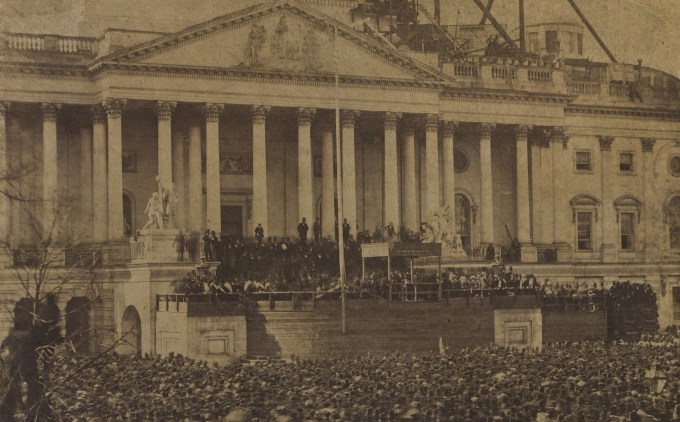
On March 4, 1861, Abraham Lincoln was sworn in as president. Several of these United States had already seceded, and more was to come – four years of Civil War that left 600,000 Americans dead. Yesterday, a new president was inaugurated, despite an attempt to force the Congress to reverse the will of the people.

It happens that I was not particularly enamored of any of the Democratic candidates who vied for the chance to run for President last year. I have to admit that some of them scared me. Had Bernie Sanders been chosen, I doubt if I would have voted at all. But Biden was a known quantity, even if a bit too well worn. To me, center left is better than radical left. I voted for President Biden because the traditional Republican Party had all but disappeared.

            Four years ago, I remember thinking that maybe Donald Trump would rise to the occasion and stifle his baser instincts on behalf of the office and his country. I sincerely wished him the best. He didn’t. In fact, he turned out to be a worse human being that I expected. But I did make him prove it.

            I’m past wondering why anyone would have voted for Trump again. They did, and a significant number still believe – with no credible evidence – that he won the election. And some of them, egged on by a then sitting President of the United States, tried to overthrow the legislative branch of that government. I suppose none of them, as I once did, swore to “support and defend the Constitution of the United States against all enemies, foreign and domestic; that I will bear true faith and allegiance to the same…” Once taken, this oath never expires. How many of the people who stormed the Capital violated it?

            I’m past wondering why people would have voted for Donald  Trump. But as I did four years ago, I would ask them to accept the results of the election and give Joe Biden a chance. That’s the way the system should work, after all. Do we really want another Civil War?   

Copyright 2021, Patrick F. Cannon