Words, Words, Words

Words, Words, Words

By Patrick F. Cannon

This is the 225th post in a series of essays I’ve written under the general title “Cannonnade.” The correct spelling should be “Cannonade,” but it wasn’t available because some knucklehead had already taken it. As far as I can tell, my first post was on November 10, 2015; I have not missed a week since.

That initial offering, Common Sense, ran to over 2700 words. I soon came to my senses, and the average piece since then has been about 600 words. In total, then, I have written some 140,000 words for “Cannonnade”, give or take. In addition, since 2006, I have collaborated with photographer Jim Caulfield on five books on Chicago architecture and architects (we are now working on number six). A rough estimate of the number of words in these, including captions, would be 150,000. I won’t even hazard a guess of the number of words in e-mails and letters involved in cajoling home and building owners to let us photograph their properties.

I retired from a career in public relations and communications in 2001. In the nearly 40 years I spent doing this, I wrote articles, press releases, brochures, speeches, and film and video scripts. At the end, I had entered the digital age and was writing content for a web site. I won’t even hazard a guess at how many words I spewed forth, but it must have been in the millions.

I turned 82 on Monday, and it occurred to me that what keeps me going is simply continuing to do what I have always done. Other than an occasional round of golf in good weather, I have no other hobbies. I don’t collect anything, and I don’t dress up as a super hero and attend conventions. I do volunteer. For more than 40 years, I have given architectural tours for the Frank Lloyd Wright Trust. Indeed, doing so is what led to eventually writing my five books.

The retired people I know who are still vital and interesting are the ones who never stopped working or volunteering. There is something to be said for getting up every morning and checking the calendar to see what’s on that day’s schedule. This past Monday, in addition to my birthday, my calendar included a visit to the dentist, proving that you can’t win them all.

Before I get carried away with self-congratulation, I should also mention that I looked over some of my old pieces, and have to admit a few were a bit on the pompous side. Also, my political prognostications have proven defective. One of my first posts assured my readers that Donald Trump didn’t stand a chance of getting the Republican nomination. I went to great lengths to show how the math just didn’t add up for him. I failed to realize that he would continue to get the votes of his “base,” while too many of the “real” Republicans stayed in the race long enough to divide the vote until it was too late to stop him.

In the past week, it looks like the Democrats have come to their senses early enough to save the country from a Sanders/Trump race. But don’t count on it. Remember, you read it here!

######

Copyright 2020, Patrick F. Cannon



Gotcha!

Gotcha!

By Patrick F. Cannon

I took a quick look to see how many of my fellow Americans have been watching the so-called debates featuring the interesting people who want to be the Democratic Party standard-bearer to rid the country of Donald Trump, whose presidency has given heart to the descendants of James Buchanan.

On average, the total seems to be about 6.5 million. Coincidentally, this seems to be the number of journalists, consultants, pundits and bloggers whose jobs and self-esteem are closely tied to the election cycle. I have done an informal survey of my friends, and found none who would admit to watching them. Nor have I. Frankly, I see no connection between success in these debates and the ability to be an effective President of these United States.

The debates are a product of the television age, and are really an offshoot of the 1960 debates between John Kennedy and Richard Nixon. These gentlemen were already the chosen candidates of their parties. Now, the debates begin the year before the actual election as part of the ridiculous primary process that separates the losers from the winners, or hopes to.

Each of the parties has its own formula for deciding which candidates may appear on the stage, which has little to do with their actual competence. All of this is supported by an army of political lifers, who have no political principles themselves, but whose services are available to the highest bidder. You shouldn’t be surprised to discover that some of them have worked for candidates of both parties.

You should also not be surprised to discover that the reason candidates need to raise so much money isn’t just the cost of television, internet and radio ads – although this is considerable – but the cost of hiring professionals at all levels to actually run their campaigns. A subset of this group of happy, but cynical, warriors are the men and women who prepare their candidates for the debates.

For the early debates, when the stage is full side to side, debate consultants for candidate X will only research the most likely opponents. What did he or she say or do 30 years ago that no longer passes the PC litmus test? Then, when candidate X is asked to answer a question on, say, health care, he can segue after his non answer to casually mentioning that candidate Y has never owned a dog. Or, if she did own a dog, did it die under mysterious circumstances?

As the candidates are winnowed out over time by either not having a sufficient showing in the polls, or the inability to raise cash, the debate consultants can sharpen their focus. They dig deeper, often succeeding in finding an associate of candidate Y who suddenly remembers that she once claimed to be direct descendant of Chief Sitting Bull, or perhaps Florence Nightingale. When these turn out to have been exaggerations designed to get the candidate into law or nursing school, we have a “gotcha” moment. They then disclose that her most famous actual relative was Bonnie Parker.

Despite the fact that the candidates this year are members of the same Democratic Party, they act more like mortal enemies. The Republicans have no such problem. Having sold their souls to the devil, they are marching lock step into disgrace. There are now two Democratic parties – the Social Democrats of Biden, et al; and the Democratic Socialists of Bernie Sanders and his followers, the Children’s Crusaders. Isn’t it time to form a new party from the moderates who have more in common with each other than with the lunatic fringes of their own parties?

Perhaps an idle dream. One thing for sure – the hired guns would have no problem espousing whatever programs the candidates think the voters think they want. Or just the opposite. Whatever.

######

Copyright 2020, Patrick F. Cannon



Watch Out! The Bernie Man Will Get You!

Watch Out! The Bernie Man Will Get You!

By Patrick F. Cannon

Recent headlines have claimed that the Democratic Party “establishment” is quaking in terror over the possibility that Senator Bernie Sanders, the proud Socialist senator from Vermont – by way of Brooklyn – may end up winning their party’s nomination for President. In which case, so the theory goes, Trump would win again.

As I recall, they had the same fear four years ago, so made sure the party nominated Hillary Clinton instead. We all know how that ended up. The Democrats now face the same problem that the Republicans struggled with in 2016 – too many candidates. Here are the results of the somewhat tainted Iowa caucuses:

Buttigieg                     26.2%

Sanders                       26.1

Warren                       18.0

Biden                           15.8

Klobuchar                   12.3

Yang                               1.0

In the New Hampshire primary, close to home for Sanders, the results were:

Sanders                       25.7%

Buttigieg                     24.4

Klobuchar                 19.8

Warren                         9.2

Biden                             8.4

Being the ace political analyst that I am, I noticed that so-called moderate Democratic candidates (not counting the minor ones) got 55.3% of the vote; and the far lefties, 44.1%.  In New Hampshire, the numbers were 52.6% and 34.9%. This would lead one to believe that the majority of Democrats would prefer a candidate somewhat closer to the center, rather than the avowed socialist (and it must be said, Marxist) Sanders.

Despite his age, Sanders seems to have become the darling of our young voters. Because socialist thought has found a refuge in academia – where actual history and the real world are not permitted to intrude – they seem to think Marxism deserves another chance. Perhaps you recall that famous definition of madness?

In 2016, by the time the Republican field had dwindled, it was too late to stop Trump. Now, they’re stuck with him and don’t seem able to do anything but sit in his lap and hope for a belly rub or two. While it may not be too late to stop Sanders, it may reach that point. Did I just read that Republicans in South Carolina are planning to vote for Sanders in the Democratic primary?  What’s to stop them from doing the same in other states?

All of this nonsense could be avoided by scrapping the primary system altogether and letting the party leaders decide who their best candidate would be. The current system isn’t enshrined in the Constitution, or in any Federal or state statute. It developed over the years in a mostly misguided effort to promote “a more democratic process.” It hasn’t worked. It’s given us Jimmie Carter, George W. Bush and (yikes!) Donald Trump. And it may give us (horrors!) Bernie Sanders, who can’t seem to stop yelling at us. Bring back the smoke-filled room, I say!

######

Copyright 2020, Patrick F. Cannon
Gimme Shelter

Gimme Shelter

By Patrick F. Cannon

As someone who has written several books on architecture, I am familiar with man’s ongoing struggles to seek shelter from the storm. Since our species emerged in Africa, we have progressed from shaky lean-tos and caves to the sophisticated dwellings of today. With their computer-controlled heating and cooling systems, and stout walls and roofs, they are proof against almost anything Mother Nature might wish to assail us with.

Yet, among us are folk who seek to return to a more primitive past. I refer to the restless wanderers who hoist upon their backs a pack containing a tent and other necessities and venture forth in search of the woods and mountains that ennoble our sacred land. This despite the undoubted fact that all of our majestic sites can be easily reached from a nearby hotel (free breakfast included).

I must admit that my own distaste for roughing it may be based on my experience as a proud member of the United States Army. As part of its basic training, the Army feels obligated to march you – with a 65-pound pack on your back and a rifle on your shoulder – some 20 miles into a remote corner of one of its properties, in my case, Fort Benning, Georgia. Once in an area chosen for its dampness and venomous creature infestation, you were instructed to pitch your pup tent. Now, in those days, you carried only half the tent. Officially called a shelter half, it required you to pair up with a fellow soldier to create a tent, which you would then share (see illustration).

The material for the tent was a kind of canvas, ingeniously designed by the Quartermaster Corps to be waterproof until you touched or poked it by accident. Through a fortunate twist of fate, I was paired with a young man from central Illinois who had been an Eagle Scout. Jim not only warned me never to touch the tent roof, but made certain that we pitched our tent on a slight incline, whereupon he conspired a series of trenches designed to direct water away from the tent. As you might expect, it rained that night and most of the next day. We remained blissfully dry, while all around us we heard the curses of the tent pokers. I should also mention that, once wet, an army sleeping bag takes several years to dry. To add to the general gloom, they decided to treat us to an overdone steak dinner that day. It was still raining, and you had to carry your meal back to your tent. Needless to say, dinner went swimmingly.

My next camping experience came more than a year later, when the signal company of which I was then associated was flown, along with its vehicles, in C-130 cargo planes to Fort Hood, Texas. We were there to support a corps headquarters directing armored troop maneuvers. Our company commander, a fine and typical graduate of West Point, choose a likely-looking flat spot for our tents – still of the same classic pup variety. For the officers and sergeants, he chose a site on higher ground, no doubt so he could admire the admirably straight rows of tents below.

As you might have guessed, it rained, this time a torrent for which the Texas hill country is justly famous. No ingenious trenching system could have saved us from the torrent that came rushing down the hill. The next morning was pure misery, until a stroke of good fortune came my way. Just while I was choking back tears, an unknown sergeant appeared and asked me if I would be interested in returning to the post, where they had need of a cryptographer for special duty. It turned out it was related to the looming Cuban missile crisis, and even the threat of nuclear annihilation seemed preferable to another night camping in the Texas wilderness.

I did some years later buy a nice tent, which I pitched in the back yard for my children. It never occurred to me to fold it up, put in a pack and wander off into the woods. By the way, if you chance to wander into the woods yourself, watch your step. Not all campers bother to dig a hole and cover it over after doing the necessary.

Copyright 2020, Patrick F. Cannon


Favorite Things

Favorite Things 

By Patrick F. Cannon

The Rogers and Hammerstein musical, The Sound of Music, is despised by sophisticates like me as being excessively sentimental and cheerful. A case in point would be the song “My Favorite Things,” which extols the virtues of “Raindrops on roses, And whiskers on kittens, Bright copper kettles, And warm woolen mittens.” Yikes!

Nevertheless, the musical may be the most popular of all time, and contains some of Richard Roger’s most beautiful melodies. The heirs of the composer and lyricist are happily counting their royalties and could care less about the “tut tuts” of people like me.

While “whiskers on kittens” isn’t one of my favorite things (I don’t hate cats, but I could happily live without them), the song got me to thinking.  So, from time to time, in this space, I’ll let you know about some of the things that I prize most highly.

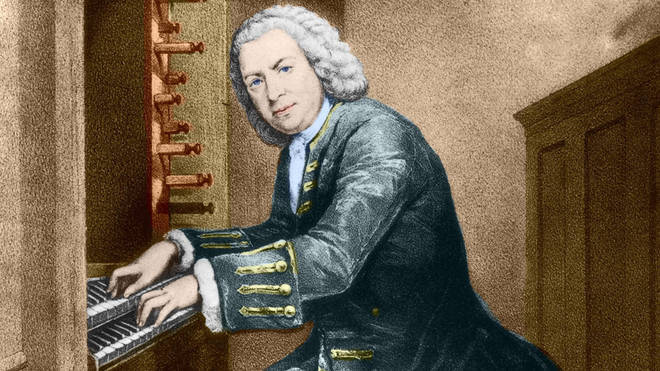
One is Bach’s Goldberg Variations. Originally written for the harpsichord as a series of exercises for the 13-year-old Johann Gottlieb Goldberg, who must have been quite the prodigy, it consists of an aria and 30 variations. It runs to about 80 minutes, give or take. While there are many recordings on the original instrument, it is now most often played on the piano. The most famous recordings are the two versions done by the wonderfully eccentric Canadian virtuoso, Glenn Gould. He was given to humming along with his playing, which must have driven recording engineers crazy; and was so adverse to cold that he wore a hat, coat and mittens even when visiting Florida. He was only 50 when he died in 1962.

I own both of his recordings and listen to them often, usually during long car rides. How many times? I’ve lost count, but it must be over 100. While that may make me seem as eccentric as Gould himself, I have a simple defense: the Goldberg Variations is one of the greatest musical accomplishments of all time. If you haven’t heard it, you can find various versions, including Gould’s, on the internet. What can it hurt to give it a listen?

One of my pet peeves (one of many) is that the majority of people simply never listen to so-called Classical music. And not only that – the audience for it is dwindling. Now, you might hear about sold-out houses when Ricardo Muti, the music director of the Chicago Symphony, is conducting, but “sold out” doesn’t mean what it used to. The total audience for Classical music has stayed roughly the same while the population continues to increase. Thus, in real terms, the audience is declining. A sold-out audience at Symphony Center totals 2,500, while a sell-out at a rock concert at Chicago’s United Center totals 23,500. I believe the Rolling Stones sold it out three times recently. And no doubt would continue to do so even when they have to be rolled on to the stage.

With due respect to the Stones, their lifetime musical output doesn’t equal the Goldberg Variations. It doesn’t bother me that people like the Rolling Stones – I like a good deal of popular music myself – what amazes me is that they dismiss Classical music without actually ever listening to it  Do they think it’s too hard? It’s music, for God’s sake! All you have to do is listen. For most of it, you don’t even have to worry about the words. It doesn’t require thought. It is the purest of all the arts because it reaches us most directly.

That’s why the Goldberg Variations is one of my favorite things.

#####

Copyright 2016, 2020, Patrick F. Cannon


The Cost of Being Healthy

The Cost of Being Healthy

By Patrick F. Cannon

Insurance companies do not pay for health care. The Federal Government does not pay for health care. We – you and me – pay for the nation’s health care, along with the stockholders and members of corporations and associations.

I’m always amused when politicians talk about free health care. I have Medicare coverage now. For it, and a supplemental policy, my wife and I pay $11,184 a year in premiums. Before we retired, we paid about 1.5 percent of our income in Medicare withholding tax. These, by the way, are just basic costs; out-of-pocket expenditures are not included.

Although it’s constantly increasing, it was estimated that the total cost of health care in the United States was $3.65 trillion in 2019. The latest per capita figures I could find were for 2017, when the US spent $10,224. The next highest amount was in Switzerland, with $8,009. The average for developed countries was $5,280. Administrative costs in the US were approximately 8-percent, as opposed to from one- to three-percent in comparable countries. Finally, before I bore you to tears, the average physician here makes $218,173 per year; the next highest is Germany, with $150,000.

While the breakdown can vary slightly year to year, private health insurance pays 34-percent of the total healthcare bill. Medicare has a 20-percent share; and Medicaid, 17 percent. Other sources, including out-of-pocket, make up the balance.

Were we to go to a single payer system – i.e., “Medicare for All” – presumably reliable sources tell us that one trillion dollars a year would be added to a Federal deficit that is already running at that level. Politicians like Bernie Sanders don’t see a problem here. You simply tax the rich. In this, he has been remarkably consistent throughout his career. He is on record as believing that there should be no such thing as a billionaire. And as a committed Marxist, he has been perfectly happy to ignore its long and persistent history of failure.

Here’s what I think. Except for some pockets in rural America, we have the finest health care in the world, as I have recently personally experienced. Nothing we do to “reform” it should jeopardize that. It’s also clear that we cannot trust the current political parties to solve the health care funding problem, since they have been obviously unable to agree on ways to even fund the government we currently have. The Republicans, who once could be counted upon to at least try to hold the line on spending, are now as profligate as the Democrats. Indeed, they lowered taxes just when tax revenues from a growing economy might have significantly lowered deficits.

We have smart people in this country, experts in health care and economics who could study the problem in detail and devise a system that would provide a high level of care at a cost the country would be willing to pay. None of these people are politicians. As reluctant as I am to turn over the government to experts, in this case I believe that only a non-partisan commission would be able to study the problem in detail and recommend a way forward.

What we have now is a Republican Party whose only idea is to repeal Obamacare; and a Democratic Party whose increasingly radical base thinks only of a Federal government-run single-payer system, funded by the rich. I frankly don’t know what a workable system would look like, except I’m certain it’s neither of those. It’s perhaps a vain hope, but what this country really needs is a new political party, which I would name the Pragmatic Party. The current failed ideologies of the right and left will not solve any of our problems.

Copyright 2020, Patrick F. Cannon


After Every Meal!

After Every Meal!

By Patrick F. Cannon

Because it is such a traumatic experience, I’m sure you remember your first trip to the dentist. My own first dentist was a leading practitioner of the South Shore neighborhood of Chicago, Peter Potter, know to all as “Painless Peter.”

Dr. Potter, who somewhat resembled the famed actor Lawrence Olivier, ended every visit with a booming “remember, you must brush after every meal!” I’m certain that your dentist did – and perhaps still does – utter this admonishment. Indeed, you may have only recently brushed your own teeth after a hearty breakfast, but did you ever wonder when this practice began, and who was responsible for bringing a modicum of cleanliness to the mouths of the world?

The world is full of people who seek to understand the workings of the universe; or to seek cures for dread diseases; or even to understand the labrynthian minds of politicians. But, as you must know by now, it has been largely left up to me to delve into the more commonplace. Who, but me, would undertake to discover the inventor of the toothbrush?

Strangely, it is of surprisingly recent invention. If you were, as I am, an expert on the history of art, you would have noticed that portraits of past notables never showed them with open mouth. Even with the advent of photography, this remained the case. And no wonder. If you actually reached middle age, what teeth you actually had left were likely to be discolored and snaggley. To clean them, your only recourse would have been a twig, which, with enough use, rather resembled a tooth pick.

(It should be pointed out that the Chinese had actually invented the toothbrush in 1498, but limited its use to the Forbidden City, giving the emperor and his court sparkling chompers, but letting the peasants make do with the aforementioned sticks.)

In the West, it was only in 1749 that the handy tool was finally invented. For this boon to mankind, we have Sir Algernon Gascoyne-Dithers (Bart.) to thank. As a baronet, he was a member of the minor nobility. He was, as was common in those days, land poor. While he was able to generate enough income from his holdings to live fairly comfortably, it wasn’t sufficient to buy himself an actual barony. This was, however, to change.

In addition to alfalfa and wheat, Sir Algernon raised hogs. Every year, when they reached the proper size, off to market they went. To ensure that they fetched the best price, his hogmaster, Willy Honker, doused them liberally with water, then brushed them with a broom of – strangely enough – hog bristles. While he was watching this annual ritual, Sir Algie was trying to dislodge some bacon rind from his teeth.  Regular readers of the space will know that civilization often advances after a flash of inspiration. So, you must imagine the baronet picking at his teeth and watching the hogs being scoured. Only genius could have put the two together and imagine a smaller brush to get rid of the pesky rind and any other debris from one’s mouth!

The rest of the story can be quickly told. In total secrecy, he experimented with various combinations of bristles and handles until he came up with something that looked very much like today’s Oral B. He was granted a patent by His Majesty’s government, and was soon selling toothbrushes by the thousands, then millions. As the money rolled in, he was able to bribe the relevant ministers and receive his seat in the House of Lords. When he was asked how he wished to be ennobled, he thought to honor his home village, thus became Baron Algernon of Fuller.

######

Copyright 2020, Patrick F. Cannon


Hail to Thee, Noble Clip!

Hail to Thee, Noble Clip!

By Patrick F. Cannon

It is to our shame that so many of mankind’s greatest inventions lie near to hand, things we use almost every day, yet the great men or women responsible for making life on this benighted planet just a bit more bearable are largely forgotten.

In this regard, I give you the noble paper clip, and its inventor, Shepworth Clipper. Now, a great many people believe to this day that the term “paper clip” comes from the ancient Druid word, clippe. How absurd! It is a far, far journey from a word that denoted – and still does – the action of cutting things in twain to our subject word. We can clip a hedge, or a nose hair, but what does this word have to do with the implement that gathers two or more pieces of paper together? Nothing, I say!

Now, to the true derivation. It seems that young Shepworth – “Shep” to his intimates – was employed as a clerk for one of the underwriters who made up the legendary Lloyds of London. It was the 1840s, and the young man was tasked with making handwritten copies of insurance policies. Just as is the case today, the policies were many pages long; so long, in fact, that it was nearly impossible to read them without dozing, which many policy holders did before getting to the exclusions.

Shep was fastidious about keeping his pages in order, but one of his fellow clerks, by name of Augustus Finknottel, was a fresh air fiend, and was given to throwing open a window without warning, turning the office into a maelstrom of flying papers. Occasionally, Shep had prudently put a paperweight on the accumulating papers, but was apt to forget. Even when the copying was done, one had to find a way to keep them together and in order.

One method was to punch a hole in the corner and tie the pages together with a length of ribbon or string. Or one could place the pages in a folder and tie it together with a ribbon. Alas, with this method, the pages were inclined to fall out the bottom if one wasn’t careful. With the other, if you wanted to correct a page, you had to undo the ribbon, remove the offending page, then tie the document back together. Bothersome, you must admit.

Then one day, quite by accident – think Newton’s apple if you will – the problem was solved in a moment of inspiration. It seems Shep had wire baskets on his desk for incoming and outgoing documents. On one of them, a length of wire had come asunder. As young men are wont to do, he began bending it back and forth until – predictably – it came apart. He bent it back and forth and – in one of those eureka moments that changes the course of history — put the ends of the wire over the papers and pressed. It was a moment he never forgot, a moment that has entered the lore of the office supplies business, a moment still remembered at their annual conventions with the Shepworth Clipper Award for Innovation.

The rest of the story is quickly told. Realizing that he would never be able to make sufficient of his new invention by himself to satisfy demand, he went to one of the numerous workshops that employed idle boys as a way of keeping them off the streets. Working with the headmaster, Mr. Fagin, he devised a simple jig that the young hands could use to form the clips. Soon, they were working like the dickens to keep up with demand. Eventually, the little tykes were put out of work by automation as word of the new inventions spread around the world. Indeed, the now wealthy Mr. Clipper designed special ships to speed the product to his waiting customers.

So, the next time you use a paper clip, please think of Shepworth Clipper, unsung benefactor of the toiling office drudge.

######

Copyright 2020, Patrick F. Cannon
Hide and Seek

Hide and Seek

By Patrick F. Cannon

David E. McCraw, the in-house lawyer who advises the newsroom of the New York Times on legal issues that could impact their coverage, has written an interesting book – Truth in Our Times – about the trials and tribulations of his job.

As you might imagine, Donald Trump looms large, both before and after his election. He has long been famous for threatening to sue for libel, but for never actually following through. The bar for libel is particularly high for public figures, which Trump knows, but I suspect he loves the publicity he gets for yelling about it.

As amusing as the instances McCaw cites are, much of the book discusses more serious matters. One is the presumed liberal bias of the Times. He frankly concedes that the newsroom staff is largely liberal in their politics, but that reporting standards mostly work to prevent obvious bias. I think they generally do succeed on a day to day basis; it’s more in the choice of what is covered that bias creeps in. No newspaper, not even the Times, can cover everything. But they obviously do a better job than Fox News and MSNBC.

McCraw pointed out something I hadn’t thought of that unintentionally feeds the perception that his newspaper has a liberal bias. Many people only know the Times from their web site. I hadn’t noticed it before, but if you open it, the left side features straight news stories, with opinion columnists at the right. Now, the paper’s editorial board and most of the opinion columnists have a liberal slant (David Brooks is one exception). In the paper, opinion pieces are grouped in the last pages of the first section. Since I suspect that most readers rarely or never see the print edition, the web layout would certainly reinforce the liberal bias perception.

But whatever their bias, almost all newspapers have to battle governments at all levels to gain access to public information. In case you think liberals are innocent of this chicanery, the Obama administration brought more indictments for “leaking” than the previous three combined. And you might recall Hillary Clinton’s private e-mail server when she was Secretary of State, a clear violation of the law. It was the Times who relentlessly covered her arrogant disregard for the public’s right to know. I think every serious journalist should wake up in the morning with the assumption that all politicians are liars and scoundrels, and act accordingly.

Let me leave you with some sobering statistics, then some words of wisdom (not mine, alas). During the Obama administration, 790,000 people in government had top secret clearances (I once had one, but for good cause). Over-classification of documents was then, and still is, epidemic. In 2016, a congressional committee discovered that an average of $10 billion a year was spent on classification activities, and that more than 50 percent of materials were improperly classified. In 2011, there were 92 million separate decisions to classify material.

In the 1971 Pentagon Papers case (was it really that long ago?), in which the Times sued the government for the right to publish the secret documents they had obtained, Justice Potter Stewart wrote:

“I should suppose that the moral, political, and practical considerations would dictate that a very first principle of that wisdom would be an insistence upon avoiding secrecy for its own sake. For when everything is classified, then nothing is classified, and the system becomes one to be disregarded by the cynical or the careless, and to be manipulated by those intent on self-protection or self-promotion. I should suppose, in short, that the hallmark of a truly effective internal security system would be the maximum possible disclosure, recognizing that secrecy can best be preserved only when credibility is truly maintained.”

Of course, the New York Times is sometimes biased in its coverage. So are the Washington Post, Chicago Tribune, Los Angeles Times, Boston Globe and Baltimore Sun. But if we didn’t have them, bias and all, who then would keep a jaundiced eye on governments at all levels?  Would no news really be good news?

######

Copyright 2020, Patrick F. Cannon

Things are Great, Aren’t They?

Things are Great, Aren’t They?

By Patrick F. Cannon

I was born in 1938 and many people born then often wax poetic about how things were better in the “good old days.” Now, I’m sure I was a bright little fellow, but I doubt I was bright enough to realize that unemployment had risen to 19 percent the year I was born; and that the frightened leaders of Britain and France had managed to buy only one more year of peace by betraying the Czechs at Munich. My “good old days” also included World War II, Korea, Viet Nam, and the numerous smaller wars we seem addicted to.

In many ways – sorry about that Bernie Sanders and Elizabeth Warren – these are the good old days. Instead of 19 percent, unemployment is at 3.5 percent, and real income continues to rise. The homeless population has declined every year since 2007, when it was 643,258, to 553,830 at the end of 2018.  Worldwide, extreme poverty is now below 10 percent. Economies in Africa and Asia are experiencing much faster growth than Europe and North America. Although there are worrying pockets, child mortality rates have fallen to record low levels.

I have said this before, but it’s worth repeating – farmers can easily feed the world now, and for the foreseeable future. Indeed, advances in agricultural science – most of which came from the United States – will enable large areas of land to be taken out of production and added to the expanding forests. News on the health front continues to be good, with great progress being made in the eradication of polio; and the steady decline of deaths from malaria, heart disease and cancer.

Advances in communications technology have been astonishing, if sometimes a mixed blessing. I type this on a laptop, which cost me about $550, or $30 in 1938 money. That might have bought you a radio then. I can search the world with my computer. Next to the laptop is my cell phone, which would have set me back about six bucks in 1938. I can do almost everything with it that I can do with my laptop, and call just about anyone in the world on a whim, whether at my desk or strolling down Michigan Avenue in Chicago.

Yet, we also live with a continuing sense of dread, most of which we can blame on our elected officials. A significant number of our fellow citizens voted for a totally unqualified man to be their president. In the three years he has been in office, he has brazenly proven just how unqualified. He ended the year deservedly impeached by the House of Representatives, in an action that was admittedly as much political as judicial; and will be disposed of the same way in the Republican Senate. That he retains the support of his “base” in the face of his outright lies and vindictiveness says as much about his supporters as himself. It also says much about Republican senators, whose wish to be re-elected trumps their obligation to serve their country.

The general rot reaches closer to home too. Tuesday’s Chicago Tribune rang out the old year by reporting that Illinois had lost more residents – 159,700 – than any other state since 2010. In the same period, every state that borders Illinois had gained population. Yet, in the face of constantly growing pension debt, no Democratic politician – not Governor Pritzker nor Chicago’s touted reform mayor Laurie Lightfoot – supports the only way it can be addressed: a constitutional amendment that would permit sensible changes in the future. Instead, they do what modern politicians are seemingly born to do: they raise taxes.

Oh well. As with most years, 2019 was a mixed bag. Against all logic and experience, I will hope for a better 2020. I know it’s better here in the Cannon household. And I can certainly wish it for you. Happy New Year!

######

Copyright 2020, Patrick F. Cannon