Bad News from Local Television

Bad News from Local Television 

By Patrick F. Cannon

(Note: This post originally appeared in 2016. If anything, things have since gotten worse.  I then failed to mention the increasing use of “cute” or weird video clips that have absolutely nothing to do with news, either local of national, but are run so that the anchors can say “wow, that’s the cutest things I’ve ever seen.” These used to be the kind featured only on “Funniest Home Videos.” In the best traditions of Capitalism, companies were soon formed to provide packages of them to local TV stations. One wonders if journalism schools are now preparing their graduates to properly read and report non-news with a straight face.)

Some of you may remember Floyd Kalber and Len O’Conner, the long- ago anchor and commentator respectively on Chicago’s Channel 5 News. I remember both with fondness as entirely professional, no nonsense newsmen. Kalber – who had started as a print journalist – was a particular hero of mine, as he once talked the folks at Channel 5 into letting him just read the weather report, rather than having a dedicated weather person stand in front of a map and parse the forecast for valuable minutes that could have been devoted to real news.

Predictably, his good sense approach to the weather forecast was doomed. Eventually, Kalber decamped for New York and the Today show, where he did the news every morning and reported occasional stories for NBC News. He later returned to Chicago and ended his career at the local birthplace of “Happy Talk” news, WLS-TV, Channel 7. It must have been bittersweet capitulation.

While the local ABC affiliate was the groundbreaker in softening and cheering up the news, all of the local Chicago stations now follow its lead. In a 30-minute newscast, with approximately 22 minutes devoted to content, there will be two weather forecasts. The first one will give the basics, but if there are any rain, snow or temperature extremes within 1,000 miles of the city, it will end with “the teaser of doom.”  In the later forecast, always longer and more detailed, the impending winter storm will turn out to be flurries. This is not to say that the weather folks don’t do a good job when there is an actual weather event; they do. But is there any excuse for devoting so much time to the weather when it’s just normal for the season? And for the seeming competition among female meteorologists to see who can wear the tightest dress?

While the overemphasis on weather is annoying, the flagrant promotion of network entertainment programming as part of the newscast is infuriating.  If ABC wants to promote “Dancing With the Stars,” it should do so in a commercial, not have its news anchors, presumably professional journalists, debase themselves by pretending that what fading actor is attempting to rejuvenate his or her career by dancing the tango with some hard body, is actually just as worthy of coverage as the latest failure of the political class to solve the state’s fiscal mess.

The local ABC affiliate also pretends that the latest Disney movie is worthy of news coverage, as long as it ends its blatant hucksterism with the phrase “Disney is the parent company of ABC News.”

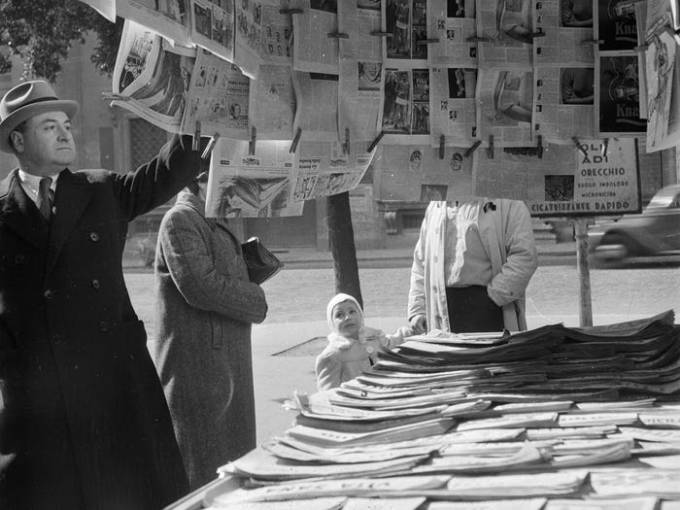
Thank God for newspapers, even though declining circulation and ad revenues make them a dubious investment for their corporate owners. What would television news directors do if they couldn’t depend on their local newspaper to uncover the stories that they piggy back on for their own content? Their own “investigative” teams are largely a joke.

Thirty years ago, newspapers were a hot investment item. Family-owned papers began to sell out for the exorbitant amount’s corporations were willing to pay for what were then considered cash cows. Then appeared the internet and a new generation that seemed unwilling to tear themselves away from their computer and phone screens, and who seem increasingly unable to tell the difference between unbiased reporting and opinion.

If great newspapers were still privately owned, they might be better able to weather revenue declines without having to worry about panicked stockholders.  I wish someone would buy the Chicago Tribune as a civic duty, just as Jeff Bezos of Amazon has bought the Washington Post. In the meantime, everyone who cares about unbiased reporting should subscribe to their local paper for the real news, and then depend on their local TV news for entertainment and the weather forecast.

#####

Copyright 2016, 2019, Patrick F. Cannon

In Flanders Field

In Flanders Field

By Patrick F. Cannon

                       In Flanders Field the poppies grow

                        Between the crosses, row on row

                        That mark our place; and in the sky

                        The larks still bravely singing, fly

                        Scarce heard amid the guns below.

These lines by Canadian physician, soldier and poet John McCrae – who himself died of pneumonia near the end of World War I in 1918 – are the reason the poppy became associated with Remembrance Day in the British Commonwealth and Armistice Day in the United States.

Armistice Day has now become Veterans Day here, but the sale of fabric (now plastic) poppies by members of the American Legion seems to be dying out. When I was young, it was rare to see people not wearing a poppy just before, during and shortly after Armistice Day, always commemorated on November 11, the day the war ended. Now…well, how many poppies did you see on Monday?

In this country, poppies are sold by the American Legion, with the funds raised going to programs to support veterans. The Legion, like its British counterpart, was formed after World War I.  As with so many similar organizations, membership has slowly declined as veterans of World War II – which after 1945, made up its largest cohort – died. This despite the fact that membership is now open to any veteran or active service member of the Federal armed services. The Legion is not alone – membership continues to decline in service and fraternal organizations as well.

So, it’s now rare to see a Legionnaire selling poppies. This is not the case in the United Kingdom and Canada. It would be rare to see a politician in either appearing without a poppy on November 11. I once arrived in London on that day, and was immediately confronted by a red-coated military pensioner selling poppies. I bought one, thus joining almost everyone I saw that day with a red flower in their lapel. From recent news reports from London, I see it’s still much the same.

Ditto Canada. Indeed, a legendary Canadian hockey commentator was just fired for shaming immigrants who didn’t realize they should have bought and worn the red symbol.  Don Cherry, described as “Canada’s most polarizing, flamboyant and opinionated hockey commentator,” discovered that his 85 years didn’t immunize him from being fired by Rogers Sportnet for calling out recent immigrants to our northern neighbor for not buying and wearing a poppy. As he so elegantly put it: “You people…who love our milk and honey, at least you could pay a couple of bucks for a poppy…”

Few people in this country any longer realize the significance of November 11, 1918. Or how many million soldiers and sailors died in the four years leading up to it. Perhaps one of the reasons why poppy sales persist in the United Kingdom and Canada is that their casualties were so much higher than ours. 116,000 Americans died in the war (or 0.13 percent of the population); the UK had 887,000 combat deaths (2.0 percent) and Canada 64,000 (1 percent, all volunteers). Both Australia and New Zealand lost approximately 1.5 percent of their populations.

In all of our wars, combat and related deaths have been approximately 1.1 million, with the Civil War accounting for nearly half of the total. One wonders if that many of our citizens now pause on Veterans Day to think about these losses, or the troubled lives of those who survive. Watching this year’s parade on the evening news, the now mostly elderly marchers far outnumbered the watching crowd. To be sure, the politicians spent the day mouthing the usual platitudes, but few of them have actually served, unlike the post-World War II generation. President Trump, like Bill Clinton before him, did everything he could to avoid service. How hollow their patriotic blather always sounds.

######

Copyright 2019, Patrick F. Cannon


A Sad Tail

A Sad Tail!

By Patrick F. Cannon

People in charge of public relations for major organizations – particularly those with hundreds or even thousands of locations – live in constant dread of that one employee who has the power to ruin its reputation in an instant of clueless stupidity.

Such was the case recently when a manager at a Naperville, IL Buffalo Wild Wings asked a group of 15 African-American customers to move to another area of the restaurant        because their current table was too close to a regular white customer “who didn’t want to sit near black people.” Predictably, they took umbrage to this request and eventually their business elsewhere. And, just as predictably, hired a lawyer and made their outrage public.

The wing king’s predicament brought memories of similar shocks I suffered during my more than 20 years managing public relations and other communications functions for the International Association of Lions Clubs. When I retired in 2001, it was the largest community service club organization in the world, with some 40,000 clubs and 1.3 million members. It still is, with even higher numbers.

Considering those numbers, there were very few public relations catastrophes during my tenure, but I didn’t escape unscathed. I remember these in particular.

Although he was re-elected, Canadian Prime Minister Justin Trudeau had to survive the publication of a photo showing him with brownface and a turban at a costume party when he was a teacher. As you may recall, Virginia Governor Ralph Northam had to admit being in blackface at a medical school party. Their tribulations remind me of a Canadian Lions club in a remote area of Saskatchewan that put on an annual minstrel show using, you guessed it, blackface. Almost inevitably, a big city newspaper found them out, and outrage ensued.

After I contacted them, they agreed to find another fundraiser, and even publicly apologized for being insensitive.  Another club to the south in Montana never quite understood what they had done wrong. This time it wasn’t a fundraiser, but, to their minds, a public service. It seems their area was infested with Prairie Dogs. Now, as you’ll agree, these are among the cuter rodents, but apparently can be a real nuisance in their millions. To help the cause, the club said it would pay a 50-cent bounty for every Prairie Dog tail produced on a given weekend.

To gain maximum participation, they advertised their intent in the local paper. A member of the ever-vigilant People for the Ethical Treatment of Animals (PETA) saw the item and blew the whistle. A very loud whistle as it turned out, but too late to save the pesky rodents. As it happened, this was not our first experience with PETA’s outrage. Over the years, Lions clubs had sponsored circuses with animal acts, and – particularly in the west and southwest – rodeos.

We could, and did, advise clubs that they might want to reconsider sponsoring such events, but, as they were perfectly legal, could do nothing to prevent them. Eventually, PETA got bored with us and found someone else to hector. But early in 1989, I learned how truly clueless a Lions club could be.

David Duke, former Grand Wizard of the Ku Klux Klan, ran for a vacant seat in the Louisiana legislature. As I recall, it was a largely white New Orleans-area district, and Duke eked out a narrow victory.  To celebrate his victory, his supporters rented a local Lions club hall. Now, these Lions routinely rented out the hall for social events, and used the income to support their charitable programs. And likely no one would have noticed the Lions connection, except that the club neglected to remove their handsome Lions logo from the podium.

To cover the event, the New Orleans Times-Picayune sent a reporter and photographer. The next morning, the paper’s front page had a very large color photograph of Mr. Duke, smiling above a large and unmistakable Lions emblem. Many other papers around the country, including the New York Times, picked it up. I can still hear the phones ringing!

I wrote a letter over the then-president’s signature explaining the association’s non-political policy and the Times and many others published it. But, as you probably know, letters to the editor are nowhere near the front page. Buffalo Wild Wings has apologized and fired the offending employees. But, as they’ll find out, that won’t be the end of it. I learned that lesson all those years ago, and didn’t in those days even have to contend with Facebook, Twitter and all the other insidious branches of the internet. But maybe they’ll think of better ways to wing it.

######

Copyright 2019, Patrick F. Cannon


An Outrageous Outbreak!

An Outrageous Outbreak!

By Patrick F. Cannon

To my great surprise, there seems to be an outbreak of Bentleys in the near Western suburbs (not to be confused with a Gaggle of Geese or a Choir of Angels). I don’t mean Bentley’s Pancake restaurants, or the pet supply stores, but the British motorcar.

For the uninitiated, Bentleys have been made since 1909, and are named after their creator, W.O. Bentley. To car enthusiasts, they are best known as winners of the 24-Hour race at LeMans, France in 1924, and from 1927-30. They went bankrupt soon after, and were taken over by Rolls Royce. Thereafter, they became Rolls Royce’s with different and less showy grill. Strangely enough, the brand is now owned by Volkswagen (go figure).

On the same day recently, I saw two Bentleys in Oak Park and one in River Forest. Had I been tooling around Lake Forest or the Gold Coast, I wouldn’t have been the least surprised to see them (and Ferrari’s as well). On the other hand, River Forest is about number 12 in the list of richest ZIP codes in the Chicago area; and parts of Oak Park (northwest) would be if separated from the rest of that diverse community.

You could argue – and many Oak Parkers of the “progressive” persuasion would prefer that you walk or ride your bike – that buying a Bentley is conspicuous consumption of the worst kind. After all, the cheapest one is likely to set you back about $220,000. If you must drive, a Toyota Prius might only cost $30,000, and put you in good stead with your bewhiskered neighbors. But here’s the thing: at current rates, the Bentley buyer is putting $22,000 in sales tax money in the public coffers instead of the $3,000 that the Prius buyer contributes.

Of course, we’re continuously reminded that the rich “don’t pay their fair share.” If you don’t believe it, just ask the Chicago Teacher’s Union (CTU), or any of the numerous candidates for the Democratic nomination for President in 2020.  Just last Sunday, Joe Biden, on 60 Minutes, allowed as how the rich should be squeezed a lot more.

It may come as a surprise to the CTU, but the Chicago public schools are largely financed by individuals who don’t send their children to public schools; and by the commercial property owners who employ the parents of those who do. The CTU talks about a corporate head tax, as if those heads belong to people who live in Timbuktu.

As far as the “fair share” of Federal income taxes go, the top 1% pay 38.47% of the total; the top 5%,, 59.14%; and the top 10%, 70.08%. The bottom 50% pay an exorbitant 3.11%. Although Chicago’s real estate tax rate is actually lower than most of the suburbs, the fat cats with $5 million condos contribute mightily to the total, and their lavish spending habits fatten the sales tax coffers much more than the canny Walmart shopper. The sales tax on a couple of Big Macs might be a buck; on two meals at Alinea, it could reach $75 or even more if the top of the wine list beckons.

So, to say the rich don’t pay their fair share is absurd. The real problem we all face is governments who refuse to do one (or both) of two things: reduce expenditures to match revenues; or increase revenues to match expenditures. Since Bill Clinton (of all people) left office in 2001, neither the Democratic or Republican parties have expressed any interest in balancing the budget. If the Federal Government or the State of Illinois (and you can throw in the City of Chicago while you’re at it) were businesses, they would have to declare bankruptcy.

Perhaps we need a new party, which I would call the Pragmatic Party. In the meantime, the next time you see a Bentley drive by, give the driver a thumbs up.

######

Copyright 2019, Patrick F. Cannon


Just Plain Bad

Just Plain Bad

By Patrick F. Cannon

I’ve recently resisted writing about President Trump. The world probably doesn’t need another opinion about him, after all. But recently I’ve talked with some of his supporters, people I like and respect. I won’t stop liking and respecting them, but I would like to remind them and all of Trump’s supporters – including Republicans in the Congress – of something they need to admit and accept: Donald Trump is a bad man.

How bad? Let me just say this: we have had presidents who have knowingly lied to the American public, but in most cases they knew they were lying and did it anyway, sometimes for reasons they thought were justified. Trump lies continuously, and really doesn’t make a distinction between truth and fiction. If he says it, then to him it’s true. He is a classic narcissist; only he is important; only he deserves loyalty (notice how he quickly turns on people who deign to disagree with him).

Everyone should realize that only the courts and the Congress have kept him from ruling by decree. He is less intelligent than Hitler, and has more hair than Mussolini, but he is the same type of megalomaniac.

Anyway, it seems unlikely that the Senate will vote him out of office, even if he’s impeached by the House (but we can always hope!). And unless the Republican Party regains its soul, he’ll probably be their candidate in 2020. If you plan to vote for him anyway, by all means go ahead, but please do so without illusions. Vote for him knowing that he is a thoroughly bad man.

######

Copyright 2019, Patrick F. Cannon

Rah, Rah, Sis Boom Bah!

Rah, Rah, Sis Boom Bah!

By Patrick F. Cannon

The State of California, in its typical wisdom, passed a law that, beginning in 2023, will permit college athletes to hire agents and sign endorsement contracts. The National Collegiate Athletic Association (NCAA) has predictably opposed this, reiterating its longstanding stance that a college scholarship is payment enough for the student athlete.

To give you an idea of what a football or basketball scholarship is worth at a Division I university, here are some examples, including at my alma mater, Northwestern:

  • Oklahoma — $124,556
  • Alabama — $137,124
  • Ohio State — $160,152
  • Northwestern — $212,000
  • Notre Dame — $213,956
  • Stanford – $223,672

It should be pointed out that the future value of a degree from the last three far exceeds that of the first three. Oh, and I should mention that these athletes are housed and fed much more lavishly than the run of the mill student, and get supplied with a lot of free branded clothing (all of the above universities will have exclusive deals with Nike, Adidas or similar supplier).

Of course, you need to actually graduate to get the full value. Graduation rates vary from 97 percent at Northwestern to 40 percent at Florida International. Perennial powerhouses Florida State and Oklahoma graduate 55 and 47 percent respectively.

Despite playing at the top level, fewer than two-percent of these athletes will ever play professional sports. And that’s likely about the percentage of student athletes who could hope to get any kind of endorsement deal. So, will the California law really do what it purports to do?

Now, anyone who has played organized football at any level will know that practice is the dues you pay to play the game. It’s time consuming and very hard work. Elite athletes are also expected to work out during the off season. Since they have no time available to hold any kind of part-time job, why not pay them the minimum wage for mandatory practices and workouts? While I personally think the free ride is payment enough, these payments would at least be quantifiable and fair to all. Many student athletes come from poor families and this would help them in particular; but I would guess that most come from families that can help them pay for some incidentals and travel.

There’s no question that major sports like football and basketball generate significant income for some universities. Both Texas and Texas A&M in that football mad state generate nearly $220 million a year in revenue. In the Big 10, Ohio State pulls in $205 million and Michigan, $195. All of them will claim that this income is what pays for non-income generating sports, and that’s probably mostly true.

Could it also help pay the minimum wage for mandatory practice for all sports? They would no doubt say no, but they do find a way to pay football coaches lavishly: last year Nick Saban of Alabama pulled in $8.3 (all in millions); Urban Meyer at Ohio State, $7.6; Jim Harbaugh at Michigan, $7.5; and (I love these names), Jimbo Fisher was paid $7.5 at Texas A&M; and Dabo Swinney a mere $6.5 at Clemson (no doubt he’ll be asking for a raise).

In my ideal world, universities would offer only academic and needs-based scholarships; and students would play sports for the love of the game. But as we know, my ideal world was never the real world and never, alas, will be.

######

Copyright 2019, Patrick F. Cannon


The Truth Has Consequences

The Truth Has Consequences

By Patrick F. Cannon

It should come as no surprise that the Chinese government reacted in its usual fashion by severing ties with the Houston Rockets after its general manager, Daryl Morley, tweeted support for the Hong Kong protesters. Before he did something of an about-face and claimed that he of course supported freedom of speech, Adam Silver, National Basketball Association president, had tried to placate the Chinese and limit the financial damage to the NBA, which is highly popular in China.

There is, of course, no freedom of speech in China. And the Chinese Communist Party isn’t likely to grant any if it can help it. In case you’re wondering why the Hong Kong protesters are wearing masks, it’s because the Chinese authorities use face recognition technology to identify its “enemies” for future punishment.

We are asked to celebrate cultural differences, but is there no limit? For decades, the Chinese have been stealing our technical and trade secrets. And this thievery has not only been limited to the mainland government. On my first trip to Taiwan, I noticed that most of the goods I saw were pirated. In a hotel bookshop, every book I picked up – bestsellers all – were obvious phonies. Ditto branded clothing. No problem getting a Gucci handbag at a great price.

Please understand that I am quite aware that not all of our own business people are perfectly ethical, but perhaps they’re more subtle? Here’s a personal story that gives some insight into the way the Chinese often do business.

When I was public relations and communications manager for Lions Clubs International, we had our international convention in Hong Kong. To get the convention, the Hong Kong Lions club members entered into a contract with the association that spelled out the responsibilities of both parties. Among the stipulations was one that forbade the local Lions from selling merchandise in competition with the parent organization. Now, my division produced and sold a video of convention highlights. We didn’t in those primitive days have the technology to do the editing and produce copies on the spot to a level of quality that would satisfy us, so took orders for later delivery.

One of the events we covered was an elaborate parade that was and is an annual feature of the Lions’ convention. One of the readers of this blog, and my golf buddy,, Ralph Wagoner, was then the producer and director of the video. He and his crew were on the parade route with their equipment doing their job when they were swooped down upon by the local police and made to leave. This despite credentials that gave them the right to be there.

I can’t say I was shocked when I discovered later that the local Lions had in fact produced their own video and sold it openly just outside our convention venue. And not only the video, but a wide variety of products with the Lions’ emblem emblazoned boldly on them, all of this in violation of the contract they had signed and our copyright.

I can only hope that the young people protesting in Hong Kong represent a new China, but based on my own experience and its long history of authoritarianism, they better keep their masks on for the time being.

######

Copyright 2019, Patrick F. Cannon

They is a Nice Person

They is a Nice Person

By Patrick F. Cannon

Pity the poor doctor or nurse who is tasked with checking either the “male” or “female” box on a birth certificate, based only on the evidence of his or her eyes. If they only knew the consternation this could cause in the future, they might have wished for another choice, say “to be determined.” But more on this later.

I’m 81 now, and people my age often marvel at the technological progress that has taken place during their lifetime. Man has been to the Moon, for goodness sakes; and you can now correct spelling and grammar mistakes without whiteout. And while the quality of the content hasn’t greatly improved, you can literally at any given moment choose from among hundreds or even thousands of movies or programs to watch on your jumbo-sized television screen.

But to me the greatest advance has been in society’s toleration of sexual orientation. When I was born, sexual relations between same-sex partners was illegal in most US jurisdictions. If such laws are still on the books, they are not now enforced. Indeed, it is against the law to discriminate against anyone for their sexual orientation, although I’m not naïve enough to believe that subtle (and even not so subtle) forms of discrimination don’t still exist.

This does not mean that many religionists still don’t rail against homosexuality, citing the bible as their authority. While the bible is a worthy book in many ways, it continues to give cover to people who need to mind their own business. Nor can the Koran be held blameless – the majority of the 72 countries that still ban homosexual relations are Muslim. Some – Iran, Somalia, Saudi Arabia, Yemen, and the UAE, among others – can impose a death sentence as punishment.

Toleration is necessary and admirable, but it should not blind us to reality. Many of our fellow countrymen were willing to ignore scientific evidence, for example, and caused a measles epidemic. And corporations are happy to pander to the anti-science brigade by labeling their products “No GMOs.” Every science-based study of genetically modified organisms has found them to be perfectly safe. And how, all of a sudden, did so many folks become lactose or gluten intolerant?

To get back to the beginning, when did people start believing you could change your sex? It’s simply not possible. Nor can you be born with the “wrong” sex. You are what you are. This does not mean that some men and women have not always preferred to live as the opposite sex. If they wish to do so, that’s their business. But when they ask us to change an official public record because they claim that some poor misguided medical professional “assigned” them the wrong sex at birth, then we’re not practicing toleration, but fantasy.

It is only in the last century that medication and surgery have permitted some transgender people to seem to be the opposite sex. Sex hormone injections and radical surgery can accomplish a cosmetic transformation (that is, by the way, irreversible); but they do not change the patient’s sex. I often wonder how a surgeon can justify surgery that doesn’t, in fact, do what it purports to do. What happened to “do no harm?”

So, let’s by all means tolerate people’s sexual orientation and proclivities. I fully proscribe to this dictum: what people do to each other in their bedroom is none of my business. I’m even happy for the media to go along by using the pronouns that folks ascribe to themselves no matter their actual sex (the latest one is “they” for non-binary people). Just don’t ask me to also deny reality.

######

Copyright 2019, Patrick F. Cannon


Cooking Made Easy, Part Three

Cooking Make Easy, Part Three

By Patrick F. Cannon
Simplify, simplify, simplify! That has ever been my culinary motto. Now, at long last, I shall reveal my strategy for cooking fine, but simple, dinners.
Let me hasten to say that I have nothing against complicated dishes; indeed my wife Jeanette specializes in meals that often take two or more days to finally reach the table. But I have always been mindful of the dictum of the legendary French chef, Pierre Savarin a la Carte, who admonished his assistants to KISS, as in “keep it simple stupid!” He has always been my hero and guiding light.
This is, of course, just a brief essay, not an outright cookbook. Therefore, I will only share with you two of my favorite and most famous dishes – steak, and linguini with white clam sauce. First, steak. For our purposes, there are three suitable and widely available cuts – porterhouse, New York strip and ribeye. The porterhouse is known as the “King of Steaks,” because it includes both the tenderloin and the strip. It takes a young person to consume this vast slab of beef; it can easily feed three or even more normal folk.
The strip steak is the most common cut, and is entirely acceptable. For the ultimate in tenderness, the ribeye is supreme. But – and I cannot stress this enough – only prime grade beef makes a great steak. Because you will pay between $18 and $25 per pound (depending on the wealth of the neighborhood where your butcher is located), you may only serve steak on rare occasions, unless you’re a captain of industry or a professional athlete. But keep in mind that the steak you buy and cook for $25 would cost $65 or more in a better steakhouse. Alas, poorer people will have to follow Marie Antoinette’s advice: “Let them eat pork.”
No matter the type, have your butcher cut it two-inches thick. Unless you’re feeding ravenous young men, a one-pound steak easily feeds two; a two-pounder, four; and so on. To cook it, you will need a heavy frying pan. When the steak is at room temperature, pat it dry, and salt and pepper to taste. Put some fat – I prefer butter, but other oils or lard are acceptable – into the pan. Turn on the burner (excuse me for being obvious, but some of our dimmer folk do require specific instructions) and when the fat is bubbling or shimmering, add the steak. Brown thoroughly on all sides, then put the pan into a 400-degree oven until the internal temperature of the meat reaches 135 degrees, which is medium rare. An instant-read thermometer is a helpful tool for this and other kitchen uses. (By the way, if you prefer your steak well done, ruin a cheaper cut of beef.)
Put the meat on a cutting board or platter and cover with aluminum foil (titanium foil would also work, but it doesn’t yet exist). After 15 minutes or so, slice against the grain and serve. To me, the classic side dishes are sautéed mushrooms, baked potato and steamed asparagus. Such things as bearnaise or A-1 sauce should only be served with lesser grades of beef. The true “prime” must stand alone! (Well, a great glob of butter could be placed on top when it comes out of the oven.)
Linguine with clam sauce makes a cheaper, but delicious meal. You can be a purist and buy fresh clams (quahog is only one possible variety), but it’s a lot easier to buy canned whole clams. One can is sufficient for 8 ounces of pasta; for a full pound you will need, not surprisingly, two cans.
In a 12-inch non-stick sauté pan, add a goodly amount of best olive oil (“best” is the pretentious word Martha Stewart uses in describing ingredients) or just plain old extra virgin, preferably from Italy. To this, add a bit of chopped onion or shallot and several of those garlic things, also chopped. Sauté until tender and fragrant, but not burned. Add the juice from the can or cans and a generous amount of vino bianco. Season with salt and pepper, a sprinkling of herbs de province, and red pepper flakes to the limit of your tolerance. When the liquid is reduced to your liking, add the clams, which only need heating.
In the meantime, you should have been cooking your pasta in salted, boiling water. When it reaches the perfect state of al dente-ness (which strangely enough means “to the tooth” in Italian), drain it (mandatory) and pour it into the pan with the sauce. Mix the pasta and the sauce on low heat until well mixed and piping hot. If you are that kind of cook, garnish with some chopped parsley and a drizzle of olive oil before serving in a great big bowl or, if you’re a stickler for form, in individual bowls. Serve the same vino bianco you used for cooking.
Technically, you should not provide any grated parmesan cheese, as it is widely thought that it does not complement clams or similar seafood. Yet, some people like to grate cheese on any pasta dish. I do not wish to use my undoubted eminence to guide your wishes in this matter. I can only say that at some Italian restaurants if you ask for parmesan for your linguine with white clam sauce, you will be screamed at, or worse. But if you insist on parmesan, you must only use the real stuff from Italy, not the ground up mixture that passes for it here.

######

Copyright 2019, Patrick F. Cannon
.


Cooking Made Easy, Part 2

Cooking Made Easy, Part Two

By Patrick F. Cannon

I had hoped to continue my culinary explorations this week with advice on how to prepare an unforgettable dinner, but fate has intervened. A massive outcry from many of my faithful readers has demanded that I give the breakfast egg more of its due.

As you will recall, I only gave advice on cooking sunny side up, over-easy and over-medium eggs. What, the angry mob demanded, happened to scrambled, poached and various kinds of boiled eggs? Do not they have a place on the breakfast plates of our great country? Upon sober reflection, I am convinced that they do.

I suspect that the first scrambled egg was a mistake. Imagine Ogg the cave man breaking an egg on the hot rock; instead of staying intact, it splatters. In frustration, Ogg attacks it with a stick, thus further scattering it about. Food being a bit harder to come by in those days, he can’t afford to throw the mess away, so he eats it. Hmm, not bad, he thinks. The scrambled egg is born of an accident, just like most stuff we eat (the oyster being the best example).

It took thousands of years to perfect the perfect recipe for this simple dish, but here it is. First of all, let your eggs reach room temperature, unless you live in an igloo. Let’s say you’re making breakfast for yourself and your inamorata. Break four eggs in a bowl, and add one quarter cup of whole cream! Not whole milk. Not almond phony milk. Not anything but whole cream. Whisk the eggs and cream until combined. Set aside for a moment and place a non-stick frying pan on a burner set to medium. Add a lot of butter.

When the butter is just melted, pour in the eggs. With a spatula, continuously work the eggs from the outside in until done to your liking. Immediately serve them. Let the eater salt and pepper to taste. Do not permit anyone to season their eggs with ketchup, mustard, or hot sauce. Such condiments may be acceptable at a cheap diner, but properly scrambled eggs should never be thus defiled.

There are those who would claim that olive oil can be substituted for butter. It is no accident that they are usually natives of Italy, Greece or Spain, where most olive oil is produced. If you go to the dairy case of your local grocer, you will find eggs, butter and cream. You will not find olive oil. Ask yourself, why?

94-percent of Americans have never poached an egg, because the thought of doing so scares them to death. If you can get your courage up, fill a pan with water and bring to a steady simmer. Add a couple of tablespoons of white vinegar. If you were to add red wine vinegar, your eggs whites would turn pink. If that thought pleases you, then give it a shot.

An extra step is very helpful. Instead of cracking the eggs directly into the water, crack them into a small bowl, then gently slide into the water. Standing at the ready with a slotted spoon, watch until the whites solidify, then scoop out. What you do with it is your own business. I favor plopping them on a piece of buttered toast. If your tastes run to Eggs Benedict, I suggest you save your sanity and just go to a good restaurant.

I’m sure you’ve heard the old expression: “He (or she) is such a bad cook, he can’t even boil an egg.” If you believe yourself to be such a person, you have no doubt been frightened by everything I’ve written above. But don’t despair. I believe with all my heart that anyone can in fact boil an egg.

Take a sauce pan and fill it with water. Place it upon a stove burner turned on to hot. When the water boils, turn the burner down until the water is just boiling. You must have a timer. Again, the eggs should be at room temperature. If you want a really soft-boiled egg, set the timer for three minutes; turn it on and put the egg in the water. When the timer goes off, take the egg out and run it briefly under cold water to stop the cooking. Eat more or less immediately, as a cold soft-boiled egg is loathsome. If you want the white to be more set, cook for four minutes. Six minutes should give you a hard-boiled egg.

There are of course other kinds of eggs – the Chinese eat something called the 100-year-old egg. I won’t tell you how to make it; otherwise you might actually have to eat it.

(Next week, finally, dinner is served!)

######

Copyright 2019, Patrick F. Cannon